Notice: تابع WP_Block_Type_Registry::register به طورنادرست فراخوانی شد. نامهای نوع بلوک نباید حروف بزرگ داشته باشند. لطفاً برای اطلاعات بیشتر، اشکال زدایی در وردپرس را مشاهده کنید. (این پیام در نگارش 5.0.0 افزوده شده است.) in /home/ethicsho/public_html/wp-includes/functions.php on line 5313
Warning: Use of undefined constant TDC_PATH_LEGACY - assumed 'TDC_PATH_LEGACY' (this will throw an Error in a future version of PHP) in /home/ethicsho/public_html/wp-content/plugins/td-composer/td-composer.php on line 109
Warning: Use of undefined constant TDSP_THEME_PATH - assumed 'TDSP_THEME_PATH' (this will throw an Error in a future version of PHP) in /home/ethicsho/public_html/wp-content/plugins/td-composer/td-composer.php on line 113 بایگانیهای DC33.7 .J83 1998 - خانه اخلاق پژوهان جوان Notice: Trying to access array offset on value of type bool in /home/ethicsho/public_html/wp-content/plugins/wp-ulike/inc/general-functions.php on line 807
Up-to-date and comprehensive, this practical best-selling text now available with an online personalized study plan, helps students learn how to deal with and apply ethical standards. The authors provide readers with the basis for discovering their own guidelines within the broad limits of professional codes of ethics and divergent theoretical positions. They raise what they consider to be central issues, present a range of diverse views on these issues, discuss their position, and provide readers with many opportunities to refine their own thinking and to actively develop their own position. The authors explore such questions as: What role do the therapist’s personal values play in the counseling relationship? What ethical responsibilities and rights do clients and therapists have? And, what considerations are involved in adapting counseling practice to diverse client populations?
Don Browning’s important work critically appropriates the distinctive insights of religious ethics and contemporary psychology to inform and reform both. Here he elaborates the moral context for pastoral care by formulating five levels of practical moral thinking, illustrates them in two case studies involving homosexuality, and integrates the levels into a method of theological practice. It is a helpful but not dominating ethical framework for pastoral care and counseling useful to students, pastors, and congregations alike. “Browning, in this book, continues efforts to teach religious ethics to those working as counselors…. It presents a clear argument and method for laying practical and workable foundations of religious ethics in pastoral work.” -Clergy Journal “[Browning] points out that much of our pastoral care is undergirded by unexamined or only partially examined moral and ethical thinking…. In our efforts to avoid moralism, we have moved more and more toward a stance of ethical neutrality which has done a disservice to the people who look to us for help. Pastoral care and counseling need to be grounded in a practical moral theology or theological ethics.” -Christian Century “Browning provides ample resources for pastors to begin a discipline of critical moral reflection, especially in their role as counselors…. His borrowings from moral philosophers and theological ethics are explicated in the context of case studies and should prove helpful for anyone engaged in the practice of ministry.” -Religious Studies Review Don S. Browning is Alexander Campbell Professor Emeritus of Ethics and the Social Sciences, Divinity School, University of Chicago. His work at the intersection of theological ethics and social sciences has led to such pioneering and influential works as Religious Thought and the Modern Psychologies and A Fundamental Practical Theology.
Immanuel Kant (1724-1804) is arguably the most influential of the Enlightenment Philosophers. In this outstanding introduction, Paul Guyer introduces and assesses all the major aspects of Kant’s thought. Beginning with a helpful overview of Kant’s life and times, Guyer introduces the “Copernican revolution” Kant brought about in metaphysics and epistemology, carefully introducing his arguments about the nature of experience, space and time in his most influential but difficult work,The Critique of Pure Reason.He gives a much-needed explanation of Kant’s famous theory of transcendental idealism, a cornerstone of his philosophy as a whole. He then examines Kant’s moral philosophy, clearly explaining Kant’s celebrated “categorical imperative” and his theories of duty, freedom of the will, and rights. Finally, he covers Kant’s aesthetics, in particular his arguments about the nature of beauty and the sublime and their relation to human freedom and happiness. A concluding chapterconsiders Kant’s legacy and his influence on the shape of contemporary philosophy. Kant is an ideal starting point for anyone coming to the philosopher for the first time, as well as those studying Kant in related disciplines.
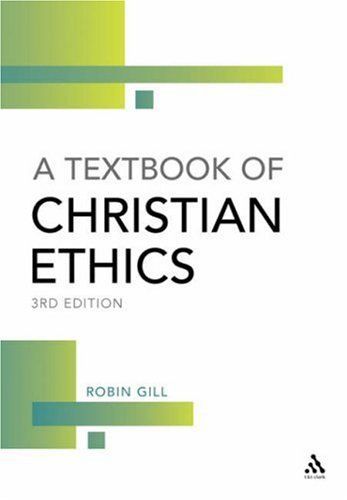
Sets out modern contributions to Christian ethics alongside texts from Augustine, Aquinas and Luther. The modern writers range from thinkers such as Niebuhr, Barth and Bonhoeffer to liberation and Third World theologians. The differing ethical positions and arguments are examined together with social and historical factors which shaped them.
ما از اخلاق چه انتظاری داریم؟ این سوال شاید تاحدودی برای عموم مردم و یا متخصصان این رشته قابل پاسخ باشد؛ اینکه خوب بودن را به ما بیاموزد و در تنظیم روابط فردی م...

جشن کتاب تهران به ایستگاه سی و یکم رسیده است. حال و احوال نشر کتاب خوب نیست و باید فرهنگدوستان را به خرید و هدیه دادن کتاب ترغیب نمود. خانه اخلاقپژوهان جوان ب...

بنیاد کتابهای اخلاق اسلامی عمدتا پالایش جان از آلودگیها و آراستن آن به زیباییها است. اندیشه محوری این قبیل کتابها آن است که انسان فعلی آنی نیست که باید باشد...

-
0 Comments