Notice: تابع WP_Block_Type_Registry::register به طورنادرست فراخوانی شد. نامهای نوع بلوک نباید حروف بزرگ داشته باشند. لطفاً برای اطلاعات بیشتر، اشکال زدایی در وردپرس را مشاهده کنید. (این پیام در نگارش 5.0.0 افزوده شده است.) in /home/ethicsho/public_html/wp-includes/functions.php on line 5313
Warning: Use of undefined constant TDC_PATH_LEGACY - assumed 'TDC_PATH_LEGACY' (this will throw an Error in a future version of PHP) in /home/ethicsho/public_html/wp-content/plugins/td-composer/td-composer.php on line 109
Warning: Use of undefined constant TDSP_THEME_PATH - assumed 'TDSP_THEME_PATH' (this will throw an Error in a future version of PHP) in /home/ethicsho/public_html/wp-content/plugins/td-composer/td-composer.php on line 113 بایگانیهای BS680.H67 .D49 2000 - خانه اخلاق پژوهان جوان Notice: Trying to access array offset on value of type bool in /home/ethicsho/public_html/wp-content/plugins/wp-ulike/inc/general-functions.php on line 807
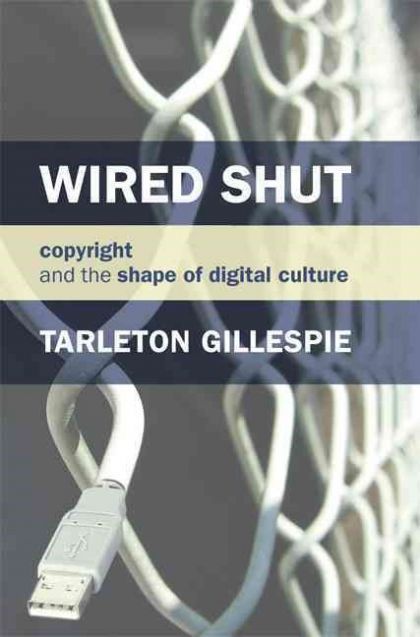
Winner, ICA 2009 Outstanding Book Award given by the International Communication Association. and Winner, 2009 CITASA Book Award given by the Communication and Information Technologies Section of the American Sociological AssociationWhile the public and the media have been distracted by the story of Napster, warnings about the evils of “piracy,” and lawsuits by the recording and film industries, the enforcement of copyright law in the digital world has quietly shifted from regulating copying to regulating the design of technology. Lawmakers and commercial interests are pursuing what might be called a technical fix: instead of specifying what can and cannot be done legally with a copyrighted work, this new approach calls for the strategic use of encryption technologies to build standards of copyright directly into digital devices so that some uses are possible and others rendered impossible. In Wired Shut, Tarleton Gillespie examines this shift to “technical copy protection” and its profound political, economic, and cultural implications.Gillespie reveals that the real story is not the technological controls themselves but the political, economic, and cultural arrangements being put in place to make them work. He shows that this approach to digital copyright depends on new kinds of alliances among content and technology industries, legislators, regulators, and the courts, and is changing the relationship between law and technology in the process. The film and music industries, he claims, are deploying copyright in order to funnel digital culture into increasingly commercial patterns that threaten to undermine the democratic potential of a network society.In this broad context, Gillespie examines three recent controversies over digital copyright: the failed effort to develop copy protection for portable music players with the Strategic Digital Music Initiative (SDMI); the encryption system used in DVDs, and the film industry’s legal response to the tools that challenged them; and the attempt by the FCC to mandate the “broadcast flag” copy protection system for digital television. In each, he argues that whether or not such technical constraints ever succeed, the political alignments required will profoundly shape the future of cultural expression in a digital age.
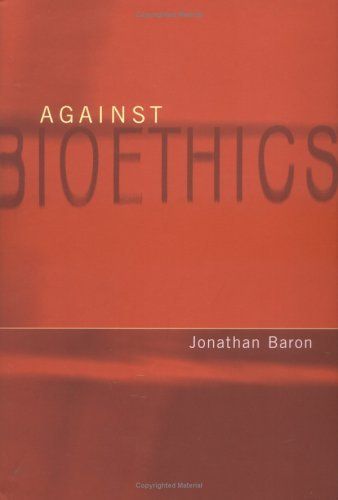
Governments, health professionals, patients, research institutions, and research subjects look to bioethicists for guidance in making important decisions about medical treatment and research. And yet, argues Jonathan Baron in Against Bioethics, applied bioethics lacks the authority of a coherent guiding theory and is based largely on intuitive judgments. Baron proposes an alternative, arguing that bioethics could have a coherent theory based on utilitarianism and decision analysis. Utilitarianism holds that the best option is the one that does the most expected good. Decision analysis provides a way of thinking about the risks and trade-offs of specific options. Like economics, utilitarian decision analysis makes predictions of expected good in complex situations, using data when possible, and focusing human judgment on the issues relevant to consequences. With such a guiding theory, bioethics would never yield decisions that clearly go against the expected good of those involved, as some do now. Baron discusses issues in bioethics that can be illuminated by such analysis, including “enhancements” to nature in the form of genetics, drugs, and mind control; reproduction; death and end-of-life issues, including advance directives, euthanasia, and organ donation; coercion and consent; conflict of interest and the reform of internal review boards; and drug research. Although Baron opposes current practice in bioethics, he argues that by combining utilitarianism and decision analysis, bioethics can achieve its aims of providing authoritative guidance in resolving thorny medical and ethical issues.
The Importance of Being Understoodargues for an alternative to traditional accounts in contemporary philosophy of the power of folk psychology to explain our actions and beliefs. Morton examines key concepts in moral psychology including motive, belief and simulation, arguing that folk psychology plays a vital role in building co-operation between individuals. He challenges many contemporary philosophical assumptions about its usefulness for understanding our actions and beliefs and shows that folk psychology can make an important contribution to understanding ethics.
This volume comprises essays presented to Alvin Plantinga on the occasion of his 70th birthday. Plantinga is one of the leading figures in Anglo-American metaphysics, epistemology and philosophy of religion; his work in these areas has been the focus of wide scholarly attention. This collection of essays, all of which were written specifically for this volume in honor of Plantinga’s 70th birthday, ranges broadly over topics in metaphysics and epistemology and includes contributions by some of the best philosophers writing today. The volume will be of particular interest to metaphysicians, epistemologists, philosophers of religion and theologians as it includes important recent work by some of the leading thinkers in these fields.With contributions from William P. Alston, Michael Bergmann, Richard Fumerton, Jenann Ismael, Jonathan Kvanvig, Trenton Merricks, Richard Otte, John Pollock, Michael C. Rea, Eleonore Stump, James Tomberlin, Peter van Inwagen, Nicholas Wolterstorff, and Keith Yandell.
ما از اخلاق چه انتظاری داریم؟ این سوال شاید تاحدودی برای عموم مردم و یا متخصصان این رشته قابل پاسخ باشد؛ اینکه خوب بودن را به ما بیاموزد و در تنظیم روابط فردی م...

جشن کتاب تهران به ایستگاه سی و یکم رسیده است. حال و احوال نشر کتاب خوب نیست و باید فرهنگدوستان را به خرید و هدیه دادن کتاب ترغیب نمود. خانه اخلاقپژوهان جوان ب...

بنیاد کتابهای اخلاق اسلامی عمدتا پالایش جان از آلودگیها و آراستن آن به زیباییها است. اندیشه محوری این قبیل کتابها آن است که انسان فعلی آنی نیست که باید باشد...

-
0 Comments