Notice: تابع WP_Block_Type_Registry::register به طورنادرست فراخوانی شد. نامهای نوع بلوک نباید حروف بزرگ داشته باشند. لطفاً برای اطلاعات بیشتر، اشکال زدایی در وردپرس را مشاهده کنید. (این پیام در نگارش 5.0.0 افزوده شده است.) in /home/ethicsho/public_html/wp-includes/functions.php on line 5313
Warning: Use of undefined constant TDC_PATH_LEGACY - assumed 'TDC_PATH_LEGACY' (this will throw an Error in a future version of PHP) in /home/ethicsho/public_html/wp-content/plugins/td-composer/td-composer.php on line 109
Warning: Use of undefined constant TDSP_THEME_PATH - assumed 'TDSP_THEME_PATH' (this will throw an Error in a future version of PHP) in /home/ethicsho/public_html/wp-content/plugins/td-composer/td-composer.php on line 113 بایگانیهای BR115.P74 .T43 2007 - خانه اخلاق پژوهان جوان Notice: Trying to access array offset on value of type bool in /home/ethicsho/public_html/wp-content/plugins/wp-ulike/inc/general-functions.php on line 807
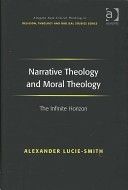
Moral thinking today finds itself stranded between the particular and the universal. Alasdair MacIntyre’s work on narrative, discussed here along with that of Stanley Hauerwas and H. T. Engelhardt, aims to undo the perceived damage done by the Enlightenment by returning to narrative and abandoning the illusion of a disembodied reason that claims to be able give a coherent explanation for everything. It is precisely this – a theory that holds good for all cases – that John Rawls proposed, drawing on the heritage of Emmanuel Kant. Who is right? Must universality be abandoned? Must we only think about morality in terms that are relative, bound by space and time? Alexander Lucie-Smith attempts to answer these questions by examining the nature of narrative itself as well as the particular narratives of Rawls and St Augustine. Bound and rooted as they are in history and personal experience, narratives nevertheless strain at the limits imposed on them. It is Lucie-Smith’s contention that each narrative that points to a lived morality exists against the background of an infinite horizon; and thus it is that the particular and the rooted can also make us aware of the universal and unchanging.
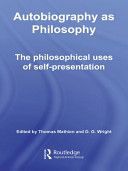
Since Plato a surprisingly large number of philosophers have chosen to write in the first person about their own lives either in works that were primarily autobiographical or in the context of other more conventionally written texts. These texts stand in marked contrast to the bulk of philosophical writing, particularly in the past century during which the discipline has become ever more professionalized and specialized. Instead of the common impersonal and argumentative forms of ordinary philosophic discussion, these autobiographical texts are deeply personal and largely narrative or explanatory. The contributors to this book examine the philosophical significance of philosophers’ autobiographies and whether or not there are broadly philosophical tasks for which this sort of writing is particularly suited. Autobiography as Philosophy contains a general discussion about the relation between philosophical and autobiographical writing, and essays on the specific writings of Augustine, Abelard, Montaigne,Descartes, Vico, Hume, Rousseau, Newman, Mill, Nietzsche, Collingwood and Russell by specialists on the works of these individuals. The book is original and distinctive in its efforts to think about the writings of historically recognized philosophers as communicative acts governed by their own distinctive interests and purposes. It is, therefore as much about the texts and the authors as about their doctrines and arguments. As a result the book steps back from many of the issues of substantive philosophical discussion to reflect on certain forms of writing as means to philosophical ends, to consider what those ends have included.
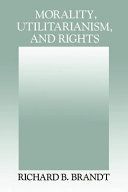
Richard Brandt is one of the most eminent and influential of contemporary moral philosophers. His work has been concerned with how to justify what is good or right not by reliance on intuitions or theories about what moral words mean but by the explanation of moral psychology and the description of what it is to value something, or to think it immoral. His approach thus stands in marked contrast to the influential theories of John Rawls. The essays reprinted in this collection span a period of almost 30 years and include many classic pieces in metaethical and normative ethical theory. The collection is aimed at both those moral philosophers familiar with Brandt’s work and at those philosophers who may be largely unfamiliar with his work. The latter group will be struck by the lucid unpretentious style and the cumulative weight of Brandt’s contributions to topics that remain at the forefront of moral philosophy.
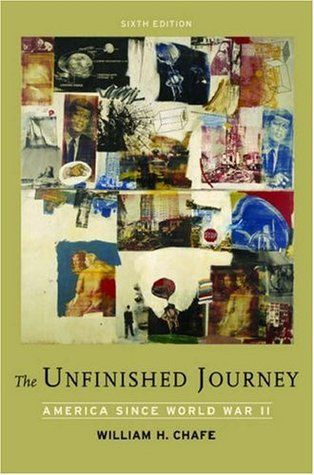
“This popular and classic text chronicles America’s roller-coaster journey through the decades since World War Two. Considering both the paradoxes and the possibilities of postwar America, William H. Chafe portrays the significant cultural and political themes that have colored our country’s past and present, including issues of race, class, gender, foreign policy, and economic and social reform. In this new edition, Chafe provides a nuanced yet unabashed assessment of George W. Bush’s presidency, covering his reelection, the saga of the Iraq War, and the administration’s response to the widespread devastation of Hurricane Katrina.”–BOOK JACKET.
ما از اخلاق چه انتظاری داریم؟ این سوال شاید تاحدودی برای عموم مردم و یا متخصصان این رشته قابل پاسخ باشد؛ اینکه خوب بودن را به ما بیاموزد و در تنظیم روابط فردی م...

جشن کتاب تهران به ایستگاه سی و یکم رسیده است. حال و احوال نشر کتاب خوب نیست و باید فرهنگدوستان را به خرید و هدیه دادن کتاب ترغیب نمود. خانه اخلاقپژوهان جوان ب...

بنیاد کتابهای اخلاق اسلامی عمدتا پالایش جان از آلودگیها و آراستن آن به زیباییها است. اندیشه محوری این قبیل کتابها آن است که انسان فعلی آنی نیست که باید باشد...

-
0 Comments