Notice: تابع WP_Block_Type_Registry::register به طورنادرست فراخوانی شد. نامهای نوع بلوک نباید حروف بزرگ داشته باشند. لطفاً برای اطلاعات بیشتر، اشکال زدایی در وردپرس را مشاهده کنید. (این پیام در نگارش 5.0.0 افزوده شده است.) in /home/ethicsho/public_html/wp-includes/functions.php on line 5313
Warning: Use of undefined constant TDC_PATH_LEGACY - assumed 'TDC_PATH_LEGACY' (this will throw an Error in a future version of PHP) in /home/ethicsho/public_html/wp-content/plugins/td-composer/td-composer.php on line 109
Warning: Use of undefined constant TDSP_THEME_PATH - assumed 'TDSP_THEME_PATH' (this will throw an Error in a future version of PHP) in /home/ethicsho/public_html/wp-content/plugins/td-composer/td-composer.php on line 113 بایگانیهای BJ52.5 .Z56 2006 - خانه اخلاق پژوهان جوان Notice: Trying to access array offset on value of type bool in /home/ethicsho/public_html/wp-content/plugins/wp-ulike/inc/general-functions.php on line 807
Much of the intense current interest in collective memory concerns the politics of memory. In a book that asks, “Is there an ethics of memory?” Avishai Margalit addresses a separate, perhaps more pressing, set of concerns. The idea he pursues is that the past, connecting people to each other, makes possible the kinds of “thick” relations we can call truly ethical. Thick relations, he argues, are those that we have with family and friends, lovers and neighbors, our tribe and our nation–and they are all dependent on shared memories. But we also have “thin” relations with total strangers, people with whom we have nothing in common except our common humanity. A central idea of the ethics of memory is that when radical evil attacks our shared humanity, we ought as human beings to remember the victims. Margalit’s work offers a philosophy for our time, when, in the wake of overwhelming atrocities, memory can seem more crippling than liberating, a force more for revenge than for reconciliation. Morally powerful, deeply learned, and elegantly written, The Ethics of Memory draws on the resources of millennia of Western philosophy and religion to provide us with healing ideas that will engage all of us who care about the nature of our relations to others.
Is it possible for postmodernism to offer coherent accounts of ethics in a fragmented social and intellectual world? In this collection, a distinguished international gathering of philosophers and literary scholars address the renewed interest in the literary text as a focus for ethical issues. Exponents of this trend include Charles Taylor, Bernard Williams, Iris Murdoch, Cora Diamond, Richard Rorty and Martha Nussbaum–a contributor and a key figure in this volume. This book assesses the significance of this development for ethical and literary theory.
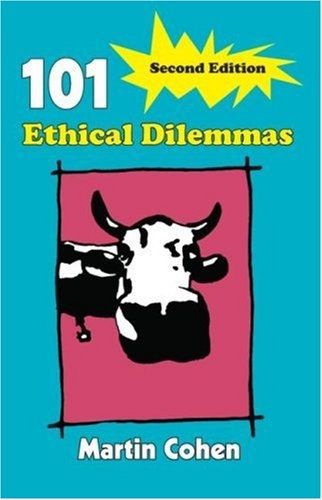
Will meat eaters get into heaven? Do trees have rights? Is it ever right to design a baby? What would you do? Would you always do the right thing? IS there a right thing? In this second edition of his thought-provoking and highly engaging introduction to ethics, Martin Cohen brings us eleven brand new ethical dilemmas including: The Dodgy Donor Clinic The Famous Footbridge Dilemma The Human Canonball. From overcrowded lifeboats to the censor’s pen, Martin Cohen’s stimulating and amusing dilemmas reveal the subtleties, complexities and contradictions that make up the rich tapestry of ethics. From DIY babies and breeding experiments to ‘Twinkies courtroom drama’ and Newgate Prison, there is a dilemma for everyone. Dilemmas from the worlds of medical, business, legal and war ethics; dilemmas in the shape of beautiful and ugly sisters, frogs, kings, ancient volcanic islands and suspiciously exotic villages. This book may not help you become a good person, but atleast you will have had a good think about it.
ما از اخلاق چه انتظاری داریم؟ این سوال شاید تاحدودی برای عموم مردم و یا متخصصان این رشته قابل پاسخ باشد؛ اینکه خوب بودن را به ما بیاموزد و در تنظیم روابط فردی م...

جشن کتاب تهران به ایستگاه سی و یکم رسیده است. حال و احوال نشر کتاب خوب نیست و باید فرهنگدوستان را به خرید و هدیه دادن کتاب ترغیب نمود. خانه اخلاقپژوهان جوان ب...

بنیاد کتابهای اخلاق اسلامی عمدتا پالایش جان از آلودگیها و آراستن آن به زیباییها است. اندیشه محوری این قبیل کتابها آن است که انسان فعلی آنی نیست که باید باشد...

-
0 Comments