Notice: تابع WP_Block_Type_Registry::register به طورنادرست فراخوانی شد. نامهای نوع بلوک نباید حروف بزرگ داشته باشند. لطفاً برای اطلاعات بیشتر، اشکال زدایی در وردپرس را مشاهده کنید. (این پیام در نگارش 5.0.0 افزوده شده است.) in /home/ethicsho/public_html/wp-includes/functions.php on line 5313
Warning: Use of undefined constant TDC_PATH_LEGACY - assumed 'TDC_PATH_LEGACY' (this will throw an Error in a future version of PHP) in /home/ethicsho/public_html/wp-content/plugins/td-composer/td-composer.php on line 109
Warning: Use of undefined constant TDSP_THEME_PATH - assumed 'TDSP_THEME_PATH' (this will throw an Error in a future version of PHP) in /home/ethicsho/public_html/wp-content/plugins/td-composer/td-composer.php on line 113 بایگانیهای BJ37 .W66 2006 - خانه اخلاق پژوهان جوان Notice: Trying to access array offset on value of type bool in /home/ethicsho/public_html/wp-content/plugins/wp-ulike/inc/general-functions.php on line 807
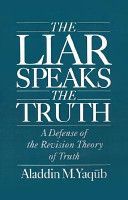
In this book, Yaqub describes a simple conception of truth and shows that it yields a semantical theory that accommodates the whole range of our seemingly conflicting intuitions about truth. This conception takes the Tarskian biconditionals (such as “The sentence ‘Johannes loved Clara’ is true if and only if Johannes loved Clara”) as correctly and completely defining the notion of truth. The semantical theory, which is called the revision theory, that emerges from this conception paints a metaphysical picture of truth as a property whose applicability is given by a revision process rather than by a fixed extension. The main advantage of this revision process is its ability to explain why truth seems in many cases almost redundant, in others substantial, and yet in others paradoxical (as in the famous Liar). Yaqub offers a comprehensive defense of the revision theory of truth by developing consistent and adequate formal semantics for languages in which all sorts of problematic sentences (Liar and company) can be constructed. Yaqub concludes by introducing a logic of truth that further demonstrates the adequacy of the revision theory.
The provocative contention of the postmodernist and feminist essays in Ethics of the Body is that conventional bioethics is out of touch, despite its growing profile. It is out of touch with an ongoing phenomenological sense of bodies themselves; with the impact of postmodernist theory as it problematizes the certainties of binary thinking; and with a postmodern culture in which bioscientific developments force us to question what is meant by the notion of the human self. The authors demonstrate that the conventional normative framework of bioethics is called into question by issues as wide ranging as genetic manipulation, disability, high-tech prosthetics, and intersexuality. The essays show how both the theory and practice of bioethics can benefit from postmodernism’s characteristic fluidity and multiplicity, as well as from the insights of a reconceived feminist bioethics. They address issues in philosophy, law, bioscientific research, psychiatry, cultural studies, and feminism from a “postconventional” perspective that looks beyond the familiar ideas of the body, proposing not a bioethics about the body but a radical ethics of the body.After exploring notions of difference in both feminist and postmodernist terms, the book considers specific issues—including HIV, addiction, borderline personality disorder, and cancer—that challenge the principles of conventional bioethics. The focus then turns to questions raised by biotechnology: one essay rethinks the traditional feminist ethics of care in the context of new reproductive technology, while others tackle genetic and genomic issues. Finally, the book looks at embodiment and some specifically anomalous forms of being-in-the-body, including a consideration of intersex infants and children that draws on feminist, postructuralist, and queer theory.
” . . . one of the most important works on philosophical ethics written in recent years. . . . Caputo speaks with a passion and a concern that are rare in academic philosophy. His profound sense of humor deepens the passion of the viewpoints he develops.Oacute; Ntilde;Mark C. Taylor Ograve; . . . a counterethics whose multiple voices will be heard long after the trivializing arguments of many analytic ethicists have vanished and the arcane formulations of many postmoderns jettisoned. . . . The either/or of this dialogue is shown as the topos of a postmodern ethics.Oacute; Ntilde;Edith Wyschogrod In Against Ethics John D. Caputo undertakes a passionate, poetic, and satiric search for the basis of an ethics in the postmodern situation. Restaging Fear and Trembling, Caputo defends the notion of obligation without ethics, of responsibility without the support of ethical foundations. Retelling the story of Abraham and Isaac, Caputo strikes the pose of a postmodern-day Johannes de Silentio, accompanied by communications from such startling figures as Johanna de Silentio, Felix Sineculpa, and Magdalena de la Cruz. In dialogue with the thought of Kierkegaard, Nietzsche, Levinas, Derrida, and Lyotard, Caputo forges a challenging, original account of what is possible and what is not possible for a continentalist ethics today.
ما از اخلاق چه انتظاری داریم؟ این سوال شاید تاحدودی برای عموم مردم و یا متخصصان این رشته قابل پاسخ باشد؛ اینکه خوب بودن را به ما بیاموزد و در تنظیم روابط فردی م...

جشن کتاب تهران به ایستگاه سی و یکم رسیده است. حال و احوال نشر کتاب خوب نیست و باید فرهنگدوستان را به خرید و هدیه دادن کتاب ترغیب نمود. خانه اخلاقپژوهان جوان ب...

بنیاد کتابهای اخلاق اسلامی عمدتا پالایش جان از آلودگیها و آراستن آن به زیباییها است. اندیشه محوری این قبیل کتابها آن است که انسان فعلی آنی نیست که باید باشد...

-
0 Comments