Notice: تابع WP_Block_Type_Registry::register به طورنادرست فراخوانی شد. نامهای نوع بلوک نباید حروف بزرگ داشته باشند. لطفاً برای اطلاعات بیشتر، اشکال زدایی در وردپرس را مشاهده کنید. (این پیام در نگارش 5.0.0 افزوده شده است.) in /home/ethicsho/public_html/wp-includes/functions.php on line 5313
Warning: Use of undefined constant TDC_PATH_LEGACY - assumed 'TDC_PATH_LEGACY' (this will throw an Error in a future version of PHP) in /home/ethicsho/public_html/wp-content/plugins/td-composer/td-composer.php on line 109
Warning: Use of undefined constant TDSP_THEME_PATH - assumed 'TDSP_THEME_PATH' (this will throw an Error in a future version of PHP) in /home/ethicsho/public_html/wp-content/plugins/td-composer/td-composer.php on line 113 بایگانیهای BJ37 .K45 2008 - خانه اخلاق پژوهان جوان Notice: Trying to access array offset on value of type bool in /home/ethicsho/public_html/wp-content/plugins/wp-ulike/inc/general-functions.php on line 807
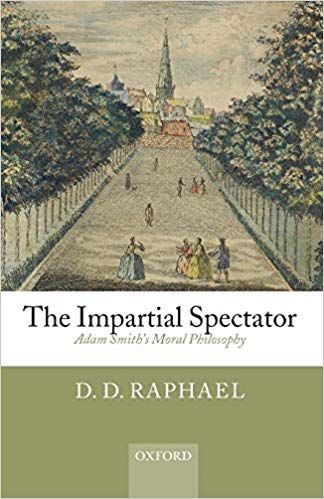
D. D. Raphael provides a critical account of the moral philosophy of Adam Smith, presented in his first book, The Theory of Moral Sentiments. Whilst it does not have the same prominence in its field as his work on economics, The Wealth of Nations, Smith’s writing on ethics is of continuing importance and interest today, especially for its theory of conscience. Smith sees the origin of conscience in the sympathetic and antipathetic feelings of spectators. As spectators of the actions of other people, we can imagine how we would feel in their situation. If we would share their motives, we approve of their action. If not, we disapprove. When we ourselves take an action, we know from experience what spectators would feel, approval or disapproval. That knowledge forms conscience, an imagined impartial spectator who tells us whether an action is right or wrong. In describing the content of moral judgment, Smith is much influenced by Stoic ethics, with an emphasis on self-command, but he voices criticism as well as praise. His own position is a combination of Stoic and Christian values. There is a substantial difference between the first five editions of the Moral Sentiments and the sixth. Failure to take account of this has led some commentators to mistaken views about the supposed youthful idealism of the Moral Sentiments as contrasted with the mature realism of The Wealth of Nations. A further source of error has been the supposition that Smith treats sympathy as the motive of moral action, as contrasted with the supposedly universal motive of self-interest in The Wealth of Nations.
Kant is generally conceived to have offered little attention to the fact that we experience the world in and through our bodies. This book argues that this standard image of the great German philosopher is radically wrong. Not only does Kant – throughout his career and in works published before and after the Critique of pure reason – reflect constantly upon the fact that human life is embodied, but the Critique of pure reason itself may be read as a critical reflection aimed at exploring some significant philosophical implications of this fact. Bringing this aspect of Kant’s philosophy into focus is important, not only because it sheds new light on our understanding of Kant’s work, but also because it is relevant to contemporary discussions in philosophy about embodiment, learning and practice. By taking his philosophy of embodiment into account, the author makes Kant stand out as a true contemporary in new and unexpected ways.
In a clear and elegant style, T. M. Scanlon reframes current philosophical debates as he explores the moral permissibility of an action. Permissibility may seem to depend on the agent’s reasons for performing an action. For example, there seems to be an important moral difference between tactical bombing and a campaign by terrorists—even if the same number of non-combatants are killed—and this difference may seem to lie in the agents’ respective aims. However, Scanlon argues that the apparent dependence of permissibility on the agent’s reasons in such cases is merely a failure to distinguish between two kinds of moral assessment: assessment of the permissibility of an action and assessment of the way an agent decided what to do. Distinguishing between these two forms of assessment leads Scanlon to an important distinction between the permissibility of an action and its meaning: the significance for others of the agent’s willingness to act in this way. An action’s meaning depends on the agent’s reasons for performing it in a way that its permissibility does not. Blame, he argues, is a response to the meaning of an action rather than its permissibility. This analysis leads to a novel account of the conditions of moral responsibility and to important conclusions about the ethics of blame.
ما از اخلاق چه انتظاری داریم؟ این سوال شاید تاحدودی برای عموم مردم و یا متخصصان این رشته قابل پاسخ باشد؛ اینکه خوب بودن را به ما بیاموزد و در تنظیم روابط فردی م...

جشن کتاب تهران به ایستگاه سی و یکم رسیده است. حال و احوال نشر کتاب خوب نیست و باید فرهنگدوستان را به خرید و هدیه دادن کتاب ترغیب نمود. خانه اخلاقپژوهان جوان ب...

بنیاد کتابهای اخلاق اسلامی عمدتا پالایش جان از آلودگیها و آراستن آن به زیباییها است. اندیشه محوری این قبیل کتابها آن است که انسان فعلی آنی نیست که باید باشد...

-
0 Comments