Notice: تابع WP_Block_Type_Registry::register به طورنادرست فراخوانی شد. نامهای نوع بلوک نباید حروف بزرگ داشته باشند. لطفاً برای اطلاعات بیشتر، اشکال زدایی در وردپرس را مشاهده کنید. (این پیام در نگارش 5.0.0 افزوده شده است.) in /home/ethicsho/public_html/wp-includes/functions.php on line 5313
Warning: Use of undefined constant TDC_PATH_LEGACY - assumed 'TDC_PATH_LEGACY' (this will throw an Error in a future version of PHP) in /home/ethicsho/public_html/wp-content/plugins/td-composer/td-composer.php on line 109
Warning: Use of undefined constant TDSP_THEME_PATH - assumed 'TDSP_THEME_PATH' (this will throw an Error in a future version of PHP) in /home/ethicsho/public_html/wp-content/plugins/td-composer/td-composer.php on line 113 بایگانیهای BJ324.V35 .G65 2009 - خانه اخلاق پژوهان جوان Notice: Trying to access array offset on value of type bool in /home/ethicsho/public_html/wp-content/plugins/wp-ulike/inc/general-functions.php on line 807
Is knowledge of right and wrong written on the human heart? Do people know God from the world around them? Does natural knowledge contribute to Christian doctrine? While these questions of natural theology and natural law have historically been part of theological reflection, twentieth-century Protestant theologians’ radical reliance on revelation has eclipsed this historic connection. Stephen Grabill attempts the treacherous task of reintegration of Reformed Protestant theology with natural law by appealing to reformation era theologians such as John Calvin, Peter Martyr Vermigli, Johannes Althusius, and Francis Turretin who carried over and refined the traditional understanding of this key doctrine. In Rediscovering the Natural Law in Reformed Theological Ethics Stephen Grabill calls Christian ethicists, theologians and laypersons to take another look at this vital element in the history of Christian ethical thought.
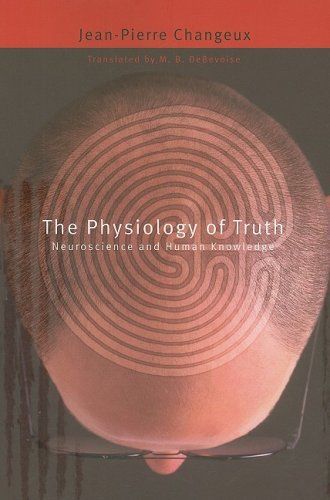
In this wide-ranging book, one of the boldest thinkers in modern neuroscience confronts an ancient philosophical problem: can we know the world as it really is?Drawing on provocative new findings about the psychophysiology of perception and judgment in both human and nonhuman primates, and also on the cultural history of science, Jean-Pierre Changeux makes a powerful case for the reality of scientific progress and argues that it forms the basis for a coherent and universal theory of human rights. On this view, belief in objective knowledge is not a mere ideological slogan or a nave confusion; it is a characteristic feature of human cognition throughout evolution, and the scientific method its most sophisticated embodiment. Seeking to reconcile science and humanism, Changeux holds that the capacity to recognize truths that are independent of subjective personal experience constitutes the foundation of a human civil society.
The Ethics of Aesthetics in Japanese Cinema and Literatureis a study of the ethics of modern Japanese aesthetics from the 1930s, through WWII and into the postwar period. What makes this book unique is that Nina Cornyetz opens up the field in new and controversial ways by exploring the tensions and harmonies between psychoanalytic ethics of the drive and socio-political ethics of relation to the other. Rejecting the convention of viewing these as contradictory, Cornyetz insists that the exemplars of psychoanalytic ethics are to the contrary, simultaneously politically ethical. Cornyetz embarks on innovative and unprecedented readings of some of the most significant literary and film texts of the Japanese canon, including works by Kawabata Yasunari, Mishima Yukio, Abe Kôbô and Shinoda Masahiro, all renowned for their texts’ aesthetic and philosophic brilliance. The study looks at how relations between individuals and communities in these texts either reiterate or transcend stereotypes, andhow desire is or is not limited by sociocultural norms. Cornyetz argues that these authors’ and filmmakers’ concepts of beauty and relation to others were, in fact, deeply impacted by political and social factors. Ranging from a discussion of fascist aesthetics to heterosexism in modern Japan,The Ethics of Aesthetics in Japanese Cinema and Literatureshows how certain changing political, intellectual and artistic issues, as well as sociocultural norms, variously nuanced these texts’ depictions of desire and the ‘other’. Through her analysis of cultural texts such as the filmsWoman in the DunesandDouble Suicide, Cornyetz challenges the convention that praises the universality of their artistic, existential or intellectual achievements. Rather she seeks to reorient these within a specifically Japanese historical context to give a new and insightful interpretation to the work. This ground breaking study is truly interdisciplinary and will appeal to students and scholars of Japaneseliterature, film, gender, culture, history and even psychoanalytic theory.
ما از اخلاق چه انتظاری داریم؟ این سوال شاید تاحدودی برای عموم مردم و یا متخصصان این رشته قابل پاسخ باشد؛ اینکه خوب بودن را به ما بیاموزد و در تنظیم روابط فردی م...

جشن کتاب تهران به ایستگاه سی و یکم رسیده است. حال و احوال نشر کتاب خوب نیست و باید فرهنگدوستان را به خرید و هدیه دادن کتاب ترغیب نمود. خانه اخلاقپژوهان جوان ب...

بنیاد کتابهای اخلاق اسلامی عمدتا پالایش جان از آلودگیها و آراستن آن به زیباییها است. اندیشه محوری این قبیل کتابها آن است که انسان فعلی آنی نیست که باید باشد...

-
0 Comments