Notice: تابع WP_Block_Type_Registry::register به طورنادرست فراخوانی شد. نامهای نوع بلوک نباید حروف بزرگ داشته باشند. لطفاً برای اطلاعات بیشتر، اشکال زدایی در وردپرس را مشاهده کنید. (این پیام در نگارش 5.0.0 افزوده شده است.) in /home/ethicsho/public_html/wp-includes/functions.php on line 5313
Warning: Use of undefined constant TDC_PATH_LEGACY - assumed 'TDC_PATH_LEGACY' (this will throw an Error in a future version of PHP) in /home/ethicsho/public_html/wp-content/plugins/td-composer/td-composer.php on line 109
Warning: Use of undefined constant TDSP_THEME_PATH - assumed 'TDSP_THEME_PATH' (this will throw an Error in a future version of PHP) in /home/ethicsho/public_html/wp-content/plugins/td-composer/td-composer.php on line 113 بایگانیهای BJ1533.L8 .R6 1995 - خانه اخلاق پژوهان جوان Notice: Trying to access array offset on value of type bool in /home/ethicsho/public_html/wp-content/plugins/wp-ulike/inc/general-functions.php on line 807
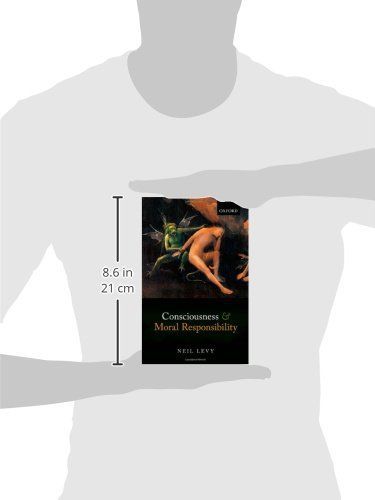
Neil Levy presents an original theory of freedom and responsibility. Cognitive neuroscience and psychology provide a great deal of evidence that our actions are often shaped by information of which we are not conscious; some psychologists have concluded that we are actually conscious of very few of the facts we respond to. But most people seem to assume that we need to be conscious of the facts we respond to in order to be responsible for what we do. Some thinkers have argued that this naive assumption is wrong, and we need not be conscious of these facts to be responsible, while others think it is correct and therefore we are never responsible. Levy argues that both views are wrong. He sets out and defends a particular account of consciousness-the global workspace view-and argues this account entails that consciousness plays an especially important role in action. We exercise sufficient control over the moral significance of our acts to be responsible for them only when we are conscious of the facts that give to our actions their moral character. Further, our actions are expressive of who we are as moral agents only when we are conscious of these same facts. There are therefore good reasons to think that the naive assumption, that consciousness is needed for moral responsibility, is in fact true. Levy suggests that this entails that people are responsible less often than we might have thought, but the consciousness condition does not entail that we are never morally responsible. — Provided by publisher.
The utility maximization paradigm forms the basis of many economic, psychological, cognitive and behavioral models. Since it was first devised in the eighteenth century, numerous examples have revealed the deficiencies of the concept. This book makes a contribution to overcome those deficiencies by taking into account insensitivity of measurement threshold and context of choice. It covers classic theory as a special, context-free case and gives a systematic overview of new models of utility maximization within a context-dependent threshold as well as related preference and choice models. The second edition has been updated to include the most recent developments and a new chapter on classic and new results for infinite sets. The presented models will be helpful to scientists in economics, decision making theory, social choice theory, behavioral and cognitive sciences, and related fields.
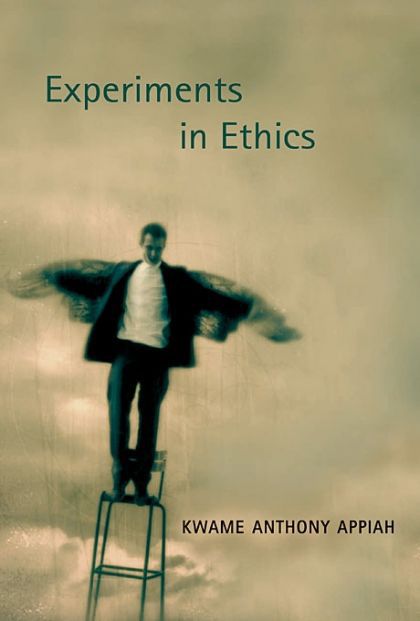
In the past few decades, scientists of human nature–including experimental and cognitive psychologists, neuroscientists, evolutionary theorists, and behavioral economists–have explored the way we arrive at moral judgments. They have called into question commonplaces about character and offered troubling explanations for various moral intuitions. Research like this may help explain what, in fact, we do and feel. But can it tell us what we ought to do or feel? In Experiments in Ethics, the philosopher Kwame Anthony Appiah explores how the new empirical moral psychology relates to the age-old project of philosophical ethics.Some moral theorists hold that the realm of morality must be autonomous of the sciences; others maintain that science undermines the authority of moral reasons. Appiah elaborates a vision of naturalism that resists both temptations. He traces an intellectual genealogy of the burgeoning discipline of “experimental philosophy,” provides a balanced, lucid account of the work being done in this controversial and increasingly influential field, and offers a fresh way of thinking about ethics in the classical tradition.Appiah urges that the relation between empirical research and morality, now so often antagonistic, should be seen in terms of dialogue, not contest. And he shows how experimental philosophy, far from being something new, is actually as old as philosophy itself. Beyond illuminating debates about the connection between psychology and ethics, intuition and theory, his book helps us to rethink the very nature of the philosophical enterprise.
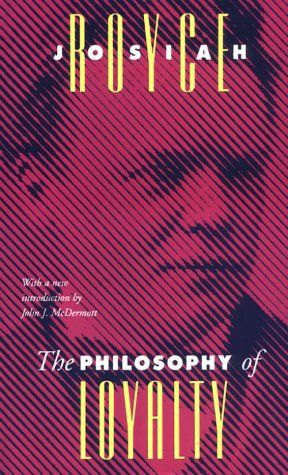
Ranging over central issues of morals and politics and the nature of freedom and authority, this study examines the role of value-neutrality, rights, equality, and the prevention of harm in the liberal tradition, and relates them to fundamental moral questions such as the relation of values to social forms, the comparability of values, and the significance of personal commitments.
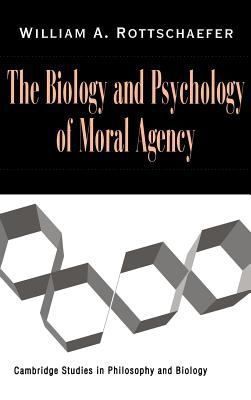
This important book brings recent findings and theories in biology and psychology to bear on the fundamental question in ethics of what it means to behave morally. By presenting a complete model of moral agency based on contemporary evolutionary theory, developmental biology and psychology, and social cognitive theory, the book offers a unique perspective. It will be read with profit by a broad range of philosophers, as well as psychologists and biologists.
ما از اخلاق چه انتظاری داریم؟ این سوال شاید تاحدودی برای عموم مردم و یا متخصصان این رشته قابل پاسخ باشد؛ اینکه خوب بودن را به ما بیاموزد و در تنظیم روابط فردی م...

جشن کتاب تهران به ایستگاه سی و یکم رسیده است. حال و احوال نشر کتاب خوب نیست و باید فرهنگدوستان را به خرید و هدیه دادن کتاب ترغیب نمود. خانه اخلاقپژوهان جوان ب...

بنیاد کتابهای اخلاق اسلامی عمدتا پالایش جان از آلودگیها و آراستن آن به زیباییها است. اندیشه محوری این قبیل کتابها آن است که انسان فعلی آنی نیست که باید باشد...

-
0 Comments