Notice: تابع WP_Block_Type_Registry::register به طورنادرست فراخوانی شد. نامهای نوع بلوک نباید حروف بزرگ داشته باشند. لطفاً برای اطلاعات بیشتر، اشکال زدایی در وردپرس را مشاهده کنید. (این پیام در نگارش 5.0.0 افزوده شده است.) in /home/ethicsho/public_html/wp-includes/functions.php on line 5313
Warning: Use of undefined constant TDC_PATH_LEGACY - assumed 'TDC_PATH_LEGACY' (this will throw an Error in a future version of PHP) in /home/ethicsho/public_html/wp-content/plugins/td-composer/td-composer.php on line 109
Warning: Use of undefined constant TDSP_THEME_PATH - assumed 'TDSP_THEME_PATH' (this will throw an Error in a future version of PHP) in /home/ethicsho/public_html/wp-content/plugins/td-composer/td-composer.php on line 113 بایگانیهای BJ1533.F8 .F84 1993 - خانه اخلاق پژوهان جوان Notice: Trying to access array offset on value of type bool in /home/ethicsho/public_html/wp-content/plugins/wp-ulike/inc/general-functions.php on line 807
‘We know much more about the global politics of intellectual property than we do about national political contests over the ownership of knowledge. Haunss and Shadlen have identified this gap in the literature and have done a fine job of bringing together a set of essays that helps to fill this gap in our understanding of the multi-layered nature of intellectual property politics.’ Peter Drahos, Australian National University ‘This thought-provoking volume provides invaluable new insights and is a major contribution to the debate on the politics of intellectual property rights.’ Duncan Matthews, Queen Mary, University of London, UK This book offers empirical analyses of conflicts over the ownership, control, and use of knowledge and information in developed and developing countries. Sebastian Haunss and Kenneth C. Shadlen, along with a collection of eminent contributors, focus on how business organizations, farmers, social movements, legal communities, state officials, transnational enterprises, and international organizations shape IP policies in areas such as health, information-communication technologies, indigenous knowledge, genetic resources, and many others. The innovative and original chapters examine conflicts over the rules governing various dimensions of IP, including patents, copyrights, traditional knowledge, and biosafety regulations. Written from a political perspective, this book is a must-read for political scientists, sociologists and anthropologists who study IP and conflicts over property. It is also an essential read for stakeholders in institutions, NGOs and industry interested in knowledge governance and IP politics.
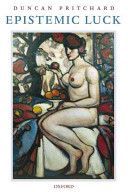
Epistemic Luck is the first book to offer a rigorous philosophical examination of the concept of luck and its relationship to knowledge. In particular, Duncan Pritchard shows how a more nuanced understanding of the relationship between knowledge and luck can enable us to see our way past some of the most intractable disputes in the contemporary theory of knowledge. Anyone working on epistemology will need to come to terms with his original and incisive contribution to the field.
Book Summary of Aiming At Virtue In PlatoThis innovative study of Plato’s ethics focuses on the concept of virtue. Based on detailed readings of the most prominent Platonic dialogues on virtue, it argues that there is a central yet previously unnoticed conceptual distinction in Plato between the idea of virtue as the supreme aim of one’s actions and the determination of which action-tokens or -types are virtuous. Appreciating the ‘aiming/determining distinction’ provides detailed and mutually consistent readings of the most well-known Platonic dialogues on virtue as well as original interpretations of central Platonic questions. Unlike most examinations of Plato’s ethics, this study does not take as its centrepiece the ‘eudaimonist framework’, which focusses on the relationship between virtue and happiness. Instead Aiming at Virtue in Plato argues that the dialogues themselves begin with the idea of the supremacy of virtue, examine how that claim can be defended, and address how to determine what constitutes the virtuous action..
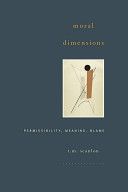
In a clear and elegant style, T. M. Scanlon reframes current philosophical debates as he explores the moral permissibility of an action. Permissibility may seem to depend on the agent’s reasons for performing an action. For example, there seems to be an important moral difference between tactical bombing and a campaign by terrorists—even if the same number of non-combatants are killed—and this difference may seem to lie in the agents’ respective aims. However, Scanlon argues that the apparent dependence of permissibility on the agent’s reasons in such cases is merely a failure to distinguish between two kinds of moral assessment: assessment of the permissibility of an action and assessment of the way an agent decided what to do. Distinguishing between these two forms of assessment leads Scanlon to an important distinction between the permissibility of an action and its meaning: the significance for others of the agent’s willingness to act in this way. An action’s meaning depends on the agent’s reasons for performing it in a way that its permissibility does not. Blame, he argues, is a response to the meaning of an action rather than its permissibility. This analysis leads to a novel account of the conditions of moral responsibility and to important conclusions about the ethics of blame.
ما از اخلاق چه انتظاری داریم؟ این سوال شاید تاحدودی برای عموم مردم و یا متخصصان این رشته قابل پاسخ باشد؛ اینکه خوب بودن را به ما بیاموزد و در تنظیم روابط فردی م...

جشن کتاب تهران به ایستگاه سی و یکم رسیده است. حال و احوال نشر کتاب خوب نیست و باید فرهنگدوستان را به خرید و هدیه دادن کتاب ترغیب نمود. خانه اخلاقپژوهان جوان ب...

بنیاد کتابهای اخلاق اسلامی عمدتا پالایش جان از آلودگیها و آراستن آن به زیباییها است. اندیشه محوری این قبیل کتابها آن است که انسان فعلی آنی نیست که باید باشد...

-
0 Comments