Notice: تابع WP_Block_Type_Registry::register به طورنادرست فراخوانی شد. نامهای نوع بلوک نباید حروف بزرگ داشته باشند. لطفاً برای اطلاعات بیشتر، اشکال زدایی در وردپرس را مشاهده کنید. (این پیام در نگارش 5.0.0 افزوده شده است.) in /home/ethicsho/public_html/wp-includes/functions.php on line 5313
Warning: Use of undefined constant TDC_PATH_LEGACY - assumed 'TDC_PATH_LEGACY' (this will throw an Error in a future version of PHP) in /home/ethicsho/public_html/wp-content/plugins/td-composer/td-composer.php on line 109
Warning: Use of undefined constant TDSP_THEME_PATH - assumed 'TDSP_THEME_PATH' (this will throw an Error in a future version of PHP) in /home/ethicsho/public_html/wp-content/plugins/td-composer/td-composer.php on line 113 بایگانیهای BJ1533.E82 .W37 2009 - خانه اخلاق پژوهان جوان Notice: Trying to access array offset on value of type bool in /home/ethicsho/public_html/wp-content/plugins/wp-ulike/inc/general-functions.php on line 807
In these lectures, delivered in 1933–1934 while he was Rector of the University of Freiburg and an active supporter of the National Socialist regime, Martin Heidegger addresses the history of metaphysics and the notion of truth from Heraclitus to Hegel. First published in German in 2001, these two lecture courses offer a sustained encounter with Heidegger’s thinking during a period when he attempted to give expression to his highest ambitions for a philosophy engaged with politics and the world. While the lectures are strongly nationalistic and celebrate the revolutionary spirit of the time, they also attack theories of racial supremacy in an attempt to stake out a distinctively Heideggerian understanding of what it means to be a people. This careful and faithful translation offers valuable insight into Heidegger’s views on language, truth, animality, and life, as well as his political thought and activity.
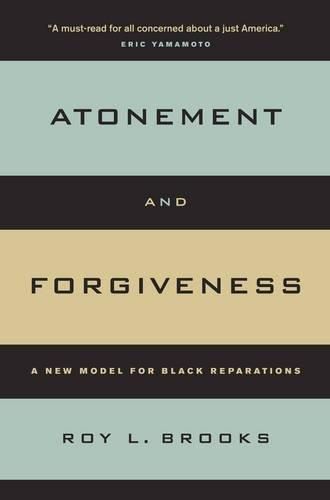
Roy L. Brooks reframes one of the most important, controversial, and misunderstood issues of our time in this far-reaching reassessment of the growing debate on black reparation. Atonement and Forgiveness shifts the focus of the issue from the backward-looking question of compensation for victims to a more forward-looking racial reconciliation. Offering a comprehensive discussion of the history of the black redress movement, this book puts forward a powerful new plan for repairing the damaged relationship between the federal government and black Americans in the aftermath of 240 years of slavery and another 100 years of government-sanctioned racial segregation. Key to Brooks’s vision is the government’s clear signal that it understands the magnitude of the atrocity it committed against an innocent people, that it takes full responsibility, and that it publicly requests forgiveness–in other words, that it apologizes. The government must make that apology believable, Brooks explains, by a tangible act that turns the rhetoric of apology into a meaningful, material reality, that is, by reparation. Apology and reparation together constitute atonement. Atonement, in turn, imposes a reciprocal civic obligation on black Americans to forgive, which allows black Americans to start relinquishing racial resentment and to begin trusting the government’s commitment to racial equality. Brooks’s bold proposal situates the argument for reparations within a larger, international framework–namely, a post-Holocaust vision of government responsibility for genocide, slavery, apartheid, and similar acts of injustice. Atonement and Forgiveness makes a passionate, convincing case that only with this spirit of heightened morality, identity, egalitarianism, and restorative justice can genuine racial reconciliation take place in America. Roy L. Brooks reframes one of the most important, controversial, and misunderstood issues of our time in this far-reaching reassessment of the growing debate on black reparation. Atonement and Forgiveness shifts the focus of the issue from the backward-looking question of compensation for victims to a more forward-looking racial reconciliation. Offering a comprehensive discussion of the history of the black redress movement, this book puts forward a powerful new plan for repairing the damaged relationship between the federal government and black Americans in the aftermath of 240 years of slavery and another 100 years of government-sanctioned racial segregation. Key to Brooks’s vision is the government’s clear signal that it understands the magnitude of the atrocity it committed against an innocent people, that it takes full responsibility, and that it publicly requests forgiveness–in other words, that it apologizes. The government must make that apology believable, Brooks explains, by a tangible act that turns the rhetoric of apology into a meaningful, material reality, that is, by reparation. Apology and reparation together constitute atonement. Atonement, in turn, imposes a reciprocal civic obligation on black Americans to forgive, which allows black Americans to start relinquishing racial resentment and to begin trusting the government’s commitment to racial equality. Brooks’s bold proposal situates the argument for reparations within a larger, international framework–namely, a post-Holocaust vision of government responsibility for genocide, slavery, apartheid, and similar acts of injustice. Atonement and Forgiveness makes a passionate, convincing case that only with this spirit of heightened morality, identity, egalitarianism, and restorative justice can genuine racial reconciliation take place in America.
The first to use Judith Butler?s work as a reading of how the legal subject is formed, this book traces how Butler comes to the themes of ethics, law and politics analyzing their interrelation and explaining how they relate to Butler?s question of how people can have more liveable and viable lives. Acknowledging the potency and influence of Butler?s ?concept? of gender as process, which occupies a well developed and well discussed position in current literature, Elena Loizidou argues that the possibility of people having more liveable and viable lives is articulated by Butler within the parameters of a sustained agonistic relationship between the three spheres of ethics, law and politics. Suggesting that Butler?s rounded understanding of the interrelationship of these three spheres will enable critical legal scholarship, as well as critical theory more generally, to consider how the question of life?s unsustainable conditions can be rethought and redressed, this book is a key readfor all students of legal ethics, political philosophy and social theory.
Germain Grisez has been a leading voice in moral philosophy and theology since the second Vatican Council. In this book, such major thinkers as John Finnis, Ralph McInerny, and William E. May consider issues in ethics, metaphysics, and politics that have been central to Grisez’s work.Grisez’s reconsideration of the philosophical foundations of Christian moral teaching, seeking to eliminate both legalistic interpretation and theological dissent, has won the support of a number of leading Catholic moralists. In the past decade, moreover, many philosophers outside of Catholicism have weighed carefully Grisez’s alternatives to theories that have long dominated secular moral philosophy.This book presents a broad spectrum of viewpoints on subjects ranging from contraception to capital punishment and considers such controversies as the scriptural basis of Grisez’s work, his interpretations of Aquinas, and his new natural law theory. The collection includes not only contributions from Grisez’s supporters but also from critics of his thought, from proportionalist Edward Collins Vacek, S.J., to the neo-Thomist Ralph McInerny. A reply by Grisez, written with Joseph M. Boyle, Jr., addresses the issues and viewpoints expressed, while an afterword by Russell Shaw reviews Grisez’s pioneering work and conveys a vivid sense of the philosopher’s personality.As Grisez’s influence grows, this volume will serve as an important touchstone on his contributions to moral and political philosophy and theology.
Perfect for introductory ethics courses, this popular anthology encourages a critical examination of contemporary moral problems by presenting differing viewpoints on issues like the death penalty; euthanasia; hate speech and censorship; world hunger and global justice; and the environment. The readings, of which over 40% are new to this Sixth Edition, include relevant legal opinions, as well as selections from the work of some of the most respected contemporary writers and thinkers.
ما از اخلاق چه انتظاری داریم؟ این سوال شاید تاحدودی برای عموم مردم و یا متخصصان این رشته قابل پاسخ باشد؛ اینکه خوب بودن را به ما بیاموزد و در تنظیم روابط فردی م...

جشن کتاب تهران به ایستگاه سی و یکم رسیده است. حال و احوال نشر کتاب خوب نیست و باید فرهنگدوستان را به خرید و هدیه دادن کتاب ترغیب نمود. خانه اخلاقپژوهان جوان ب...

بنیاد کتابهای اخلاق اسلامی عمدتا پالایش جان از آلودگیها و آراستن آن به زیباییها است. اندیشه محوری این قبیل کتابها آن است که انسان فعلی آنی نیست که باید باشد...

-
0 Comments