Notice: تابع WP_Block_Type_Registry::register به طورنادرست فراخوانی شد. نامهای نوع بلوک نباید حروف بزرگ داشته باشند. لطفاً برای اطلاعات بیشتر، اشکال زدایی در وردپرس را مشاهده کنید. (این پیام در نگارش 5.0.0 افزوده شده است.) in /home/ethicsho/public_html/wp-includes/functions.php on line 5313
Warning: Use of undefined constant TDC_PATH_LEGACY - assumed 'TDC_PATH_LEGACY' (this will throw an Error in a future version of PHP) in /home/ethicsho/public_html/wp-content/plugins/td-composer/td-composer.php on line 109
Warning: Use of undefined constant TDSP_THEME_PATH - assumed 'TDSP_THEME_PATH' (this will throw an Error in a future version of PHP) in /home/ethicsho/public_html/wp-content/plugins/td-composer/td-composer.php on line 113 بایگانیهای BJ1531 .T83 2008 - خانه اخلاق پژوهان جوان Notice: Trying to access array offset on value of type bool in /home/ethicsho/public_html/wp-content/plugins/wp-ulike/inc/general-functions.php on line 807
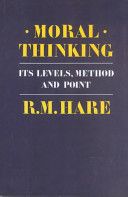
This book is a continuation of the enterprise which the author began with ‘The Language of Morals and Freedom and Reason’. In the present work, R.M. Hare has fashioned, out of the logical and linguistic theses of his earlier books, a full-scale but readily intelligible account of moral argument.
“G. E. Moore’s fame as a philosopher rests on his ethics of love and beauty, which inspired Bloomsbury, and on his ‘common sense’ certainties, which challenge abstract philosophical theory. Behind these themes lie his critical engagement with Kant’s idealist philosophy, which is published here for the first time. These early writings, Moore’s fellowship dissertations of 1897 and 1898, show how he initiated his influential break with idealism. In 1897 his main target was Kant’s ethics; but by 1898 it was the whole Kantian project of transcendental philosophy that he rejected, and the theory which he developed to replace it gave rise to the new project of philosophy as logical analysis. This edition includes comments by Moore’s examiners, Henry Sidgwick, Edward Caird and Bernard Bosanquet, and in a substantial introduction the editors explore the crucial importance of the dissertations to the history of twentieth-century philosophical thought”–
Mark Graber looks at the history of abortion law in action to argue that the only defensible, constitutional approach to the issue is to afford all women equal choice – abortion should remain legal or bans should be strictly enforced. Steering away from metaphysical critiques of privacy, Graber compares the philosophical, constitutional, and democratic merits of the two systems of abortion regulation witnessed in the twentieth-century: pre-Roe v. Wade statutory prohibitions on abortion and Roe’s ban on significant state interference with the market for safe abortion services. He demonstrates that before Roe, pro-life measures were selectively and erratically administered, thereby subverting our constitutional commitment to equal justice. Claiming that these measures would be similarly administered if reinstated, the author seeks to increase support for keeping abortion legal, even among those who have reservations about its morality. Abortion should remain legal, Graber argues, because statutory bans on abortion have a history of being enforced in ways that intentionally discriminate against poor persons and persons of color. In the years before Roe, the same law enforcement officials who routinely ignored and sometimes assisted those physicians seeking to terminate pregnancies for their private patients too often prevented competent abortionists from offering the same services to the general public. This double standard violated the fundamental human and constitutional right of equal justice under law, a right that has powerful roots in the American political tradition and that remains a major concern of the equal protection clause of the Fourteenth Amendment.
Despite the pharmaceutical industry’s notable contributions to human progress, including the development of miracle drugs for treating cancer, AIDS, and heart disease, there is a growing tension between the industry and the public. Debates are raging over how the industry can and should be expected to act. In this volume leading figures in industry, government, NGOs, the medical community, and academia discuss and propose solutions to the ethical dilemmas of drug industry behavior. They examine such aspects as the role of intellectual property rights and patent protection, the moral and economic requisites of research and clinical trials, drug pricing, marketing and advertising. . Michael Santoro is Associate Professor with tenure in the Business Environment Department at Rutgers Business School, where he teaches courses on business ethics, public policy, labor and human rights, law, ethical issues in the pharmaceutical industry and China business strategy. As a Research Associate at Harvard Business School, he wrote or co-authored nearly thirty case studies and teaching notes on ethical and legal topics such as global protection of intellectual property, insider trading, the Federal Sentencing Guidelines and Fair Credit Reporting Act. Thomas Gorrie is Corporate Vice President, Government Affairs & Policy, at Johnson & Johnson, with responsiblity for all federal, state and international government affairs and policy. He completed post-doctoral studies at the Swiss Federal Institute of Technology in Zurich, following the receipt of his doctorate at Princeton University. Gorrie has over 30 years of worldwide health care experience and has worked with various Johnson & Johnson companies in research and development, marketing and sales, business development, strategic planning, general management, international, venture capital, and health policy.
ما از اخلاق چه انتظاری داریم؟ این سوال شاید تاحدودی برای عموم مردم و یا متخصصان این رشته قابل پاسخ باشد؛ اینکه خوب بودن را به ما بیاموزد و در تنظیم روابط فردی م...

جشن کتاب تهران به ایستگاه سی و یکم رسیده است. حال و احوال نشر کتاب خوب نیست و باید فرهنگدوستان را به خرید و هدیه دادن کتاب ترغیب نمود. خانه اخلاقپژوهان جوان ب...

بنیاد کتابهای اخلاق اسلامی عمدتا پالایش جان از آلودگیها و آراستن آن به زیباییها است. اندیشه محوری این قبیل کتابها آن است که انسان فعلی آنی نیست که باید باشد...

-
0 Comments