Notice: تابع WP_Block_Type_Registry::register به طورنادرست فراخوانی شد. نامهای نوع بلوک نباید حروف بزرگ داشته باشند. لطفاً برای اطلاعات بیشتر، اشکال زدایی در وردپرس را مشاهده کنید. (این پیام در نگارش 5.0.0 افزوده شده است.) in /home/ethicsho/public_html/wp-includes/functions.php on line 5313
Warning: Use of undefined constant TDC_PATH_LEGACY - assumed 'TDC_PATH_LEGACY' (this will throw an Error in a future version of PHP) in /home/ethicsho/public_html/wp-content/plugins/td-composer/td-composer.php on line 109
Warning: Use of undefined constant TDSP_THEME_PATH - assumed 'TDSP_THEME_PATH' (this will throw an Error in a future version of PHP) in /home/ethicsho/public_html/wp-content/plugins/td-composer/td-composer.php on line 113 بایگانیهای BJ1475 .H45 2006 - خانه اخلاق پژوهان جوان Notice: Trying to access array offset on value of type bool in /home/ethicsho/public_html/wp-content/plugins/wp-ulike/inc/general-functions.php on line 807
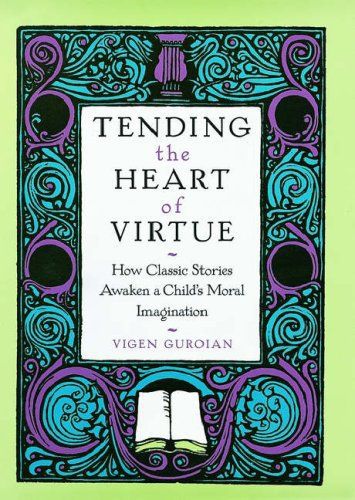
As the popularity of William Bennett’s Book of Virtues attests, parents are turning more and more to children’s literature to help instill values in their kids. Now, in this elegantly written and passionate book, Vigen Guroian provides the perfect complement to books such as Bennett’s, offering parents and teachers a much-needed roadmap to some of our finest children’s stories. Guroian illuminates the complex ways in which fairy tales and fantasies educate the moral imagination from earliest childhood. Examining a wide range of stories–from “Pinocchio” and “The Little Mermaid” to “Charlotte’s Web,” “The Velveteen Rabbit,” “The Wind in the Willows,” and the “Chronicles of Narnia”–he argues that these tales capture the meaning of morality through vivid depictions of the struggle between good and evil, in which characters must make difficult choices between right and wrong, or heroes and villains contest the very fate of imaginary worlds. Character and the virtues are depicted compellingly in these stories; the virtues glimmer as if in a looking glass, and wickedness and deception are unmasked of their pretensions to goodness and truth. We are made to face the unvarnished truth about ourselves, and what kind of people we want to be. Throughout, Guroian highlights the classical moral virtues such as courage, goodness, and honesty, especially as they are understood in traditional Christianity. At the same time, he so persuasively evokes the enduring charm of these familiar works that many readers will be inspired to reread their favorites and explore those they may have missed.
This new resource is written for physical therapy and occupational therapy administrators, curriculum coordinators and educators. Stemming from the summer 2003 “Dreamcatchers” Conference, Creighton University’s “Leadership in Ethics Education,” the authors have assembled a veritable “who’s who” of PT and OT academics to share their insights regarding contemporary issues in health and rehabilitation ethics. Going beyond the “nuts and bolts” of teaching ethics, the text aims to present pedagogical strategies that will ultimately change the face of how educators think, and consequently, how they teach ethics to the next generation of health professionals.
Kant’s Groundwork of the Metaphysics of Morals is one of the most important works in modern moral philosophy. This collection of essays, the first of its kind in nearly thirty years, introduces the reader to some of the most important studies of the book from the past two decades, arranged in the form of a collective commentary.
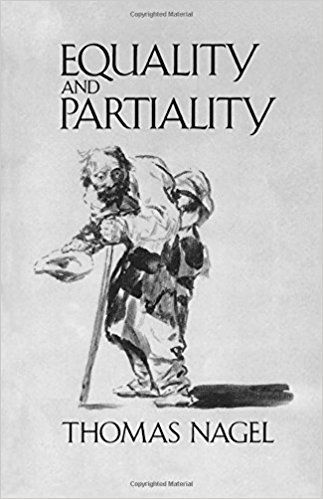
Derived from Thomas Nagel’s Locke Lectures, Equality and Partiality proposes a nonutopian account of political legitimacy, based on the need to accommodate both personal and impersonal motives in any credible moral theory, and therefore in any political theory with a moral foundation. Within each individual, Nagel believes, there is a division between two standpoints, the personal and the impersonal. Without the impersonal standpoint, there would be no morality, only the clash, compromise, and occasional convergence of individual perspectives. It is because a human being does not occupy only his own point of view that each of us is susceptible to the claims of others through private and public morality. Political systems, to be legitimate, must achieve an integration of these two standpoints within the individual. These ideas are applied to specific problems such as social and economic inequality, toleration, international justice, and the public support of culture. Nagel points to the problem of balancing equality and partiality as the most important issue with which political theorists are now faced.
ما از اخلاق چه انتظاری داریم؟ این سوال شاید تاحدودی برای عموم مردم و یا متخصصان این رشته قابل پاسخ باشد؛ اینکه خوب بودن را به ما بیاموزد و در تنظیم روابط فردی م...

جشن کتاب تهران به ایستگاه سی و یکم رسیده است. حال و احوال نشر کتاب خوب نیست و باید فرهنگدوستان را به خرید و هدیه دادن کتاب ترغیب نمود. خانه اخلاقپژوهان جوان ب...

بنیاد کتابهای اخلاق اسلامی عمدتا پالایش جان از آلودگیها و آراستن آن به زیباییها است. اندیشه محوری این قبیل کتابها آن است که انسان فعلی آنی نیست که باید باشد...

-
0 Comments