Notice: تابع WP_Block_Type_Registry::register به طورنادرست فراخوانی شد. نامهای نوع بلوک نباید حروف بزرگ داشته باشند. لطفاً برای اطلاعات بیشتر، اشکال زدایی در وردپرس را مشاهده کنید. (این پیام در نگارش 5.0.0 افزوده شده است.) in /home/ethicsho/public_html/wp-includes/functions.php on line 5313
Warning: Use of undefined constant TDC_PATH_LEGACY - assumed 'TDC_PATH_LEGACY' (this will throw an Error in a future version of PHP) in /home/ethicsho/public_html/wp-content/plugins/td-composer/td-composer.php on line 109
Warning: Use of undefined constant TDSP_THEME_PATH - assumed 'TDSP_THEME_PATH' (this will throw an Error in a future version of PHP) in /home/ethicsho/public_html/wp-content/plugins/td-composer/td-composer.php on line 113 بایگانیهای BJ1471.5 .G74 1995 - خانه اخلاق پژوهان جوان Notice: Trying to access array offset on value of type bool in /home/ethicsho/public_html/wp-content/plugins/wp-ulike/inc/general-functions.php on line 807
This book is a major work in the history of ethics, and provides the first study of early modern British philosophy in several decades. Professor Darwall discerns two distinct traditions feeding into the moral philosophy of the seventeenth and eighteenth centuries. On the one hand, there is the empirical, naturalist tradition, comprising Hobbes, Locke, Cumberland, Hutcheson, and Hume, which argues that obligation is the practical force that empirical discoveries acquire in the process of deliberation. On the other hand, there is the group including Cudworth, Shaftesbury, Butler, and in some moments Locke, which views obligation as inconceivable without autonomy and which seeks to develop a theory of the will as self-determining.
Thomas Nagel’s Mortal Questions explores some fundamental issues concerning the meaning, nature and value of human life. Questions about our attitudes to death, sexual behaviour, social inequality, war and political power are shown to lead to more obviously philosophical problems about personal identity, consciousness, freedom, and value. This original and illuminating book aims at a form of understanding that is both theoretical and personal in its lively engagement with what are literally issues of life and death.
David Hume’s revolutionary philosophies took an empirical approach to the study of human nature. Controversial in his time, he was accused of everything from atheism to moral corruption; he has since been recognized as one of the foremost thinkers of the late modern period, influencing the thought of nearly every philosopher in his wake. The arguments presented in his writings have survived three centuries of varying perspectives, and have had a lasting influence on the philosophy of mind, knowledge, religion, action, morality, economics, and politics.”A Companion to Hume” is the ideal resource for the study of one of history’s most remarkable thinkers, demonstrating the range of Hume’s work and illuminating the ongoing debates that they have generated. Comprised of twenty-nine expertly commissioned essays addressing such expansive topics of knowledge, passion, morality, religion, economics, and politics, this collection examines the paradoxes of Hume’s thought and his legacy, covering the methods, themes, and consequences of his contributions to philosophy.
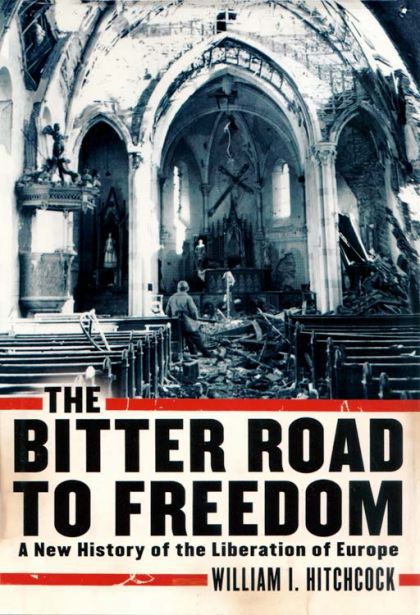
American s are justly proud of th e role their country played in liberating Europe from Nazi tyranny. For many years, we have celebrated the courage of Allied soldiers, sailors, and aircrews who defeated Hitler’s regime and restored freedom to the continent. But in recounting the heroism of the “greatest generation,” Americans often overlook the wartime experiences of European people themselves — the very people for whom the war was fought.In this brilliant new book, historian William I. Hitchcock surveys the European continent from D-Day to the final battles of the war and the first few months of the peace. Based on exhaustive research in five nations and dozens of archives, Hitchcock’s groundbreaking account shows that the liberation of Europe was both a military triumph and a human tragedy of epic proportions.Hitchcock gives voice to those who were on the receiving end of liberation, moving them from the edge of the story to the center. From France to Poland to Germany, from concentration-camp internees to refugees, farmers to shopkeepers, husbands and wives to children, the experience of liberation was often difficult and dangerous. Their gratitude was mixed with guilt or resentment. Their lives were difficult to reassemble.This strikingly original, multinational history of liberation brings to light the interactions of soldiers and civilians, the experiences of noncombatants, and the trauma of displacement and loss amid unprecedented destruction. This book recounts a surprising story, often jarring and uncomfortable, and one that has never been told with such richness and depth.Ranging from the ferocious battle for Normandy (where as many French civilians died on D-Day as U.S. servicemen) to the plains of Poland, from the icy ravines of the Ardennes to the shattered cities and refugee camps of occupied Germany, The Bitter Road to Freedom depicts in searing detail the shocking price that Europeans paid for their freedom.Today, with American soldiers once again waging wars of liberation in faraway lands, this book serves as a timely and sharp reminder of the terrible human toll exacted by even the most righteous of wars.
ما از اخلاق چه انتظاری داریم؟ این سوال شاید تاحدودی برای عموم مردم و یا متخصصان این رشته قابل پاسخ باشد؛ اینکه خوب بودن را به ما بیاموزد و در تنظیم روابط فردی م...

جشن کتاب تهران به ایستگاه سی و یکم رسیده است. حال و احوال نشر کتاب خوب نیست و باید فرهنگدوستان را به خرید و هدیه دادن کتاب ترغیب نمود. خانه اخلاقپژوهان جوان ب...

بنیاد کتابهای اخلاق اسلامی عمدتا پالایش جان از آلودگیها و آراستن آن به زیباییها است. اندیشه محوری این قبیل کتابها آن است که انسان فعلی آنی نیست که باید باشد...

-
0 Comments