Notice: تابع WP_Block_Type_Registry::register به طورنادرست فراخوانی شد. نامهای نوع بلوک نباید حروف بزرگ داشته باشند. لطفاً برای اطلاعات بیشتر، اشکال زدایی در وردپرس را مشاهده کنید. (این پیام در نگارش 5.0.0 افزوده شده است.) in /home/ethicsho/public_html/wp-includes/functions.php on line 5313
Warning: Use of undefined constant TDC_PATH_LEGACY - assumed 'TDC_PATH_LEGACY' (this will throw an Error in a future version of PHP) in /home/ethicsho/public_html/wp-content/plugins/td-composer/td-composer.php on line 109
Warning: Use of undefined constant TDSP_THEME_PATH - assumed 'TDSP_THEME_PATH' (this will throw an Error in a future version of PHP) in /home/ethicsho/public_html/wp-content/plugins/td-composer/td-composer.php on line 113 بایگانیهای BJ1461 .L78 - خانه اخلاق پژوهان جوان Notice: Trying to access array offset on value of type bool in /home/ethicsho/public_html/wp-content/plugins/wp-ulike/inc/general-functions.php on line 807
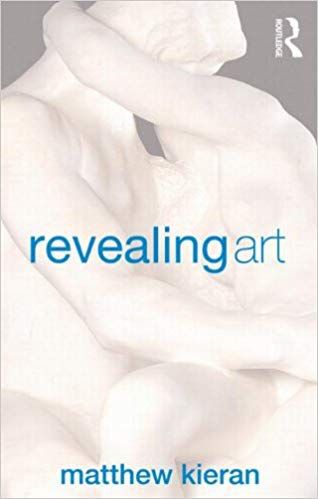
Why does art matter to us, and what makes good art? Why is the role of imagination so important in art? Illustrated with carefully chosen color and black-and-white plates of examples from Michelangelo to Matisse and Poussin to Jackson Pollock,Revealing Artexplores some of the most important questions we can ask about art. Matthew Kieran clearly but forcefully asks how art inspires us and disgusts us and whether artistic judgment is simply a matter of taste, and if art can be immoral or obscene, should it be censored? He brings such abstract issues to life with fascinating discussions of individual paintings, photographs and sculptures, such as Michelangelo’sPieta,Andres Serrano’sPiss Christand Jackson Pollock’sSummertime. He also suggests some answers to problems that any one in an art gallery or museum is likely to ask themselves: what is a beautiful work of art, and can art really reveal something true about our own nature? Revealing Artis ideal foranyone interested in debates about art today, or who has simply stood in front of a painting and felt baffled.
Governments now face complex dilemmas regarding the promotion of human rights, the punishment of crimes against humanity, and the scope for humanitarian intervention. This book offers a theoretical and empirical analysis of these issues. The contributors explore the meaning of “ethical foreign policy” and look at potential or actual instruments of ethical foreign policy-making. Finally, three case studies examine more closely developments in the foreign policies of the U.S., the U.K., and the European Union, to assess the difficulties raised by the incorporation of ethical considerations into foreign policy.
Is medical ethics in times of armed conflict identical to medical ethics in times of peace, as the World Medical Association declares? In Bioethics and Armed Conflict, the first comprehensive study of medical ethics in conventional, unconventional, and low-intensity war, Michael Gross examines the dilemmas that arise when bioethical principles clash with military necessity—when physicians try to save lives during an endeavor dedicated to taking them—and describes both the conflicts and congruencies of military and medical ethics.Gross describes how the principles of contemporary just war, unlike those of medical ethics, often go beyond the welfare of the individual to consider the collective interests of combatants and noncombatants and the general interests of the state. Military necessity plays havoc with such patients’ rights as the right to life, the right to medical care, informed consent, confidentiality, and the right to die. The principles of triage in battle conditions dictate not need-based treatment but the distribution of resources that will return the greatest number of soldiers to active duty. And unconventional warfare, including current “wars” on terrorism, challenges the traditional concept of medical neutrality as physicians who have sworn to “do no harm” are called upon to lend their expertise to “interrogational” torture or to the development of biological or chemical weapons. Difficult dilemmas inevitably arise during armed conflict, and medicine, Gross concludes, is not above the fray. Medical ethics in time of war cannot be identical to medical ethics in peacetime.
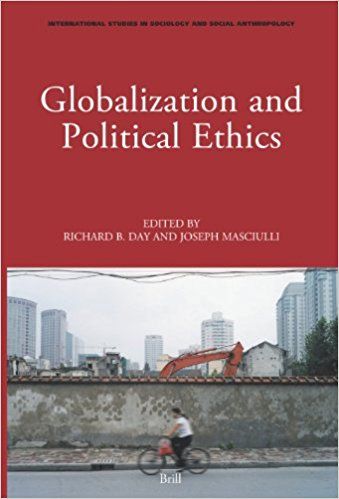
Rational exercise of our responsibility requires us to relate the globalization process to the ends and purposes that properly befit human life and human community. Economic ‘ends’ are merely the ‘means’ to ends of a higher order, which can only be specified in terms of moral duty and ethical purpose. The contributors to this book explore political-ethical issues of globalization, including terrorism, institutional change and distribution in the world economy, the role of the United Nations and international financial institutions, the regimes of international trade and technology transfer, the effects of regionalism in the European Union and the Association of Southeast Asian Nations, the failure of Russia, human rights enforcement in Africa, and the prospects for global governance. This book was originally published as Volume 4 no. 3-4 (2005) of Brill’s journal “Perspectives on Global Development and Technology,”
ما از اخلاق چه انتظاری داریم؟ این سوال شاید تاحدودی برای عموم مردم و یا متخصصان این رشته قابل پاسخ باشد؛ اینکه خوب بودن را به ما بیاموزد و در تنظیم روابط فردی م...

جشن کتاب تهران به ایستگاه سی و یکم رسیده است. حال و احوال نشر کتاب خوب نیست و باید فرهنگدوستان را به خرید و هدیه دادن کتاب ترغیب نمود. خانه اخلاقپژوهان جوان ب...

بنیاد کتابهای اخلاق اسلامی عمدتا پالایش جان از آلودگیها و آراستن آن به زیباییها است. اندیشه محوری این قبیل کتابها آن است که انسان فعلی آنی نیست که باید باشد...

-
0 Comments