Notice: تابع WP_Block_Type_Registry::register به طورنادرست فراخوانی شد. نامهای نوع بلوک نباید حروف بزرگ داشته باشند. لطفاً برای اطلاعات بیشتر، اشکال زدایی در وردپرس را مشاهده کنید. (این پیام در نگارش 5.0.0 افزوده شده است.) in /home/ethicsho/public_html/wp-includes/functions.php on line 5313
Warning: Use of undefined constant TDC_PATH_LEGACY - assumed 'TDC_PATH_LEGACY' (this will throw an Error in a future version of PHP) in /home/ethicsho/public_html/wp-content/plugins/td-composer/td-composer.php on line 109
Warning: Use of undefined constant TDSP_THEME_PATH - assumed 'TDSP_THEME_PATH' (this will throw an Error in a future version of PHP) in /home/ethicsho/public_html/wp-content/plugins/td-composer/td-composer.php on line 113 بایگانیهای BJ1461 .H26 1998 - خانه اخلاق پژوهان جوان Notice: Trying to access array offset on value of type bool in /home/ethicsho/public_html/wp-content/plugins/wp-ulike/inc/general-functions.php on line 807
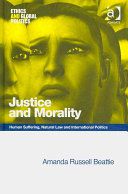
An important contribution in the study of international political thought. Bridging the contending theories of natural law and international relations, this book proposes a ‘relational ontology’ as the basis for rethinking our approach to international politics. Beattie challenges both the conventional interpretation of natural law as necessarily and intractably theological, and the dominant conception of international relations as structurally distinct from the ends of human good, in order to recover the centrality of other-directed agency to the promotion of human development. The book contains a number of challenging and controversial ideas which should provoke constructive debate within international relations theory, political theory, and philosophical ethics.
This is a revised edition of Walker’s well-known book in feminist ethics first published in 1997. Walker’s book proposes a view of morality and an approach to ethical theory which uses the critical insights of feminism and race theory to rethink the epistemological and moral position of the ethical theorist, and how moral theory is inescapably shaped by culture and history. The main gist of her book is that morality is embodied in “practices of responsibility” that express our identities, values, and connections to others in socially patterned ways. Thus ethical theory needs to be empirically informed and politically critical to avoid reiterating forms of socially entrenched bias. Responsible ethical theory should reveal and question the moral significance of social differences. The book engages with, and challenges, the work of contemporary analytic philosophers in ethics.
Disagreements about the morality of markets, and about self-interested behavior within markets, run deep. They arise from perspectives within economics and political philosophy that appear to have nothing in common. In this book, Daniel Finn provides a framework for understanding these conflicting points of view. Recounting the arguments for and against markets and self-interest, he argues that every economy must address four fundamental problems: allocation, distribution, scale, and the quality of relations. In addition, every perspective on the morality of markets addresses explicitly or implicitly the economic, political, and cultural contexts of markets, or what Finn terms ‘the moral ecology of markets’. His book enables a dialogue among the various participants in the debate over justice in markets. In this process, Finn engages with major figures in political philosophy, including John Rawls, Robert Nozick, and Michael Walzer, as well as in economics, notably Milton Friedman, Friedrich Hayek, and James Buchannan.
ما از اخلاق چه انتظاری داریم؟ این سوال شاید تاحدودی برای عموم مردم و یا متخصصان این رشته قابل پاسخ باشد؛ اینکه خوب بودن را به ما بیاموزد و در تنظیم روابط فردی م...

جشن کتاب تهران به ایستگاه سی و یکم رسیده است. حال و احوال نشر کتاب خوب نیست و باید فرهنگدوستان را به خرید و هدیه دادن کتاب ترغیب نمود. خانه اخلاقپژوهان جوان ب...

بنیاد کتابهای اخلاق اسلامی عمدتا پالایش جان از آلودگیها و آراستن آن به زیباییها است. اندیشه محوری این قبیل کتابها آن است که انسان فعلی آنی نیست که باید باشد...

-
0 Comments