Notice: تابع WP_Block_Type_Registry::register به طورنادرست فراخوانی شد. نامهای نوع بلوک نباید حروف بزرگ داشته باشند. لطفاً برای اطلاعات بیشتر، اشکال زدایی در وردپرس را مشاهده کنید. (این پیام در نگارش 5.0.0 افزوده شده است.) in /home/ethicsho/public_html/wp-includes/functions.php on line 5313
Warning: Use of undefined constant TDC_PATH_LEGACY - assumed 'TDC_PATH_LEGACY' (this will throw an Error in a future version of PHP) in /home/ethicsho/public_html/wp-content/plugins/td-composer/td-composer.php on line 109
Warning: Use of undefined constant TDSP_THEME_PATH - assumed 'TDSP_THEME_PATH' (this will throw an Error in a future version of PHP) in /home/ethicsho/public_html/wp-content/plugins/td-composer/td-composer.php on line 113 بایگانیهای BJ1461 .F485 2012 - خانه اخلاق پژوهان جوان Notice: Trying to access array offset on value of type bool in /home/ethicsho/public_html/wp-content/plugins/wp-ulike/inc/general-functions.php on line 807
This book argues that moral theology has yet to embrace the recommendations of the Second Vatican Council concerning the ways in which moral theology is to be renewed. There is little or no consensus between theologians regarding the nature, content and uniqueness of Christian morality. After highlighting the strengths and weaknesses of the so-called autonomy and faith ethic schools of thought, Mealey argues that there is little dividing them and that, in some instances, both schools are simply defending one aspect of a hermeneutical dialectic.In an attempt to move away from the divisions between proponents of the faith-ethic and autonomy positions, Mealey enlists the help of the hermeneutical theory of Paul Ricoeur, arguing that the debate on the uniqueness of Christian morality can be mediated if scholars look to the possibilities opened up by Ricoeur’s hermeneutics of interpretation. Mealey also argues that the uniqueness of Christian morality is more adequately explained in terms of a specific identity (self) that is constantly subject to change and revision in light of many, often conflicting, moral sources. She advocates a move away from attempts to explain the uniqueness of Christian morality in terms of one specific, unchanging context, motivation, norm or divine command or value. By embracing the possibilities opened up by Ricoeurian hermeneutics, Mealey explains how concepts such as revelation, tradition, orthodoxy and moral conscience may be understood in a hermeneutical way without being deemed sectarian or unorthodox.
In 1784, the German newspaper Berlinische Monatsschrift asked its audience to reply to the question “What is Enlightenment?” Immanuel Kant took the opportunity to investigate the purported truths and assumptions of his age. Two hundred years later, Michel Foucault wrote a response to Kant’s initial essay, positioning Kant as the initiator of the discourse and critique of modernity. The Politics of Truth takes this initial encounter between Foucault and Kant, as a framework for its selection of unpublished essays and transcripts of lectures Foucault gave in America and France between 1978 and 1984, the year of his death. Ranging from reflections on the Enlightenment and revolution to a consideration of the Frankfurt School, this collection offers insight into the topics preoccupying Foucault as he worked on what would be his last body of published work, the three-volume History of Sexuality. It also offers what is in a sense the most “American” moment of Foucault’s thinking, for it was in America that he realized the necessity of tying his own thought to that of the Frankfurt School.
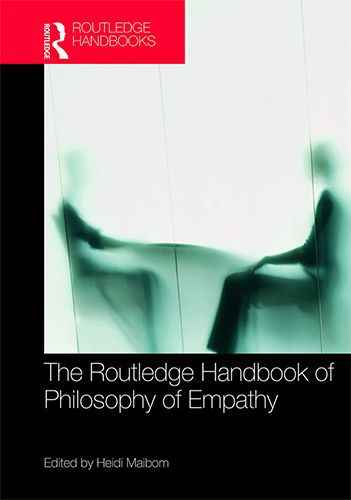
Empathy plays a central role in the history and contemporary study of ethics, interpersonal understanding, and the emotions, yet until now has been relatively underexplored. The Routledge Handbook of Philosophy of Empathy is an outstanding reference source to the key topics, problems and debates in this exciting field and is the first collection of its kind. Comprising over thirty chapters by a team of international contributors, the Handbook is divided into six parts: * Core issues *History of empathy *Empathy and understanding *Empathy and morals *Empathy in art and aesthetics *Empathy and individual differences. Within these sections central topics and problems are examined, including: empathy and imagination; neuroscience; David Hume and Adam Smith; understanding; evolution; altruism; moral responsibility; art, aesthetics, and literature; gender; empathy and related disciplines such as anthropology. Essential reading for students and researchers in philosophy, particularly ethics and philosophy of mind and psychology, the Handbook will also be of interest to those in related fields, such as anthropology and social psychology.
ما از اخلاق چه انتظاری داریم؟ این سوال شاید تاحدودی برای عموم مردم و یا متخصصان این رشته قابل پاسخ باشد؛ اینکه خوب بودن را به ما بیاموزد و در تنظیم روابط فردی م...

جشن کتاب تهران به ایستگاه سی و یکم رسیده است. حال و احوال نشر کتاب خوب نیست و باید فرهنگدوستان را به خرید و هدیه دادن کتاب ترغیب نمود. خانه اخلاقپژوهان جوان ب...

بنیاد کتابهای اخلاق اسلامی عمدتا پالایش جان از آلودگیها و آراستن آن به زیباییها است. اندیشه محوری این قبیل کتابها آن است که انسان فعلی آنی نیست که باید باشد...

-
0 Comments