Notice: تابع WP_Block_Type_Registry::register به طورنادرست فراخوانی شد. نامهای نوع بلوک نباید حروف بزرگ داشته باشند. لطفاً برای اطلاعات بیشتر، اشکال زدایی در وردپرس را مشاهده کنید. (این پیام در نگارش 5.0.0 افزوده شده است.) in /home/ethicsho/public_html/wp-includes/functions.php on line 5313
Warning: Use of undefined constant TDC_PATH_LEGACY - assumed 'TDC_PATH_LEGACY' (this will throw an Error in a future version of PHP) in /home/ethicsho/public_html/wp-content/plugins/td-composer/td-composer.php on line 109
Warning: Use of undefined constant TDSP_THEME_PATH - assumed 'TDSP_THEME_PATH' (this will throw an Error in a future version of PHP) in /home/ethicsho/public_html/wp-content/plugins/td-composer/td-composer.php on line 113 بایگانیهای BJ1451 .M6483 2011 - خانه اخلاق پژوهان جوان Notice: Trying to access array offset on value of type bool in /home/ethicsho/public_html/wp-content/plugins/wp-ulike/inc/general-functions.php on line 807
This scarce antiquarian book is included in our special Legacy Reprint Series. In the interest of creating a more extensive selection of rare historical book reprints, we have chosen to reproduce this title even though it may possibly have occasional imperfections such as missing and blurred pages, missing text, poor pictures, markings, dark backgrounds and other reproduction issues beyond our control. Because this work is culturally important, we have made it available as a part of our commitment to protecting, preserving and promoting the world’s literature.
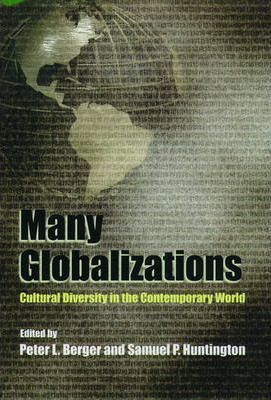
Much discussed but poorly understood, globalization is praised as the answer to all the world’s problems and blamed for everything from pollution to poverty. In Many Globalizations, Peter Berger and Samuel Huntington bring together an array of scholars from around the world, who paint a far subtler and more richly shaded portrait, showing both the power and the unexpected consequences of this great force. Here the stereotypes of globalization as American imperialism on the one hand or economic cure-all on the other fall apart under the close scrutiny of these leading scholars. Looking at globalization in countries such as Chile, Japan, South Africa, Germany, Turkey, Hungary, Taiwan, India, and the United States, they show that an emerging global culture does indeed exist, one that is heavily American in origin and content, but that is far from a centrally directed force like classic imperialism–nor is it simply a “metastasized Disneyland.” They examine the currents that carry this culture, from a worldwide class of young professionals to nongovernmental organizations, and define globalization’s many variations (ranging from Buddhist influences to Islamic modernism) as well as subglobalizations that bind regions together. The authors also draw attention to globalizing forces that have escaped media scrutiny, such as the role of evangelical Protestantism (which both adapts to local languages and cultures, and introduce distinctively American values) and Opus Dei, the conservative Catholic movement that originated in Spain. Analytical, incisive and stimulating, Many Globalizations offers rare insight into perhaps the central issue of modern times, one that is changing the West as much as the developing world.
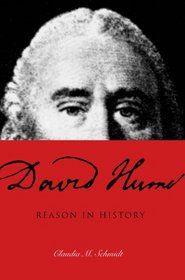
In his seminal Philosophy of David Hume (1941), Norman Kemp Smith called for a study of Hume “in all his manifold activities: as philosopher, as political theorist, as economist, as historian, and as man of letters, ” indicating that “Hume’s philosophy, as the attitude of mind which found for itself these various forms of expression, will then have been presented, adequately and in due perspective, for the first time.” Claudia Schmidt seeks to address this long-standing need in Hume scholarship. Against the charges that Hume holds no consistent philosophical position, offers no constructive account of rationality, and sees no positive relation between philosophy and other areas of inquiry, Schmidt argues for the overall coherence of Hume’s thought as a study of “reason in history.” She develops this interpretation by tracing Hume’s constructive account of human cognition and its historical dimension as a unifying theme across the full range of his writings. Hume, she shows, provides a positive account of the ways in which our concepts, beliefs, emotions, and standards of judgment in different areas of inquiry are shaped by experience, both in the personal history of the individual and in the life of a community. This book is valuable at many levels: for students, as an introduction to Hume’s writings and issues in their interpretation; for Hume specialists, as a unified and intriguing interpretation of his thought; for philosophers generally, as a synthesis of recent developments in Hume scholarship; and for scholars in other disciplines, as a guide to Hume’s contributions to their own fields.
ما از اخلاق چه انتظاری داریم؟ این سوال شاید تاحدودی برای عموم مردم و یا متخصصان این رشته قابل پاسخ باشد؛ اینکه خوب بودن را به ما بیاموزد و در تنظیم روابط فردی م...

جشن کتاب تهران به ایستگاه سی و یکم رسیده است. حال و احوال نشر کتاب خوب نیست و باید فرهنگدوستان را به خرید و هدیه دادن کتاب ترغیب نمود. خانه اخلاقپژوهان جوان ب...

بنیاد کتابهای اخلاق اسلامی عمدتا پالایش جان از آلودگیها و آراستن آن به زیباییها است. اندیشه محوری این قبیل کتابها آن است که انسان فعلی آنی نیست که باید باشد...

-
0 Comments