Notice: تابع WP_Block_Type_Registry::register به طورنادرست فراخوانی شد. نامهای نوع بلوک نباید حروف بزرگ داشته باشند. لطفاً برای اطلاعات بیشتر، اشکال زدایی در وردپرس را مشاهده کنید. (این پیام در نگارش 5.0.0 افزوده شده است.) in /home/ethicsho/public_html/wp-includes/functions.php on line 5313
Warning: Use of undefined constant TDC_PATH_LEGACY - assumed 'TDC_PATH_LEGACY' (this will throw an Error in a future version of PHP) in /home/ethicsho/public_html/wp-content/plugins/td-composer/td-composer.php on line 109
Warning: Use of undefined constant TDSP_THEME_PATH - assumed 'TDSP_THEME_PATH' (this will throw an Error in a future version of PHP) in /home/ethicsho/public_html/wp-content/plugins/td-composer/td-composer.php on line 113 بایگانیهای BJ1251 .M66 2011 - خانه اخلاق پژوهان جوان Notice: Trying to access array offset on value of type bool in /home/ethicsho/public_html/wp-content/plugins/wp-ulike/inc/general-functions.php on line 807
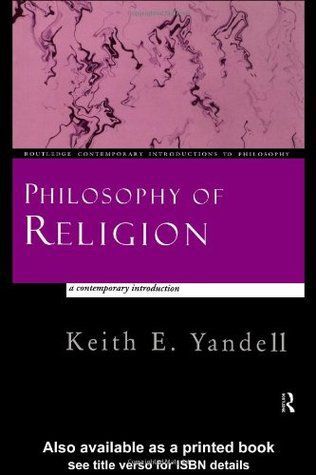
Philosophy of Religion provides an account of the central issues and viewpoints in the philosophy of religion but also shows how such issues can be rationally assessed and in what ways competing views can be rationally assessed. It includes major philosophical figures in religious traditions as well as discussions by important contemporary philosophers. Keith Yandell deals lucidly and constructively with representative views from Judaism, Christianity, Islam, Hinduism, Buddhism, and Jainism. This book will appeal to students of both philosophy and religion as well as to the general reader interested in the subject.Unique features of Philosophy of Religion: * key reading and new reading in the subject area* questions at the ends of chapters* a glossary of philosophical terms* annotated further reading
At the core of Kant’s ethics lies the claim that if there is a supreme principle of morality, then it is not a utilitarian or Aristotelian perfectionist principle, or even a principle resembling the Ten Commandments. The only viable candidate for the supreme principle of morality is the Categorial Imperative. This book is the most detailed investigation of thie claim. It constructs a new, criterial reading of Kant’s derivation of one version of the Categorial Imperative: The Formula of Universal Law. This reading shows this derivation to be far more compelling than contemporary philosophers tend to believe. It also reveals a novel approach to deriving another version of the Categorial Imperative, the Formula of Humanity, a principle widely considered to be the most attractive Kantian candidate for the supreme principle of morality. Lucidly written and dealing with a foundational topic in the history of ethics, this book will be important not just for Kant scholars but for a broad swath of students of philosophy. Samuel Kerstein is Associate Professor of Philosophy at the University of Maryland, College Park
K. Danner Clouser is one of the most important figures in establishing and shaping the fields of medical ethics, bioethics, and the philosophy of education in the second half of the twentieth century. Clouser challenged many established approaches to moral theory and offered innovative strategies for integrating the humanities into professional education, especially that of physicians and nurses. The contributions published in Building Bioethics: Conversations with Clouser and Friends on Medical Ethics are unique both in their devotion to a critical review of his contributions, and in bringing together internationally known figures in bioethics, medical ethics, and philosophy of medicine to comment upon Clouser’s work. These leaders of the field include Tom Beauchamp, Daniel Callahan, James Childress, Nancy Dubler, H. Tristram Engelhardt, Al Jonsen, Loretta Kopelman, Larry McCullough, John Moskop, and Robert Veatch. This book merits special attention from those interested in bioethics, philosophy of medicine, medical ethics, philosophy, medical education, religious studies, and nursing education.
Kant’s third Critique, the Critique of Judgement,is regarded as one of the most influential books in the history of aesthetics. This book is designed as a reader’s guide for students trying to work their way, step-by-step, through Kant’s text. This is one of the first comprehensive introductions to Kant’s Critique of Judgement.Not only does it include a detailed and full account of Kant’s aesthetic theory, it incorporates an extended discussion of the “Critique of Teleological Judgement,” a treatment of Kant’s overall conception of the text, and its place in the wider critical system. Designed as an introduction, suitable for undergraduate and first-year postgraduate use, the book assumes no prior knowledge of Kant or any other particular philosophy. The choice of text is the Pluhar translation in the Hackett edition. However, throughout, Douglas Burnham provides alternative translations of key terms and phrases, making the book independent of any particular translation of Kant’s text.
In this significant contribution to Hegel scholarship, Robert Williams develops the most comprehensive account to date of Hegel’s concept of recognition (Anerkennung). Fichte introduced the concept of recognition as a presupposition of both Rousseau’s social contract and Kant’s ethics. Williams shows that Hegel appropriated the concept of recognition as the general pattern of his concept of ethical life, breaking with natural law theory yet incorporating the Aristotelian view that rights and virtues are possible only within a certain kind of community.He explores Hegel’s intersubjective concept of spirit (Geist) as the product of affirmative mutual recognition and his conception of recognition as the right to have rights. Examining Hegel’s Jena manuscripts, his Philosophy of Right, the Phenomenology of Spirit, and other works, Williams shows how the concept of recognition shapes and illumines Hegel’s understandings of crime and punishment, morality, the family, the state, sovereignty, international relations, and war. A concluding chapter on the reception and reworking of the concept of recognition by contemporary thinkers including Derrida, Levinas, and Deleuze demonstrates Hegel’s continuing centrality to the philosophical concerns of our age.
ما از اخلاق چه انتظاری داریم؟ این سوال شاید تاحدودی برای عموم مردم و یا متخصصان این رشته قابل پاسخ باشد؛ اینکه خوب بودن را به ما بیاموزد و در تنظیم روابط فردی م...

جشن کتاب تهران به ایستگاه سی و یکم رسیده است. حال و احوال نشر کتاب خوب نیست و باید فرهنگدوستان را به خرید و هدیه دادن کتاب ترغیب نمود. خانه اخلاقپژوهان جوان ب...

بنیاد کتابهای اخلاق اسلامی عمدتا پالایش جان از آلودگیها و آراستن آن به زیباییها است. اندیشه محوری این قبیل کتابها آن است که انسان فعلی آنی نیست که باید باشد...

-
0 Comments