Notice: تابع WP_Block_Type_Registry::register به طورنادرست فراخوانی شد. نامهای نوع بلوک نباید حروف بزرگ داشته باشند. لطفاً برای اطلاعات بیشتر، اشکال زدایی در وردپرس را مشاهده کنید. (این پیام در نگارش 5.0.0 افزوده شده است.) in /home/ethicsho/public_html/wp-includes/functions.php on line 5313
Warning: Use of undefined constant TDC_PATH_LEGACY - assumed 'TDC_PATH_LEGACY' (this will throw an Error in a future version of PHP) in /home/ethicsho/public_html/wp-content/plugins/td-composer/td-composer.php on line 109
Warning: Use of undefined constant TDSP_THEME_PATH - assumed 'TDSP_THEME_PATH' (this will throw an Error in a future version of PHP) in /home/ethicsho/public_html/wp-content/plugins/td-composer/td-composer.php on line 113 بایگانیهای BJ1031 .T47 2006 - خانه اخلاق پژوهان جوان Notice: Trying to access array offset on value of type bool in /home/ethicsho/public_html/wp-content/plugins/wp-ulike/inc/general-functions.php on line 807
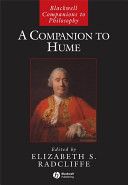
David Hume’s revolutionary philosophies took an empirical approach to the study of human nature. Controversial in his time, he was accused of everything from atheism to moral corruption; he has since been recognized as one of the foremost thinkers of the late modern period, influencing the thought of nearly every philosopher in his wake. The arguments presented in his writings have survived three centuries of varying perspectives, and have had a lasting influence on the philosophy of mind, knowledge, religion, action, morality, economics, and politics.”A Companion to Hume” is the ideal resource for the study of one of history’s most remarkable thinkers, demonstrating the range of Hume’s work and illuminating the ongoing debates that they have generated. Comprised of twenty-nine expertly commissioned essays addressing such expansive topics of knowledge, passion, morality, religion, economics, and politics, this collection examines the paradoxes of Hume’s thought and his legacy, covering the methods, themes, and consequences of his contributions to philosophy.
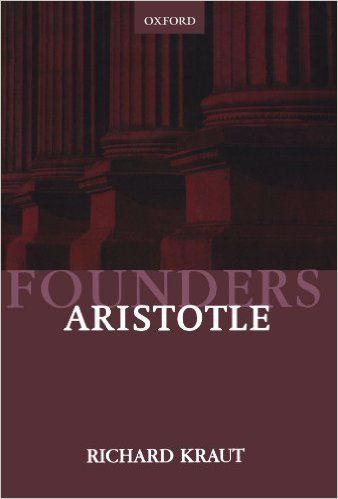
This book offers a systematic overview of Aristotle’s conception of well-being, virtue and justice in the Nicomachean Ethics, and then explores the major themes of Politics: civic-mindedness, slavery, family, property, the common good, class conflict, the limited wisdom of the multitude, and the radically egalitarian institutions of the ideal society.
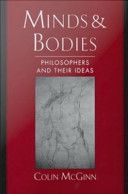
In Minds and Bodies, Colin McGinn offers proof that contemporary philosophy, in the hands of a consummate reviewer, can be the occasion not only sharp critical assessment, but also writing so clear and engaging that readers with no special background in the subject but simply a taste for challenging idea can feel welcome. Gathering nearly forty review-essays printed mainly in nonspecialist publications over the past twenty years, McGinn, a distinguished philosopher and teacher, measures the best of recent Anglo-American philosophical writing, considering books by Thomas Nagel, John Searle, and Daniel Dennett, among others, and navigating with energy and wit important new work in ethics, philosophy of language, and philosophy of mind. Opening with a section on philosophical lives–books written on or by Ludwig Wittgenstein, Bertrand Russell, Charles Peirce, and A. J. Ayer– McGinn moves to the question of consciousness, offering readers two dozen crisp and provocative pieces on work seeking to define and illuminate the mind, its activity, and its relation to the world of physical objects. Closing with a section on ethics, McGinn brings a bold and sharply original perspective to argument in such controversial areas as animal rights and feminist moral theory. A bracing collection of masterfully written reviews that together form an accessible picture of philosophy as it is practiced today, Minds and Bodies makes permanent the critical reflections of a gifted philosopher and writer and is destined to find an appreciative audience both within the philosophical community and in the wider culture of intellectually curious readers.
Book Summary of Classical Moralists: Selections Illustrating EthicsThis book is a history of ethics based upon selections from the original sources and upon translations of the authors themselves. The evolution of ethical thought is thereby revealed from Socrates to Martineau. Contents: Socrates; Plato; Aristotle; Zeno; Epicurus; Titus Lucretius Carus; Epictetus; Marcus Aurelius Antoninus; Plotinus; Saint Augustine; Peter Abelard; Thomas Abelard; Thomas Aquinas; Hugo Grotius; Thomas Hobbes; Ralph Cudworth; Henry More; Richard Cumberland; Baruch De Spinoza; Nicolas Malebranche; John Locke; Samuel Clarke; Third Earl of Shaftesbury; Benard De Mandeville; William Wollaston; Joseph Butler; Francis Hutcheson; David Hartley; David Hume; Adam Smith; Claude Adrien Helvetius; William Paley; Jeremy Bentham; Richard Price; Thomas Reid; Immanuel Kant; Johann Gottlieb; Georg Wilhelm Friedrich; Arthur Schopnehauer; Friedrich Eduard Beneke; John Stuart Mill; Herbert Spencer; Henry Sidgwick..
ما از اخلاق چه انتظاری داریم؟ این سوال شاید تاحدودی برای عموم مردم و یا متخصصان این رشته قابل پاسخ باشد؛ اینکه خوب بودن را به ما بیاموزد و در تنظیم روابط فردی م...

جشن کتاب تهران به ایستگاه سی و یکم رسیده است. حال و احوال نشر کتاب خوب نیست و باید فرهنگدوستان را به خرید و هدیه دادن کتاب ترغیب نمود. خانه اخلاقپژوهان جوان ب...

بنیاد کتابهای اخلاق اسلامی عمدتا پالایش جان از آلودگیها و آراستن آن به زیباییها است. اندیشه محوری این قبیل کتابها آن است که انسان فعلی آنی نیست که باید باشد...

-
0 Comments