Notice: تابع WP_Block_Type_Registry::register به طورنادرست فراخوانی شد. نامهای نوع بلوک نباید حروف بزرگ داشته باشند. لطفاً برای اطلاعات بیشتر، اشکال زدایی در وردپرس را مشاهده کنید. (این پیام در نگارش 5.0.0 افزوده شده است.) in /home/ethicsho/public_html/wp-includes/functions.php on line 5313
Warning: Use of undefined constant TDC_PATH_LEGACY - assumed 'TDC_PATH_LEGACY' (this will throw an Error in a future version of PHP) in /home/ethicsho/public_html/wp-content/plugins/td-composer/td-composer.php on line 109
Warning: Use of undefined constant TDSP_THEME_PATH - assumed 'TDSP_THEME_PATH' (this will throw an Error in a future version of PHP) in /home/ethicsho/public_html/wp-content/plugins/td-composer/td-composer.php on line 113 بایگانیهای BJ1031 .F57 1992 - خانه اخلاق پژوهان جوان Notice: Trying to access array offset on value of type bool in /home/ethicsho/public_html/wp-content/plugins/wp-ulike/inc/general-functions.php on line 807
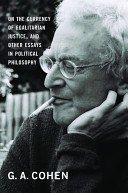
G. A. Cohen was one of the most gifted, influential, and progressive voices in contemporary political philosophy. At the time of his death in 2009, he had plans to bring together a number of his most significant papers. This is the first of three volumes to realize those plans. Drawing on three decades of work, it contains previously uncollected articles that have shaped many of the central debates in political philosophy, as well as papers published here for the first time. In these pieces, Cohen asks what egalitarians have most reason to equalize, he considers the relationship between freedom and property, and he reflects upon ideal theory and political practice.Included here are classic essays such as “Equality of What?” and “Capitalism, Freedom, and the Proletariat,” along with more recent contributions such as “Fairness and Legitimacy in Justice,” “Freedom and Money,” and the previously unpublished “How to Do Political Philosophy.” On ample display throughout are the clarity, rigor, conviction, and wit for which Cohen was renowned. Together, these essays demonstrate how his work provides a powerful account of liberty and equality to the left of Ronald Dworkin, John Rawls, Amartya Sen, and Isaiah Berlin.
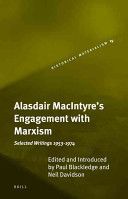
Although Alasdair MacIntyre is best known today as the author of “After Virtue” (1981), he was, in the 1950s and 1960s, one of the most erudite members of Britain’s Marxist Left: being a militant within, first, the Communist Party, then the New Left, and finally the heterodox Trotskyist International Socialism group. This selection of his essays on Marxism from that period aims to show that his youthful thought profoundly informed his mature ethics, and that, in the wake of the collapse of the state-capitalist regimes in Russia and Eastern Europe, the powerful and optimistic revolutionary Marxist ethics of liberation he articulated in that period is arguably as salient to anti-capitalist activists today as it was half a century ago.
This book is an interpretation of Alexis de Tocqueville’s moral and political thought and sheds new light on his ideas concerning the relationship between liberalism and democracy. This study is highly innovative as it portrays Tocqueville’s liberalism as a synthesis between modern thought and Christian apology. Tocqueville remains an important figure sociology, politics, and philosophy, and the themes addressed in his work — religion, the press, racism, the role of government — are highly relevant today.This book discusses a wide range of Tocqueville’s writings, including many that are unavailable or not readily available in English thus providing a new, much-needed understanding of the centrality of religion in Tocqueville’s work.
ما از اخلاق چه انتظاری داریم؟ این سوال شاید تاحدودی برای عموم مردم و یا متخصصان این رشته قابل پاسخ باشد؛ اینکه خوب بودن را به ما بیاموزد و در تنظیم روابط فردی م...

جشن کتاب تهران به ایستگاه سی و یکم رسیده است. حال و احوال نشر کتاب خوب نیست و باید فرهنگدوستان را به خرید و هدیه دادن کتاب ترغیب نمود. خانه اخلاقپژوهان جوان ب...

بنیاد کتابهای اخلاق اسلامی عمدتا پالایش جان از آلودگیها و آراستن آن به زیباییها است. اندیشه محوری این قبیل کتابها آن است که انسان فعلی آنی نیست که باید باشد...

-
0 Comments