Notice: تابع WP_Block_Type_Registry::register به طورنادرست فراخوانی شد. نامهای نوع بلوک نباید حروف بزرگ داشته باشند. لطفاً برای اطلاعات بیشتر، اشکال زدایی در وردپرس را مشاهده کنید. (این پیام در نگارش 5.0.0 افزوده شده است.) in /home/ethicsho/public_html/wp-includes/functions.php on line 5313
Warning: Use of undefined constant TDC_PATH_LEGACY - assumed 'TDC_PATH_LEGACY' (this will throw an Error in a future version of PHP) in /home/ethicsho/public_html/wp-content/plugins/td-composer/td-composer.php on line 109
Warning: Use of undefined constant TDSP_THEME_PATH - assumed 'TDSP_THEME_PATH' (this will throw an Error in a future version of PHP) in /home/ethicsho/public_html/wp-content/plugins/td-composer/td-composer.php on line 113 بایگانیهای BJ1012 .R29 2012 - خانه اخلاق پژوهان جوان Notice: Trying to access array offset on value of type bool in /home/ethicsho/public_html/wp-content/plugins/wp-ulike/inc/general-functions.php on line 807
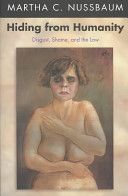
Should laws about sex and pornography be based on social conventions about what is disgusting? Should felons be required to display bumper stickers or wear T-shirts that announce their crimes? This powerful and elegantly written book, by one of America’s most influential philosophers, presents a critique of the role that shame and disgust play in our individual and social lives and, in particular, in the law. Martha Nussbaum argues that we should be wary of these emotions because they are associated in troubling ways with a desire to hide from our humanity, embodying an unrealistic and sometimes pathological wish to be invulnerable. Nussbaum argues that the thought-content of disgust embodies “magical ideas of contamination, and impossible aspirations to purity that are just not in line with human life as we know it.” She argues that disgust should never be the basis for criminalizing an act, or play either the aggravating or the mitigating role in criminal law it currently does. She writes that we should be similarly suspicious of what she calls “primitive shame,” a shame “at the very fact of human imperfection,” and she is harshly critical of the role that such shame plays in certain punishments. Drawing on an extraordinarily rich variety of philosophical, psychological, and historical references–from Aristotle and Freud to Nazi ideas about purity–and on legal examples as diverse as the trials of Oscar Wilde and the Martha Stewart insider trading case, this is a major work of legal and moral philosophy.
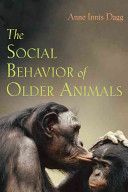
How do young and old social animals view each other? Are aged animals perceived by others as weaker? Or wiser? What is the relationship between age and power among social animals?Taking a cue from Frans de Waal’s seminal work examining the lives of chimpanzees, Anne Innis Dagg in this pioneering study probes the lives of older mammals and birds. Synthesizing the available scientific research and anecdotal evidence, she explores how aging affects the lives and behavior of animals ranging from elk to elephants and gulls to gorillas, examining such topics as longevity; how others in a group view senior members in regard to leadership, wisdom, and teaching; mating success; interactions with mates and offspring; how aging affects dominance; changes in aggressive behavior and adaptability; and death and dying.At once instructive and compelling, this theme-spanning book reveals the complex nature of maturity in scores of social species and shows that animal behavior often displays the same diversity we find in ourselves.
“Now available in English for the first time, Norwegian philosopher Arne Naess’s meditation on the art of living is an exhortation to preserve the environment and biodiversity. Like a “universal great-grandfather,” he offers a bright and bold perspective on the power of feelings to move us away from ecological and cultural degradation toward sound, future-focused policy and action.”.
In this brief book one of the most distinguished living American philosophers takes up the question of whether ethical judgments can properly be considered objective–a question that has vexed philosophers over the past century. Looking at the efforts of philosophers from the Enlightenment through the twentieth century, Putnam traces the ways in which ethical problems arise in a historical context. Hilary Putnam’s central concern is ontology–indeed, the very idea of ontology as the division of philosophy concerned with what (ultimately) exists. Reviewing what he deems the disastrous consequences of ontology’s influence on analytic philosophy–in particular, the contortions it imposes upon debates about the objective of ethical judgments–Putnam proposes abandoning the very idea of ontology. He argues persuasively that the attempt to provide an ontological explanation of the objectivity of either mathematics or ethics is, in fact, an attempt to provide justifications that are extraneous to mathematics and ethics–and is thus deeply misguided.
ما از اخلاق چه انتظاری داریم؟ این سوال شاید تاحدودی برای عموم مردم و یا متخصصان این رشته قابل پاسخ باشد؛ اینکه خوب بودن را به ما بیاموزد و در تنظیم روابط فردی م...

جشن کتاب تهران به ایستگاه سی و یکم رسیده است. حال و احوال نشر کتاب خوب نیست و باید فرهنگدوستان را به خرید و هدیه دادن کتاب ترغیب نمود. خانه اخلاقپژوهان جوان ب...

بنیاد کتابهای اخلاق اسلامی عمدتا پالایش جان از آلودگیها و آراستن آن به زیباییها است. اندیشه محوری این قبیل کتابها آن است که انسان فعلی آنی نیست که باید باشد...

-
0 Comments