Notice: تابع WP_Block_Type_Registry::register به طورنادرست فراخوانی شد. نامهای نوع بلوک نباید حروف بزرگ داشته باشند. لطفاً برای اطلاعات بیشتر، اشکال زدایی در وردپرس را مشاهده کنید. (این پیام در نگارش 5.0.0 افزوده شده است.) in /home/ethicsho/public_html/wp-includes/functions.php on line 5313
Warning: Use of undefined constant TDC_PATH_LEGACY - assumed 'TDC_PATH_LEGACY' (this will throw an Error in a future version of PHP) in /home/ethicsho/public_html/wp-content/plugins/td-composer/td-composer.php on line 109
Warning: Use of undefined constant TDSP_THEME_PATH - assumed 'TDSP_THEME_PATH' (this will throw an Error in a future version of PHP) in /home/ethicsho/public_html/wp-content/plugins/td-composer/td-composer.php on line 113 بایگانیهای BJ1012 .C4535 2008 - خانه اخلاق پژوهان جوان Notice: Trying to access array offset on value of type bool in /home/ethicsho/public_html/wp-content/plugins/wp-ulike/inc/general-functions.php on line 807
Ambitious legal thinkers have become mesmerized by moral philosophy, believing that great figures in the philosophical tradition hold the keys to understanding and improving law and justice and even to resolving the most contentious issues of constitutional law. They are wrong, contends Richard Posner in this book. Posner characterizes the current preoccupation with moral and constitutional theory as the latest form of legal mystification – an evasion of the real need of American law, which is for a greater understanding of the social, economic, and political facts out of which great legal controversies arise. In pursuit of that understanding, Posner advocates a rebuilding of the law on the pragmatic basis of open-minded and systematic empirical inquiry and the rejection of cant and nostalgia – the true professionalism foreseen by Holmes a century ago.
All students and advocates of human rights will be interested in this concerted exploration of the human rights moral obligations that fall, not directly on states, but on private and public organisations. Such an approach to human rights opens up the possibility of holding corporations and bureaucracies to account for human rights violations even when they have acted in accordance with the law. This interdisciplinary and international project brings together eminent philosophers, lawyers, social scientists and practitioners to articulate theoretically and develop in practical contexts the moral implications of human rights for non-state actors. What emerges from the book as a whole is a distinctive contemporary vision of the emerging moral impact of human rights and its significance for organisational behaviour and performance.
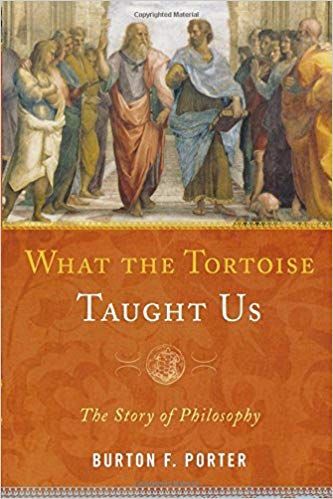
What the Tortoise Taught Us offers a lively, concise journey through Western philosophy that explores the lives of major philosophers, their ideas, and how their thinking continues to influence our lives today. Using a chronological approach, Burton F. Porter shows how various philosophers address life’s big questions. By putting each philosopher and their ideas into historical context, he helps us understand how certain ideas developed based on the thinking of the time and how those ideas have influenced our modern perspectives.Using familiar language and interesting anecdotes, Porter provides an extremely readable and lively history that takes themes that characterize each age to reflect on the greater human experience. The book includes the philosophies and lives of the ancient philosophers such as Socrates, Plato, and Aristotle and continues through time into the Middle Ages with St. Thomas Aquinas to the Renaissance and beyond. Porter explores the metaphysics of Descartes and Hobbes, the epistemology of Hume and Berkeley, and the ethics of Kant and Mill among others. Finally he concludes with contemporary issues, including racism, abortion, and modern feminism.
Hendrik Lorenz presents a comprehensive study of Plato’s and Aristotle’s conceptions of non-rational desire. They see this as something that humans share with animals, and which aims primarily at the pleasures of food, drink, and sex. Lorenz explores the cognitive resources that both philosophers make available for the explanation of such desires, and what they take rationality to add to the motivational structure of human beings. In doing so, he exposes a remarkable degree of continuity between Plato’s and Aristotle’s thought in this area. He also sheds fresh light, not only on both philosophers’ theories of motivation, but also on how they conceive of the mind, both in itself and in relation to the body.
ما از اخلاق چه انتظاری داریم؟ این سوال شاید تاحدودی برای عموم مردم و یا متخصصان این رشته قابل پاسخ باشد؛ اینکه خوب بودن را به ما بیاموزد و در تنظیم روابط فردی م...

جشن کتاب تهران به ایستگاه سی و یکم رسیده است. حال و احوال نشر کتاب خوب نیست و باید فرهنگدوستان را به خرید و هدیه دادن کتاب ترغیب نمود. خانه اخلاقپژوهان جوان ب...

بنیاد کتابهای اخلاق اسلامی عمدتا پالایش جان از آلودگیها و آراستن آن به زیباییها است. اندیشه محوری این قبیل کتابها آن است که انسان فعلی آنی نیست که باید باشد...

-
0 Comments