Notice: تابع WP_Block_Type_Registry::register به طورنادرست فراخوانی شد. نامهای نوع بلوک نباید حروف بزرگ داشته باشند. لطفاً برای اطلاعات بیشتر، اشکال زدایی در وردپرس را مشاهده کنید. (این پیام در نگارش 5.0.0 افزوده شده است.) in /home/ethicsho/public_html/wp-includes/functions.php on line 5313
Warning: Use of undefined constant TDC_PATH_LEGACY - assumed 'TDC_PATH_LEGACY' (this will throw an Error in a future version of PHP) in /home/ethicsho/public_html/wp-content/plugins/td-composer/td-composer.php on line 109
Warning: Use of undefined constant TDSP_THEME_PATH - assumed 'TDSP_THEME_PATH' (this will throw an Error in a future version of PHP) in /home/ethicsho/public_html/wp-content/plugins/td-composer/td-composer.php on line 113 بایگانیهای BJ1012 .B536 2000 - خانه اخلاق پژوهان جوان Notice: Trying to access array offset on value of type bool in /home/ethicsho/public_html/wp-content/plugins/wp-ulike/inc/general-functions.php on line 807
Philosophers have long suspected that thought and discourse about what we ought to do differ in some fundamental way from statements about what is. But the difference has proved elusive, in part because the two kinds of statement look alike. Focusing on judgments that express decisions–judgments about what is to be done, all things considered–Allan Gibbard offers a compelling argument for reconsidering, and reconfiguring, the distinctions between normative and descriptive discourse–between questions of “ought” and “is.” Gibbard considers how our actions, and our realities, emerge from the thousands of questions and decisions we form for ourselves. The result is a book that investigates the very nature of the questions we ask ourselves when we ask how we should live, and that clarifies the concept of “ought” by understanding the patterns of normative concepts involved in beliefs and decisions. An original and elegant work of metaethics, this book brings a new clarity and rigor to the discussion of these tangled issues, and will significantly alter the long-standing debate over “objectivity” and “factuality” in ethics. Table of Contents: I. Preliminaries 1. Introduction: A Possibility Proof 2. Intuitionism as Template: Emending Moore II. The Thing to Do 3. Planning and Ruling Out: The “Frege-Geach” Problem 4. Judgment, Disagreement, Negation 5. Supervenience and Constitution 6. Character and Import III. Normative Concepts 7. Ordinary Oughts: Meaning and Motivation 8. Normative Kinds: Patterns of Engagement 9. What to Say about the Thing to Do: The Expressivistic Turn and What it Gains Us IV. Knowing What to Do 10. Explaining with Plans 11. Knowing What to Do 12. Ideal Response Concepts 13. Deep Vindication and Practical Confidence 14. Impasse and Dissent References Index This is a remarkable book. It takes up a central and much-discussed problem – the difference between normative thought (and discourse) and “descriptive” thought (and discourse). It develops a compelling response to that problem with ramifications for much else in philosophy. But perhaps most importantly, it brings new clarity and rigor to the discussion of these tangled issues. It will take some time to come to terms with the details of Gibbard’s discussion. It is absolutely clear, however, that the book will reconfigure the debate over objectivity and “factuality” in ethics.–Gideon Rosen, Professor of Philosophy, Princeton UniversityGibbard,/author> writes elegantly, and the theory he develops is innovative, philosophically sophisticated, and challenging. Gibbard defends his theory vigorously and with admirable intellectual honesty.–David Copp, Professor of Philosophy, Bowling Green State University
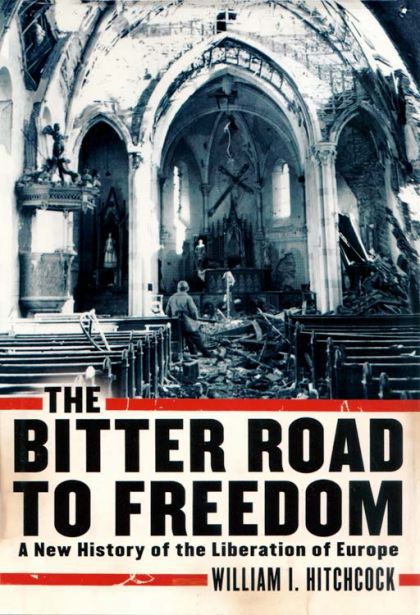
American s are justly proud of th e role their country played in liberating Europe from Nazi tyranny. For many years, we have celebrated the courage of Allied soldiers, sailors, and aircrews who defeated Hitler’s regime and restored freedom to the continent. But in recounting the heroism of the “greatest generation,” Americans often overlook the wartime experiences of European people themselves — the very people for whom the war was fought.In this brilliant new book, historian William I. Hitchcock surveys the European continent from D-Day to the final battles of the war and the first few months of the peace. Based on exhaustive research in five nations and dozens of archives, Hitchcock’s groundbreaking account shows that the liberation of Europe was both a military triumph and a human tragedy of epic proportions.Hitchcock gives voice to those who were on the receiving end of liberation, moving them from the edge of the story to the center. From France to Poland to Germany, from concentration-camp internees to refugees, farmers to shopkeepers, husbands and wives to children, the experience of liberation was often difficult and dangerous. Their gratitude was mixed with guilt or resentment. Their lives were difficult to reassemble.This strikingly original, multinational history of liberation brings to light the interactions of soldiers and civilians, the experiences of noncombatants, and the trauma of displacement and loss amid unprecedented destruction. This book recounts a surprising story, often jarring and uncomfortable, and one that has never been told with such richness and depth.Ranging from the ferocious battle for Normandy (where as many French civilians died on D-Day as U.S. servicemen) to the plains of Poland, from the icy ravines of the Ardennes to the shattered cities and refugee camps of occupied Germany, The Bitter Road to Freedom depicts in searing detail the shocking price that Europeans paid for their freedom.Today, with American soldiers once again waging wars of liberation in faraway lands, this book serves as a timely and sharp reminder of the terrible human toll exacted by even the most righteous of wars.
This book is an accessible introduction that will enable students, through practical exercises, to develop their own skills in reasoning about ethical issues, including analyzing and evaluating arguments used in discussions of ethical issues; analyzing and evaluating ethical concepts, such as utilitarianism; making decisions on ethical issues; and learning how to approach ethical issues in a fair minded way. The issues discussed in the book include abortion, euthanasia, capital punishment, animal rights, the environment and war. The book will be essential reading for students studying all aspects of ethics.
Recently, the first “zoopharming” product has reached market approval: it is a recombinant human protein for medical use that is produced in the milk of transgenic goats. In addition, other transgenic animals, including faster-growing salmon and „environmentally friendly” pigs with reduced levels of phosphate in their faeces are awaiting regulatory approval. These are only some examples of upcoming applications of genetic engineering in farm animals. Other potential applications include traditional breeding goals such as higher milk or meat yields, leaner meat, and disease resistance. While genetic engineering in livestock opens a huge range of possibilities, it also brings about concerns of safety and justification: does genetic engineering affect animal welfare? Is it safe and morally acceptable to apply genetic engineering to farm animals for the various purposes that are envisaged? It is against this background that the Europaische Akademie GmbH and the Berlin-Brandenburgische Akademie der Wissenschaften addressed the topic of transgenic farm animals in an interdisciplinary symposium in 2007. In these proceedings the following topics are covered: an analysis of the state of the art of the technology and its applications, an introduction to the specific application zoopharming (including its historical industrial development and the market for biopharmaceuticals), an assessment of ethical aspects, and considerations regarding the investigation of animal welfare implications of livestock biotechnology. The proceedings address science, industry, politics and the general public interested in the chances and risks of this upcoming field of biotechnology.
ما از اخلاق چه انتظاری داریم؟ این سوال شاید تاحدودی برای عموم مردم و یا متخصصان این رشته قابل پاسخ باشد؛ اینکه خوب بودن را به ما بیاموزد و در تنظیم روابط فردی م...

جشن کتاب تهران به ایستگاه سی و یکم رسیده است. حال و احوال نشر کتاب خوب نیست و باید فرهنگدوستان را به خرید و هدیه دادن کتاب ترغیب نمود. خانه اخلاقپژوهان جوان ب...

بنیاد کتابهای اخلاق اسلامی عمدتا پالایش جان از آلودگیها و آراستن آن به زیباییها است. اندیشه محوری این قبیل کتابها آن است که انسان فعلی آنی نیست که باید باشد...

-
0 Comments