Notice: تابع WP_Block_Type_Registry::register به طورنادرست فراخوانی شد. نامهای نوع بلوک نباید حروف بزرگ داشته باشند. لطفاً برای اطلاعات بیشتر، اشکال زدایی در وردپرس را مشاهده کنید. (این پیام در نگارش 5.0.0 افزوده شده است.) in /home/ethicsho/public_html/wp-includes/functions.php on line 5313
Warning: Use of undefined constant TDC_PATH_LEGACY - assumed 'TDC_PATH_LEGACY' (this will throw an Error in a future version of PHP) in /home/ethicsho/public_html/wp-content/plugins/td-composer/td-composer.php on line 109
Warning: Use of undefined constant TDSP_THEME_PATH - assumed 'TDSP_THEME_PATH' (this will throw an Error in a future version of PHP) in /home/ethicsho/public_html/wp-content/plugins/td-composer/td-composer.php on line 113 بایگانیهای BF637.F67 .E86 1998 - خانه اخلاق پژوهان جوان Notice: Trying to access array offset on value of type bool in /home/ethicsho/public_html/wp-content/plugins/wp-ulike/inc/general-functions.php on line 807
The recent revival of natural law theory in modern moral philosophy has been an exciting and important development. This book brings together an international group of moral philosophers who make original contributions to the project of developing natural law ethics as a comprehensive treatment of modern ethical theory and practice.
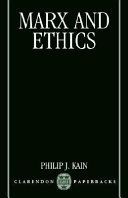
This book traces the development of Marx’s ethics as they underwent various shifts and changes during different periods of his thought. In his early writings, his ethics were based on a concept of essence much like Aristotle’s, which Marx tried to link to a principle of universalization similar to Kant’s “categorical imperative.” In the period 1845-46, Marx abandoned this view, holding morality to be incompatible with his historical materialism. In the later work he was less of a determinist. Though he no longer wished to reject morality, he did want to transcend a morality of burdensome obligation and constraint in order to realize a community built upon spontaneous bonds of solidarity.
Is there a “right to die”? Should the elderly or the terminally ill be allowed to take their own lives? Should the families of comatose patients be permitted to decide when to “pull the plug”? Do “living wills” have full legal standing? Questions like these have been brought to the forefront of national attention by cases such as the battle in Terri Schiavo’s family. Offering excerpts from court decisions, plenty of full-color photographs, and other essential resources, “The Right to Die” examines this incendiary issue by illuminating the arguments from both sides.
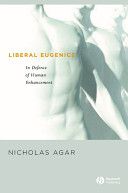
In this provocative book, philosopher Nicholas Agar defends the idea that parents should be allowed to enhance their children’s characteristics.Gets away from fears of a Huxleyan ‘Brave New World’ or a return to the fascist eugenics of the past. Written from a philosophically and scientifically informed point of view. Considers real contemporary cases of parents choosing what kind of child to have. Uses ‘moral images’ as a way to get readers with no background in philosophy to think about moral dilemmas. Provides an authoritative account of the science involved, making the book suitable for readers with no knowledge of genetics. Creates a moral framework for assessing all new technologies.
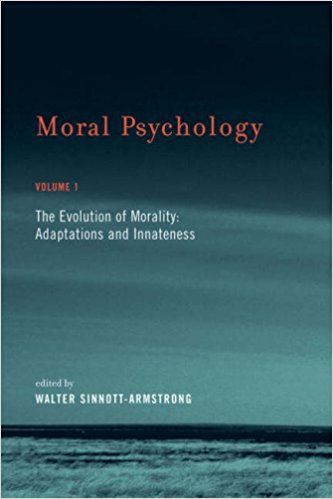
For much of the twentieth century, philosophy and science went their separate ways. In moral philosophy, fear of the so-called naturalistic fallacy kept moral philosophers from incorporating developments in biology and psychology. Since the 1990s, however, many philosophers have drawn on recent advances in cognitive psychology, brain science, and evolutionary psychology to inform their work. This collaborative trend is especially strong in moral philosophy, and these three volumes bring together some of the most innovative work by both philosophers and psychologists in this emerging interdisciplinary field.Contributors to Volume 1:William Casebeer (Air Force Academy), Leda Cosmides (University of California, Santa Barbara), Oliver Curry (London School of Economics), Michael Dietrich (Dartmouth College), Catherine Driscoll (North Carolina State University), Susan Dwyer (University of Maryland, Baltimore County), Owen Flanagan (Duke University), Gilbert Harman (Princeton University), Richard Joyce (Australian National University Research School of Social Science), Debra Lieberman (University of Hawaii), Ron Mallon (University of Utah), John Mikhail (Georgetown Law School), Geoffrey Miller (University of New Mexico), Jesse Prinz (University of North Carolina at Chapel Hill), Peter Railton (University of Michigan), Michael Ruse (Florida State University) Hagop Sarkissian (Duke University), Walter Sinnott-Armstrong (Dartmouth College), Chandra Sekhar Sripada (University of Michigan) Valerie Tiberius (University of Minnesota), John Tooby (University of California, Santa Barbara), Peter Tse (Dartmouth College) Kathleen Wallace (Hofstra University), Arthur Wolf (Stanford University), David Wong (Duke University).
ما از اخلاق چه انتظاری داریم؟ این سوال شاید تاحدودی برای عموم مردم و یا متخصصان این رشته قابل پاسخ باشد؛ اینکه خوب بودن را به ما بیاموزد و در تنظیم روابط فردی م...

جشن کتاب تهران به ایستگاه سی و یکم رسیده است. حال و احوال نشر کتاب خوب نیست و باید فرهنگدوستان را به خرید و هدیه دادن کتاب ترغیب نمود. خانه اخلاقپژوهان جوان ب...

بنیاد کتابهای اخلاق اسلامی عمدتا پالایش جان از آلودگیها و آراستن آن به زیباییها است. اندیشه محوری این قبیل کتابها آن است که انسان فعلی آنی نیست که باید باشد...

-
0 Comments