Notice: تابع WP_Block_Type_Registry::register به طورنادرست فراخوانی شد. نامهای نوع بلوک نباید حروف بزرگ داشته باشند. لطفاً برای اطلاعات بیشتر، اشکال زدایی در وردپرس را مشاهده کنید. (این پیام در نگارش 5.0.0 افزوده شده است.) in /home/ethicsho/public_html/wp-includes/functions.php on line 5313
Warning: Use of undefined constant TDC_PATH_LEGACY - assumed 'TDC_PATH_LEGACY' (this will throw an Error in a future version of PHP) in /home/ethicsho/public_html/wp-content/plugins/td-composer/td-composer.php on line 109
Warning: Use of undefined constant TDSP_THEME_PATH - assumed 'TDSP_THEME_PATH' (this will throw an Error in a future version of PHP) in /home/ethicsho/public_html/wp-content/plugins/td-composer/td-composer.php on line 113 بایگانیهای BF561 .H35 2008 - خانه اخلاق پژوهان جوان Notice: Trying to access array offset on value of type bool in /home/ethicsho/public_html/wp-content/plugins/wp-ulike/inc/general-functions.php on line 807
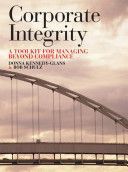
How good companies build a culture of integrity In the present environment of corporate governance brought on by high-profile executive scandals, this book makes a strong case for encouraging business leaders to manage beyond compliance. Achieving the bare minimum of compliance isn’t enough. By making corporate responsibility and integrity a strategic priority-rather than something companies are forced to comply with-companies can realize tangible financial returns and benefits. This book provides practical advice, effective tools, and time-tested best practices for approaching corporate integrity strategically and managing an integrity program on a day-to-day basis. There is a growing realization that compliance with the rules is only a minimum standard of performance, and an increasing demand from stakeholders at every level — shareholders, employees, customers along the entire supply chain, consumers, advocacy groups, and the local community at large — for more transparency and accountability from corporations. But most businesses have little experience and few tools to deal with the urgent demand to increase corporate responsibility. Corporate Integrity provides practical tools and proven processes to manage complex integrity dilemmas and support implementation: Explains how to create a culture of integrity in your organization and how to motivate the appropriate corporate behaviors. Coverage includes: How to assess and measure integrity; how to align corporate integrity commitments and actions; how to design and implement dependable and strategic corporate accountability systems and processes; how to develop corporate integrity standards and report on them, and much more. Includes a wealth of practical business tools and best practices that readers can apply to improve the level of corporate integrity in their own company. Features three detailed case studies and numerous other examples that illustrate corporate integrity dilemmas and solutions in action. Shows how managing corporate responsibility strategically and proactively can go beyond a mere public relations exercise to foster a corporate “win” in the court of popular opinion and in the marketplace. Bridges the gaps between corporations, governments, employees, interest groups, and consumers. Offers tools and solutions that apply to both for-profit corporations and non-profit organizations.
The ethical assessment of new technologies raises two principal concerns: the need to develop effective policies and legislation, and the reconsideration of the ethical frameworks in which these policies and laws are developed. The importance of rapid, accurate examinations of tensions between Philosophy and Law and the relationship between philosophical principles and empirical data has never been greater.The Concise Encyclopedia of Ethics of New Technologies includes 23 articles previously published in the highly-acclaimed Encyclopedia of Applied Ethics, nine updated articles, and five new articles, commissioned especially for this volume. Over half of the previously published articles include updated facts and bibliographic citations. Authors of genetics articles have updated their works to include the most recent developments and publications. New articles include: “Cloning,” “Geneticization,” “Health Technology Assessment,” “Intrinsic and Instrumental Value,” and “Novel Foods.”Articles fall into these subject categories:* Medical Ethics* Scientific Ethics* Theories of Ethics* Environmental Ethics* Legal Ethics* Ethical Concepts
Gull chicks beg for food from their parents. Peacocks spread their tails to attract potential mates. Meerkats alert family members of the approach of predators. But are these–and other animals–sometimes dishonest? That’s what William Searcy and Stephen Nowicki ask inThe Evolution of Animal Communication. They take on the fascinating yet perplexing question of the dependability of animal signaling systems. The book probes such phenomena as the begging of nesting birds, alarm calls in squirrels and primates, carotenoid coloration in fish and birds, the calls of frogs and toads, and weapon displays in crustaceans. Do these signals convey accurate information about the signaler, its future behavior, or its environment? Or do they mislead receivers in a way that benefits the signaler? For example, is the begging chick really hungry as its cries indicate or is it lobbying to get more food than its brothers and sisters? Searcy and Nowicki take on these and other questions by developing clear definitions of key issues, by reviewing the most relevant empirical data and game theory models available, and by asking how well theory matches data. They find that animal communication is largely reliable–but that this basic reliability also allows the clever deceiver to flourish. Well researched and clearly written, their book provides new insight into animal communication, behavior, and evolution.
This book addresses the question of the communication of Christian ethics in the public forum of liberal, pluralist societies. Drawing on debates in philosophy, theology and sociological theory, it relates the problem of communication to fundamental questions about the nature of liberal societies and the identity of Christian faith and the Christian community. With particular emphasis on Kantian and neo-Kantian ethics, it explores the link between autonomy and community in liberal societies. The theology of communio, expressed in revealed Christian traditions, can reconcile autonomy and community. Any Christian attempt to communicate this vision must also reflect on Christianity’s own identity, especially the ways in which its own self-consciousness grows in critical interaction with secularity. In this light, Christian ethical communication is both a witness to a distinctive identity, founded in the revelation of the triune God, and a vision of universal human solidarity which can reconcile autonomy and community.
ما از اخلاق چه انتظاری داریم؟ این سوال شاید تاحدودی برای عموم مردم و یا متخصصان این رشته قابل پاسخ باشد؛ اینکه خوب بودن را به ما بیاموزد و در تنظیم روابط فردی م...

جشن کتاب تهران به ایستگاه سی و یکم رسیده است. حال و احوال نشر کتاب خوب نیست و باید فرهنگدوستان را به خرید و هدیه دادن کتاب ترغیب نمود. خانه اخلاقپژوهان جوان ب...

بنیاد کتابهای اخلاق اسلامی عمدتا پالایش جان از آلودگیها و آراستن آن به زیباییها است. اندیشه محوری این قبیل کتابها آن است که انسان فعلی آنی نیست که باید باشد...

-
0 Comments