Notice: تابع WP_Block_Type_Registry::register به طورنادرست فراخوانی شد. نامهای نوع بلوک نباید حروف بزرگ داشته باشند. لطفاً برای اطلاعات بیشتر، اشکال زدایی در وردپرس را مشاهده کنید. (این پیام در نگارش 5.0.0 افزوده شده است.) in /home/ethicsho/public_html/wp-includes/functions.php on line 5313
Warning: Use of undefined constant TDC_PATH_LEGACY - assumed 'TDC_PATH_LEGACY' (this will throw an Error in a future version of PHP) in /home/ethicsho/public_html/wp-content/plugins/td-composer/td-composer.php on line 109
Warning: Use of undefined constant TDSP_THEME_PATH - assumed 'TDSP_THEME_PATH' (this will throw an Error in a future version of PHP) in /home/ethicsho/public_html/wp-content/plugins/td-composer/td-composer.php on line 113 بایگانیهای BF315 .M23 2004 - خانه اخلاق پژوهان جوان Notice: Trying to access array offset on value of type bool in /home/ethicsho/public_html/wp-content/plugins/wp-ulike/inc/general-functions.php on line 807
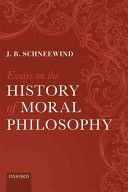
J. B. Schneewind presents a selection of his published essays on ethics, the history of ethics and moral psychology, together with a new piece offering an intellectual autobiography. The volume ranges across the seventeenth, eighteenth, and nineteenth centuries: it includes Schneewind’s early anti-foundationalist “Moral Knowledge and Moral Principles,” the classic “The Misfortunes of Virtue,” and other early essays on Kant’s relation to pre-Kantian moral philosophy; also a long piece on “The Active Powers,” and Schneewind’s own interpretation of Kant’s moral philosophy. These writings provide excellent introductions to Schneewind’s two long books, and supplement them in important ways.
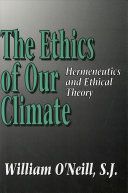
In this book, William O’Neill, S.J., offers an interpretation of the nature and scope of practical reasoning in light of postmodern philosophical criticism. He charts a via media between the abstract formalism of neo-Kantian morality and relativist interpretations of neo-Aristotelian ethics. The three parts of the book treat the eclipse of the classical Aristotelian conception of practical reason; the Kantian heritage in the modern moral theories of John Rawls and R.M. Hare; and the hermeneutical retrieval of a moral interpretation of the world. Drawing upon the philosophical hermeneutics of Hans-Georg Gadamer, modern analytical philosophy, and the discourse ethics of Jurgen Habermas, O’Neill offers a critical reconstruction of practical reason which upholds the primacy of moral community while recognizing the ethical import of historical and cultural difference. The final chapter applies the preceding hermeneutical critique to the question of the distinctiveness of Christian ethics in the writings of Karl Barth, Hans Urs von Balthasar, Josef Fuchs, and Bruno Schuller. This original contribution will be of special interest to students and teachers of moral philosophy and theology.
Most readers of Spinoza treat him as a pure metaphysician, a grim determinist, or a stoic moralist, but none of these descriptions captures the author of the Ethics, argues Steven B. Smith in this intriguing book. Offering a new reading of Spinoza’s masterpiece, Smith asserts that the Ethics is a celebration of human freedom and its attendant joys and responsibilities and should be placed among the great founding documents of the Enlightenment. Two aspects of Smith’s book distinguish it from other studies. It treats the famous “geometrical method” of the Ethics as a form of moral rhetoric, a model for the construction of individuality. And it presents the Ethics as a companion to Spinoza’s major work of political philosophy, the Theologico-Political Treatise, each work helping to explore the problem of freedom. Affirming Spinoza’s centrality for both critics and defenders of modernity, the book will be of value to students of political theory, philosophy, and intellectual history.
ما از اخلاق چه انتظاری داریم؟ این سوال شاید تاحدودی برای عموم مردم و یا متخصصان این رشته قابل پاسخ باشد؛ اینکه خوب بودن را به ما بیاموزد و در تنظیم روابط فردی م...

جشن کتاب تهران به ایستگاه سی و یکم رسیده است. حال و احوال نشر کتاب خوب نیست و باید فرهنگدوستان را به خرید و هدیه دادن کتاب ترغیب نمود. خانه اخلاقپژوهان جوان ب...

بنیاد کتابهای اخلاق اسلامی عمدتا پالایش جان از آلودگیها و آراستن آن به زیباییها است. اندیشه محوری این قبیل کتابها آن است که انسان فعلی آنی نیست که باید باشد...

-
0 Comments