Notice: تابع WP_Block_Type_Registry::register به طورنادرست فراخوانی شد. نامهای نوع بلوک نباید حروف بزرگ داشته باشند. لطفاً برای اطلاعات بیشتر، اشکال زدایی در وردپرس را مشاهده کنید. (این پیام در نگارش 5.0.0 افزوده شده است.) in /home/ethicsho/public_html/wp-includes/functions.php on line 5313
Warning: Use of undefined constant TDC_PATH_LEGACY - assumed 'TDC_PATH_LEGACY' (this will throw an Error in a future version of PHP) in /home/ethicsho/public_html/wp-content/plugins/td-composer/td-composer.php on line 109
Warning: Use of undefined constant TDSP_THEME_PATH - assumed 'TDSP_THEME_PATH' (this will throw an Error in a future version of PHP) in /home/ethicsho/public_html/wp-content/plugins/td-composer/td-composer.php on line 113 بایگانیهای BF201 .T78 2004 - خانه اخلاق پژوهان جوان Notice: Trying to access array offset on value of type bool in /home/ethicsho/public_html/wp-content/plugins/wp-ulike/inc/general-functions.php on line 807
Human beings have the unique ability to consciously reflect on the nature of the self. But reflection has its costs. We can ask what the self is, but as David Hume pointed out, the self, once reflected upon, may be nowhere to be found. The favored view is that we are material beings living in the material world. But if so, a host of destabilizing questions surface. If persons are just a sophisticated sort of animal, then what sense is there to the idea that we are free agents who control our own destinies? What makes the life of any animal, even one as sophisticated as Homo sapiens, worth anything? What place is there in a material world for God? And if there is no place for a God, then what hold can morality possibly have on us–why isn’t everything allowed? Flanagan’s collection of essays takes on these questions and more. He continues the old philosophical project of reconciling a scientific view of ourselves with a view of ourselves as agents of free will and meaning-makers. But to this project he brings the latest insights of neuroscience, cognitive science, and psychiatry, exploring topics such as whether the conscious mind can be explained scientifically, whether dreams are self-expressive or just noise, the moral socialization of children, and the nature of psychological phenomena such as multiple personality disorder and false memory syndrome. What emerges from these explorations is a liberating vision which can make sense of the self, agency, character transformation, and the value and worth of human life. Flanagan concludes that nothing about a scientific view of persons must lead to nihilism.
An easy-to-grasp guide to addressing the principles of ethics and applying them to daily lifeHow do you define “good” versus “evil?” Do you know the difference between moral “truth” and moral relativity? Whether or not you know Aristotle from Hume, Ethics For Dummies will get you comfortable with the centuries-old study of ethical philosophy quickly and effectively! Ethics For Dummies is a practical, friendly guide that takes the headache out of the often-confusing subject of ethics. In plain English, it examines the controversial facets of ethical thought, explores the problem of evil, demystifies the writings and theories of such great thinkers through the ages as Aristotle, Confucius, Descartes, Kant, Nietzsche, and so much more. Provides the tools to tackle and understand today’s important questions and ethical dilemmas Shows you how to apply the concepts and theories of ethical philosophy to your everyday life Other title by Panza: Existentialism For DummiesWhether you’re currently enrolled in an ethics course or are interested in living a good life but are vexed with ethical complexities, Ethics For Dummies has you covered!9780470601600The fast and easy way to learn the art of fashion drawingIf you’re an aspiring fashion designer, you know it’s essential to be able to draw, prepare, and present a fashion drawing. Whether you have little or no prior drawing experience, Fashion Drawing For Dummies gives you easy-to-follow, non-intimidating instructions for mastering the drawing skills you need to design like a pro.This fun guide gives you dozens of step-by-step diagrams that walk you through the process of preparing creative illustrations that you can later develop into dynamic presentations for your design portfolio. Plus, you’ll not only learn how to draw clothes and fabric, but also how to show details that make up the total look: faces and hairstyles, fashion accents, and a wide variety of textures. Learn the rules and techniques of fashion drawing Draw the human figure in different poses from multiple angles Discover how to complement your drawings with accessories, clothing, and styleIf you’re a fledgling designer looking for non-intimidating guidance on learning the ins and outs of fashion drawing, this friendly guide has you covered!
Self love is an inescapable problem for ethics, yet much of contemporary ethics is reluctant to offer any normative moral anthropologies. Instead, secular ethics and contemporary culture promote a norm of self-realization which is subjective and uncritical. Christian ethics also fails to address this problem directly, because it tends to investigate self love within the context of conflicts between the self’s interests and those of her neighbors. Self Love and Christian Ethics argues for right self love as the solution of proper self-relation that intersects with love for God and love for neighbor. Darlene Fozard Weaver explains that right self love entails a true self-understanding that is embodied in the person’s concrete acts and relations. In making this argument, she calls upon ethicists to revisit ontological accounts of the self and to devote more attention to particular moral acts.
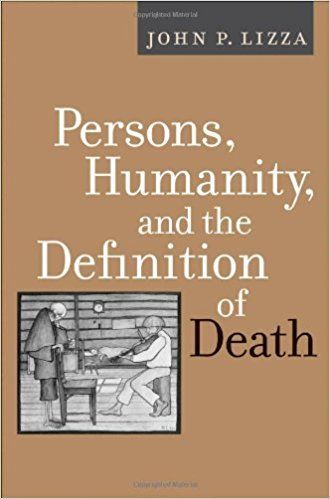
In this riveting and timely work, John P. Lizza presents the first comprehensive analysis of personhood and humanity in the context of defining death. Rejecting the common assumption that human or personal death is simply a biological phenomenon for biologists or physicians to define, Lizza argues that the definition of death is also a matter for metaphysical reflection, moral choice, and cultural acceptance. Lizza maintains that defining death remains problematic because basic ontological, ethical, and cultural issues have never been adequately addressed. Advances in life-sustaining technology and organ transplantation have led to revision of the legal definition of death. It is generally accepted that death occurs when all functions of the brain have ceased. However, legal and clinical cases involving postmortem pregnancy, individuals in permanent vegetative state, those with anencephaly, and those with severe dementia challenge the neurological criteria. Is “brain death” really death? Should the neurological criteria be expanded to include individuals in permanent vegetative state, with anencephaly, and those with severe dementia? What metaphysical, ethical, and cultural considerations are relevant to answering such questions? Although Lizza accepts a pluralistic approach to the legal definition of death, he proposes a nonreductive, substantive view in which persons are understood as “constituted by” human organisms. This view, he argues, provides the best account of human nature as biological, moral, and cultural and supports a consciousness-related formulation of death. Through an analysis of legal and clinical cases and a discussion of alternative concepts of personhood, Lizza casts greater light on the underlying themes of a complex debate.
ما از اخلاق چه انتظاری داریم؟ این سوال شاید تاحدودی برای عموم مردم و یا متخصصان این رشته قابل پاسخ باشد؛ اینکه خوب بودن را به ما بیاموزد و در تنظیم روابط فردی م...

جشن کتاب تهران به ایستگاه سی و یکم رسیده است. حال و احوال نشر کتاب خوب نیست و باید فرهنگدوستان را به خرید و هدیه دادن کتاب ترغیب نمود. خانه اخلاقپژوهان جوان ب...

بنیاد کتابهای اخلاق اسلامی عمدتا پالایش جان از آلودگیها و آراستن آن به زیباییها است. اندیشه محوری این قبیل کتابها آن است که انسان فعلی آنی نیست که باید باشد...

-
0 Comments