Notice: تابع WP_Block_Type_Registry::register به طورنادرست فراخوانی شد. نامهای نوع بلوک نباید حروف بزرگ داشته باشند. لطفاً برای اطلاعات بیشتر، اشکال زدایی در وردپرس را مشاهده کنید. (این پیام در نگارش 5.0.0 افزوده شده است.) in /home/ethicsho/public_html/wp-includes/functions.php on line 5313
Warning: Use of undefined constant TDC_PATH_LEGACY - assumed 'TDC_PATH_LEGACY' (this will throw an Error in a future version of PHP) in /home/ethicsho/public_html/wp-content/plugins/td-composer/td-composer.php on line 109
Warning: Use of undefined constant TDSP_THEME_PATH - assumed 'TDSP_THEME_PATH' (this will throw an Error in a future version of PHP) in /home/ethicsho/public_html/wp-content/plugins/td-composer/td-composer.php on line 113 بایگانیهای BD435 .P47 2005 - خانه اخلاق پژوهان جوان Notice: Trying to access array offset on value of type bool in /home/ethicsho/public_html/wp-content/plugins/wp-ulike/inc/general-functions.php on line 807
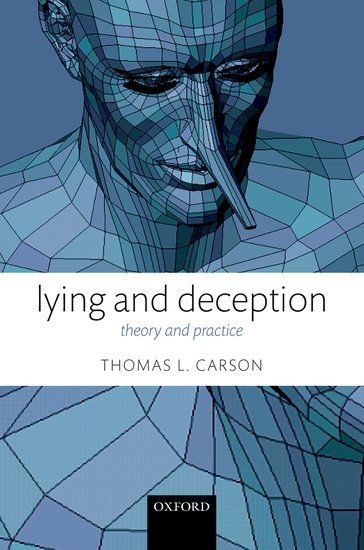
Thomas Carson offers the most comprehensive and up-to-date investigation of moral and conceptual questions about lying and deception. Part I addresses conceptual questions and offers definitions of lying, deception, and related concepts such as withholding information, “keeping someone in the dark,” and “half truths.” Part II deals with questions in ethical theory. Carson argues that standard debates about lying and deception between act-utilitarians and their critics are inconclusive because they rest on appeals to disputed moral intuitions. He defends a version of the golden rule and a theory of moral reasoning. His theory implies that there is a moral presumption against lying and deception that causes harm — a presumption at least as strong as that endorsed by act-utilitarianism. He uses this theory to justify his claims about the issues he addresses in Part III: deception and withholding information in sales, deception in advertising, bluffing in negotiations, the duties of professionals to inform clients, lying and deception by leaders as a pretext for fighting wars, and lying and deception about history (with special attention to the Holocaust), and cases of distorting the historical record by telling half-truths. The book concludes with a qualified defence of the view that honesty is a virtue.
InClassical Individualism,Tibor Machan argues that individualism is far from being dead. Machan identifies, develops and defends what he calls classical individualism: the sort with roots in Aristotle rather than Hobbes. This type of individualism does not reject the social nature of the human being, but finds that every human being is also a self-directed agent who is responsible for what he or she does. Machan rejects all types of collectivism, including communitarianism, ethnic solidarity, racial unity, and gender identity. The ideas inClassical Individualismhave important social and political implications, and will be of interest to anyone concerned with the notion of individuality and individual responsibility.
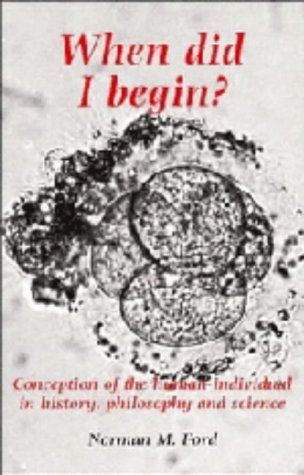
When Did I Begin? investigates the theoretical, moral and biological issues surrounding the debate over the beginning of human life. With the continuing controversy over the use of in vitro fertilization techniques and experimentation with human embryos, these issues have been forced into the arena of public debate. The answer to the question, āWhen did I begin?ā draws on both scientific evidence, and on the philosophical concepts of the presence of the human individaul. As a leading theologian and moral philosopher, thoroughly conversant with modern embryology, Norman Ford, a Salesian priest, is well qualified to bridge the gap between the biological and philosophical point of view. Dr Ford argues that a human individual could not begin before definitive individuation occurs with the appearance of the primative streak about two weeks after fertilisation. While he does not specifically address any moral issues regarding the treatment of human embryos, the author views reading of this book as an essential prerequisite for such moral considerations. The implications of Dr Fordās answer to the question posed in the title will be crucially important for fully evaluating such problems as embryo experimentation and contraception, for a range of readers from embryologists and physicians to moral philosophers and theologians. The book has already stimulated considerable interest and debate, and is now available in paperback for the first time.
ما از اخلاق چه انتظاری داریم؟ این سوال شاید تاحدودی برای عموم مردم و یا متخصصان این رشته قابل پاسخ باشد؛ اینکه خوب بودن را به ما بیاموزد و در تنظیم روابط فردی م...

جشن کتاب تهران به ایستگاه سی و یکم رسیده است. حال و احوال نشر کتاب خوب نیست و باید فرهنگدوستان را به خرید و هدیه دادن کتاب ترغیب نمود. خانه اخلاقپژوهان جوان ب...

بنیاد کتابهای اخلاق اسلامی عمدتا پالایش جان از آلودگیها و آراستن آن به زیباییها است. اندیشه محوری این قبیل کتابها آن است که انسان فعلی آنی نیست که باید باشد...

-
0 Comments