Notice: تابع WP_Block_Type_Registry::register به طورنادرست فراخوانی شد. نامهای نوع بلوک نباید حروف بزرگ داشته باشند. لطفاً برای اطلاعات بیشتر، اشکال زدایی در وردپرس را مشاهده کنید. (این پیام در نگارش 5.0.0 افزوده شده است.) in /home/ethicsho/public_html/wp-includes/functions.php on line 5313
Warning: Use of undefined constant TDC_PATH_LEGACY - assumed 'TDC_PATH_LEGACY' (this will throw an Error in a future version of PHP) in /home/ethicsho/public_html/wp-content/plugins/td-composer/td-composer.php on line 109
Warning: Use of undefined constant TDSP_THEME_PATH - assumed 'TDSP_THEME_PATH' (this will throw an Error in a future version of PHP) in /home/ethicsho/public_html/wp-content/plugins/td-composer/td-composer.php on line 113 بایگانیهای BD171 .O47 2005 - خانه اخلاق پژوهان جوان Notice: Trying to access array offset on value of type bool in /home/ethicsho/public_html/wp-content/plugins/wp-ulike/inc/general-functions.php on line 807
To understand one another as individuals and to fulfill the moral duties that require such understanding, we must communicate with each other. We must also maintain protected channels that render reliable communication possible, a demand that, Seana Shiffrin argues, yields a prohibition against lying and requires protection for free speech. This book makes a distinctive philosophical argument for the wrong of the lie and provides an original account of its difference from the wrong of deception. Drawing on legal as well as philosophical arguments, the book defends a series of notable claims–that you may not lie about everything to the “murderer at the door,” that you have reasons to keep promises offered under duress, that lies are not protected by free speech, that police subvert their mission when they lie to suspects, and that scholars undermine their goals when they lie to research subjects. Many philosophers start to craft moral exceptions to demands for sincerity and fidelity when they confront wrongdoers, the pressures of non-ideal circumstances, or the achievement of morally substantial ends. But Shiffrin consistently resists this sort of exceptionalism, arguing that maintaining a strong basis for trust and reliable communication through practices of sincerity, fidelity, and respecting free speech is an essential aspect of ensuring the conditions for moral progress, including our rehabilitation of and moral reconciliation with wrongdoers.
The fox knows many things, the Greeks said, but the hedgehog knows one big thing. In his most comprehensive work the author argues that value in all its forms is one big thing: that what truth is, life means, morality requires, and justice demands are different aspects of the same large question. He develops original theories on a great variety of issues very rarely considered in the same book: moral skepticism, literary, artistic, and historical interpretation, free will, ancient moral theory, being good and living well, liberty, equality, and law among many other topics. What we think about any one of these must stand up, eventually, to any argument we find compelling about the rest. Skepticism in all its forms, philosophical, cynical, or post-modern, threatens that unity. The Galilean revolution once made the theological world of value safe for science. But the new republic gradually became a new empire: the modern philosophers inflated the methods of physics into a totalitarian theory of everything. They invaded and occupied all the honorifics, reality, truth, fact, ground, meaning, knowledge, and being, and dictated the terms on which other bodies of thought might aspire to them, and skepticism has been the inevitable result. The author feels we need a new revolution, and that we must make the world of science safe for value.
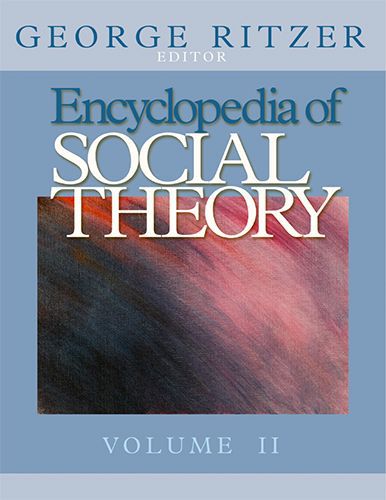
The Encyclopedia of Social Theory is an indispensable reference source for anyone interested in the roots of contemporary social theory. It examines the global landscape of all the key theories and the theorists behind them, presenting them in the context needed to understand their strengths and weaknesses. Led by internationally renowned scholar George Ritzer, the Encyclopedia of Social Theory draws together a team of more than 200 international scholars covering the developments, achievements, and prospects of social theory from its inception in the 18th century to the present. Understanding that social theory can both explain and alter the social world, this two-volume set serves as not only a foundation for learning, but also an inspiration for creative and reflexive engagement with the rich range of ideas it contains.
A distinguished international team of scholars under the editorship of Carlo Natali have collaborated to produce a systematic, chapter-by-chapter study of one of the most influential texts in the history of moral philosophy. The seventh book of Aristotle’s Nicomachean Ethics discusses weakness of will in its first ten chapters, then turns in the last four chapters to pleasure and its relation to the supreme human good.
Government interference in free enterprise is growing. Should they intercede in business ethics and corporate responsibility; and if so, to what extent? The Morality of Business: A Profession for Human Wealthcare goes beyond the utilitarian case in discussing the various elements of business ethics, social policy, job security, outsourcing, government regulation, stakeholder theory, advertising and property rights.”Professor Machan has done it again! Profit seeking behavior by business is ethical and prudent, but it only can be ethical when a person is free, and that depends upon having private property rights. Business ethics is not about ‘corporate citizenship,’ as so many others seem to believe. The contemplative life, so highly valued by many in academe, is made possible by the success of those in commerce. Which one lives a more ethical life? Read Machan’s, The Morality of Business for his answer.”-Don Booth, Chapman University, California, USA
ما از اخلاق چه انتظاری داریم؟ این سوال شاید تاحدودی برای عموم مردم و یا متخصصان این رشته قابل پاسخ باشد؛ اینکه خوب بودن را به ما بیاموزد و در تنظیم روابط فردی م...

جشن کتاب تهران به ایستگاه سی و یکم رسیده است. حال و احوال نشر کتاب خوب نیست و باید فرهنگدوستان را به خرید و هدیه دادن کتاب ترغیب نمود. خانه اخلاقپژوهان جوان ب...

بنیاد کتابهای اخلاق اسلامی عمدتا پالایش جان از آلودگیها و آراستن آن به زیباییها است. اندیشه محوری این قبیل کتابها آن است که انسان فعلی آنی نیست که باید باشد...

-
0 Comments