Notice: تابع WP_Block_Type_Registry::register به طورنادرست فراخوانی شد. نامهای نوع بلوک نباید حروف بزرگ داشته باشند. لطفاً برای اطلاعات بیشتر، اشکال زدایی در وردپرس را مشاهده کنید. (این پیام در نگارش 5.0.0 افزوده شده است.) in /home/ethicsho/public_html/wp-includes/functions.php on line 5313
Warning: Use of undefined constant TDC_PATH_LEGACY - assumed 'TDC_PATH_LEGACY' (this will throw an Error in a future version of PHP) in /home/ethicsho/public_html/wp-content/plugins/td-composer/td-composer.php on line 109
Warning: Use of undefined constant TDSP_THEME_PATH - assumed 'TDSP_THEME_PATH' (this will throw an Error in a future version of PHP) in /home/ethicsho/public_html/wp-content/plugins/td-composer/td-composer.php on line 113 بایگانیهای BD171 .L869 2004 - خانه اخلاق پژوهان جوان Notice: Trying to access array offset on value of type bool in /home/ethicsho/public_html/wp-content/plugins/wp-ulike/inc/general-functions.php on line 807
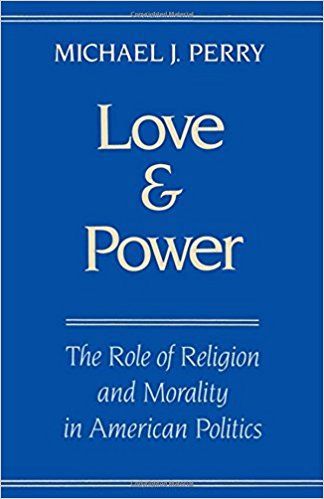
In this sequel to his Morality, Politics, and Law, Michael Perry addresses the proper relation of moral convictions to the politics of a morally pluralistic society. While his analysis focuses on religious morality, Perry’s argument applies to morality generally. Contending that no justification of a contested political choice can be neutral among competing conceptions of human good, the author develops an ideal of “ecumenical politics” in which moral convictions about human good can be brought to bear in a productive way in political argument.
One of the world’s most important political philosophers, Jon Elster is a leading thinker on reason and rationality and their roles in politics and public life. In this short book, he crystallizes and advances his work, bridging the gap between philosophers who use the idea of reason to assess human behavior from a normative point of view and social scientists who use the idea of rationality to explain behavior. In place of these approaches, Elster proposes a unified conceptual framework for the study of behavior.Drawing on classical moralists as well as modern scholarship, and using a wealth of historical and contemporary illustrations,Reason and Rationalitymarks a new development in Elster’s thinking while at the same time providing a brief, elegant, and accessible introduction to his work.
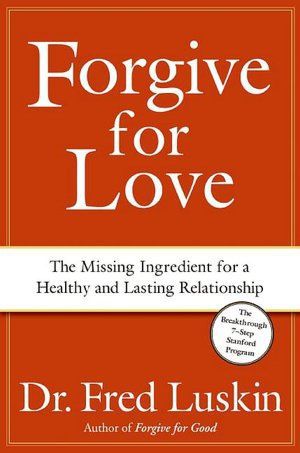
Finding the love of your life and holding onto that relationship is more difficult than ever. The problem hasn’t gone unnoticed. From relationship therapists to speed-dating, self-help books to online matchmaking, an entire industry has developed to help us navigate the bumpy road of relationships. Yet in spite of the availability of all these resources, many of us still struggle to discover and keep the love of our lives. That is, until now. This groundbreaking book from the frontiers of psychology offers startling new research about the one missing factor that is vital to relationships—forgiveness. A national bestselling author and leading expert on forgiveness, Dr. Fred Luskin shows that no matter how much two people may love each other, their relationship will not succeed unless they practice forgiveness—an approach that most relationship experts continue to ignore. Why is forgiveness an essential tool for relationships? Studies reveal that 70 percent for what we argue about at the beginning of our relationships will never be fully resolved. In other words, our basic needs and behaviors don’t change over time. The issues are endless: the socks that always end up on the floor, how often to have sex, the ESPN obsession, working hours, and, of course, friends and family. Without forgiveness, these issues, however big or small, too easily turn into relationship-eroding grudges. Forgive for Love is the solution for your relationship woes, providing the tools you need to find and hold onto the love of your life. Dr. Luskin delivers a proven seven-step program for creating and maintaining loving and lasting relationships, teaching easy-to-learn forgiveness skills that will not only resolve immediate conflicts but improve the overall happiness and longevity of your relationships. Simply put: people in healthy relationships figure out how to forgive their partners for being themselves. They do so because it is nearly impossible to change other people and because none of us are perfect. Forgiveness is the key, and Forgive for Love has the answers.
What distinguishes evils from ordinary wrongs? Is hatred a necessarily evil? Are some evils unforgivable? Are there evils we should tolerate? What can make evils hard to recognize? Are evils inevitable? How can we best respond to and live with evils? Claudia Card offers a secular theory of evil that responds to these questions and more. Evils, according to her theory, have two fundamental components. One component is reasonably foreseeable intolerable harm — harm that makes a life indecent and impossible or that makes a death indecent. Theother component is culpable wrongdoing. Atrocities, such as genocides, slavery, war rape, torture, and severe child abuse, are Card’s paradigms because in them these key elements are writ large. Atrocities deserve more attention than secular philosophers have so far paid them. They are distinguishedfrom ordinary wrongs not by the psychological states of evildoers but by the seriousness of the harm that is done. Evildoers need not be sadistic: they may simply be negligent or unscrupulous in pursuing their goals. Card’s theory represents a compromise between classic utilitarian and stoic alternatives (including Kant’s theory of radical evil). Utilitarians tend to reduce evils to their harms; Stoics tend to reduce evils to the wickedness of perpetrators: Card accepts neither reduction. She also responds toNietzsche’s challenges about the worth of the concept of evil, and she uses her theory to argue that evils are more important than merely unjust inequalities. She applies the theory in explorations of war rape and violence against intimates. She also takes up what Primo Levi called “the gray zone”,where victims become complicit in perpetrating on others evils that threaten to engulf themselves. While most past accounts of evil have focused on perpetrators, Card begins instead from the position of the victims, but then considers more generally how to respond to — and live with — evils, asvictims, as perpetrators, and as those who have become both.
ما از اخلاق چه انتظاری داریم؟ این سوال شاید تاحدودی برای عموم مردم و یا متخصصان این رشته قابل پاسخ باشد؛ اینکه خوب بودن را به ما بیاموزد و در تنظیم روابط فردی م...

جشن کتاب تهران به ایستگاه سی و یکم رسیده است. حال و احوال نشر کتاب خوب نیست و باید فرهنگدوستان را به خرید و هدیه دادن کتاب ترغیب نمود. خانه اخلاقپژوهان جوان ب...

بنیاد کتابهای اخلاق اسلامی عمدتا پالایش جان از آلودگیها و آراستن آن به زیباییها است. اندیشه محوری این قبیل کتابها آن است که انسان فعلی آنی نیست که باید باشد...

-
0 Comments