Notice: تابع WP_Block_Type_Registry::register به طورنادرست فراخوانی شد. نامهای نوع بلوک نباید حروف بزرگ داشته باشند. لطفاً برای اطلاعات بیشتر، اشکال زدایی در وردپرس را مشاهده کنید. (این پیام در نگارش 5.0.0 افزوده شده است.) in /home/ethicsho/public_html/wp-includes/functions.php on line 5313
Warning: Use of undefined constant TDC_PATH_LEGACY - assumed 'TDC_PATH_LEGACY' (this will throw an Error in a future version of PHP) in /home/ethicsho/public_html/wp-content/plugins/td-composer/td-composer.php on line 109
Warning: Use of undefined constant TDSP_THEME_PATH - assumed 'TDSP_THEME_PATH' (this will throw an Error in a future version of PHP) in /home/ethicsho/public_html/wp-content/plugins/td-composer/td-composer.php on line 113 بایگانیهای BC53 .H36 2006 - خانه اخلاق پژوهان جوان Notice: Trying to access array offset on value of type bool in /home/ethicsho/public_html/wp-content/plugins/wp-ulike/inc/general-functions.php on line 807
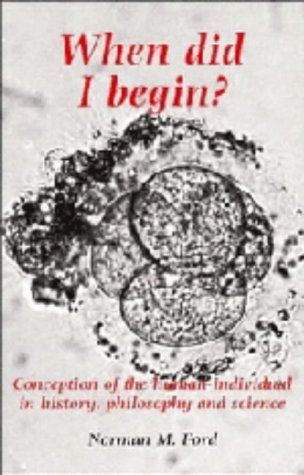
When Did I Begin? investigates the theoretical, moral and biological issues surrounding the debate over the beginning of human life. With the continuing controversy over the use of in vitro fertilization techniques and experimentation with human embryos, these issues have been forced into the arena of public debate. The answer to the question, āWhen did I begin?ā draws on both scientific evidence, and on the philosophical concepts of the presence of the human individaul. As a leading theologian and moral philosopher, thoroughly conversant with modern embryology, Norman Ford, a Salesian priest, is well qualified to bridge the gap between the biological and philosophical point of view. Dr Ford argues that a human individual could not begin before definitive individuation occurs with the appearance of the primative streak about two weeks after fertilisation. While he does not specifically address any moral issues regarding the treatment of human embryos, the author views reading of this book as an essential prerequisite for such moral considerations. The implications of Dr Fordās answer to the question posed in the title will be crucially important for fully evaluating such problems as embryo experimentation and contraception, for a range of readers from embryologists and physicians to moral philosophers and theologians. The book has already stimulated considerable interest and debate, and is now available in paperback for the first time.
In ancient Greece, as today, popular moral attitudes differed importantly from the theories of moral philosophers. While for the latter we have Plato and Aristotle, this insightful work explores the everyday moral conceptions to which orators appealed in court and political assemblies, and which were reflected in non-philosophical literature. Oratory and comedy provide the primary testimony, and reference is also made to Sophocles, Euripides, Herodotus, Thucydides, Xenophon, and other sources. The selection of topics, the contrasts and comparisons with modern religious, social and legal principles, and accessibility to the non-specialist ensure the work’s appeal to all readers with an interest in ancient Greek culture and social life.
This textbook for instruction in biomedical research ethics can also serve as a valuable reference for professionals in the field of bioethics. The 149 cases included in the book are grouped in nine chapters, each of which covers a key area of debate in the field. Some of the case studies are classics, including the famous cases of the Tuskegee Syphilis Study (in which subjects with syphilis were not given treatment) and the Willowbrook hepatitis studies (in which institutionalized subjects were intentionally exposed to hepatitis). Others focus on such current issues as human embryonic stem cell research, cloning by somatic nuclear transfer, and the design and function of institutional review boards. Each chapter begins with a brief introduction that places the issues raised in context; this is followed by a number of cases (each of which is no more than a few pages). Study questions meant to encourage further discussion follow each case.After an introductory discussion of the history and tenets of ethics in medical research, the book’s chapters cover the topics of oversight and study design; informed consent; the selection of subjects; conflicts of interest; the social effects of research; embryos, fetuses, and children; genetic research; the use of animals; and authorship and publication. Following these chapters are appendixes with the texts of the Nuremburg Code and the World Declaration of Geneva, two key documents in the establishment of bioethical standards for research. Also included are a glossary, a table of cases by general category, and an alphabetical listing of cases.
Being a consumer is now integral to the human experience, something none of us can avoid. At the same time, many of the products that we buy come to us with histories steeped in highly unethical practices, such as worker exploitation, animal suffering, and environmental damage. Consuming Choices considers the ethical dimensions of consumer life by exploring several basic questions: Exactly what sorts of unethical practices are implicated in today’s consumer products? Does moral culpability for these practices fall solely on the companies that perform them, or does it also fall upon consumers who purchase the products made with such practices? And most importantly, do consumers ever have moral obligations to avoid particular products? To answer, David T. Schwartz provides the most detailed philosophical exploration to date on consumer ethics. He utilizes historical and fictional examples to illustrate the types of wrongdoing currently implicated by consumer products in this age of globalization, offers a clear description of the relevant moral theories and important ethical concepts, and provides concrete suggestions on how to be a more ethical consumer.
ما از اخلاق چه انتظاری داریم؟ این سوال شاید تاحدودی برای عموم مردم و یا متخصصان این رشته قابل پاسخ باشد؛ اینکه خوب بودن را به ما بیاموزد و در تنظیم روابط فردی م...

جشن کتاب تهران به ایستگاه سی و یکم رسیده است. حال و احوال نشر کتاب خوب نیست و باید فرهنگدوستان را به خرید و هدیه دادن کتاب ترغیب نمود. خانه اخلاقپژوهان جوان ب...

بنیاد کتابهای اخلاق اسلامی عمدتا پالایش جان از آلودگیها و آراستن آن به زیباییها است. اندیشه محوری این قبیل کتابها آن است که انسان فعلی آنی نیست که باید باشد...

-
0 Comments