Notice: تابع WP_Block_Type_Registry::register به طورنادرست فراخوانی شد. نامهای نوع بلوک نباید حروف بزرگ داشته باشند. لطفاً برای اطلاعات بیشتر، اشکال زدایی در وردپرس را مشاهده کنید. (این پیام در نگارش 5.0.0 افزوده شده است.) in /home/ethicsho/public_html/wp-includes/functions.php on line 5313
Warning: Use of undefined constant TDC_PATH_LEGACY - assumed 'TDC_PATH_LEGACY' (this will throw an Error in a future version of PHP) in /home/ethicsho/public_html/wp-content/plugins/td-composer/td-composer.php on line 109
Warning: Use of undefined constant TDSP_THEME_PATH - assumed 'TDSP_THEME_PATH' (this will throw an Error in a future version of PHP) in /home/ethicsho/public_html/wp-content/plugins/td-composer/td-composer.php on line 113 بایگانیهای B945.S84 .V45 2011 - خانه اخلاق پژوهان جوان Notice: Trying to access array offset on value of type bool in /home/ethicsho/public_html/wp-content/plugins/wp-ulike/inc/general-functions.php on line 807
From the relative obscurity in which Levinas’s work languished until very recently, Emmanuel Levinas must now be judged as one of the most influential figures in contemporary Continental philosophy. There is no better guide than John Lewelyn to lead one through the thickets of Levinas’s prose. Bursting with questions, multiple references, cascading citations and multilingual puns and nuances, this book is the compelling record of intellectual obsession. Taking as its guiding thre the theme of genealogy, the book gives a broadly chronological and impressively manageable presentation of the whole sweep of the Levinas’s work. Balanced and finely grained, Llewelyn confronts questions of method, Heidegger, phenomenology, the theme of sensibility, religion, enjoyment, feminity, eros, justice and the political. The book reaches a stunning climax in a series of chapters that give a hestitant but tolerant discussion of the question of God in Levinas, the relation to Levinasian ethics to Nietzscheangenealogy, and an extraordinary discussion of metaphor that leads into a wholly original analysis of Levinas’s poetics and metaphorics. The book concludes with a sensitive reading of the autobiographical epigraphs to Levinas’sOtherwise than Being…and a consideration of the Holocaust.
Integrity is essential to Judeo-Christian business ethics. But today’s business environment is complex. Those in business, and those preparing to enter the business world, need to grapple with the question of how integrity and biblical ethics can be applied in the workplace. They need to go “beyond integrity” in their thinking. Beyond Integrity is neither excessively theoretical nor simplistic and dogmatic. Rather, it offers a balanced and pragmatic approach to a number of concrete ethical issues. Readings from a wide range of sources present competing perspectives on each issue, and real-life case studies further help the reader grapple with ethical dilemmas. The authors conclude each chapter with their own distinctly Christian commentary on the topic covered. This second edition includes recent issues that have surfaced in today’s constantly changing business culture. Revisions include: – Ethical implications of information technology, biotechnology, and other important new issues – Reflections on recent court cases that shape the moral discussion – Shorter text with increased accessibility to the reader With the goal of helping readers arrive at their own conclusions, this book provides a decision-making model. Beyond Integrity equips men and women to develop a biblically based approach to the ethical challenges of twenty-first century business.
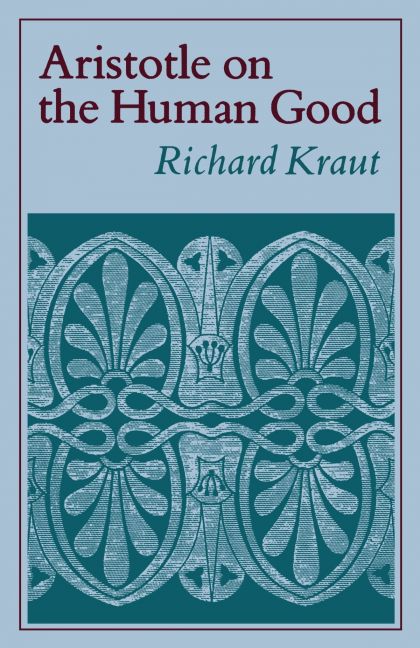
Aristotle’s Nicomachean Ethics, which equates the ultimate end of human life with happiness (eudaimonia), is thought by many readers to argue that this highest goal consists in the largest possible aggregate of intrinsic goods. Richard Kraut proposes instead that Aristotle identifies happiness with only one type of good: excellent activity of the rational soul. In defense of this reading, Kraut discusses Aristotle’s attempt to organize all human goods into a single structure, so that each subordinate end is desirable for the sake of some higher goal.This book also emphasizes the philosopher’s hierarchy of natural kinds, in which every type of creature achieves its good by imitating divine life. As Kraut argues, Aristotle’s belief that thinking is the sole activity of the gods leads him to an intellectualist conception of the ethical virtues. Aristotle values these traits because, by subordinating emotion to reason, they enhance our ability to lead a life devoted to philosophy or politics.
Originally published in 1987, Colin Campbell’s classic treatise on the sociology of consumption has become one of the most widely cited texts in sociology, anthropology, cultural studies, and the history of ideas. In the thirty years since its publication, The Romantic Ethic and the Spirit of Modern Consumerism has lost none of its impact. If anything, the growing commodification of society, the increased attention to consumer studies and marketing, and the ever-proliferating range of purchasable goods and services have made Campbell’s rereading of Weber more urgent still. As Campbell uncovers how and why a consumer-oriented society emerged from a Europe that once embodied Weber’s Protestant ethic, he delivers a rich theorization of the modern logics and values structuring consumer behavior. This new edition, featuring an extended Introduction from the author and an Afterword from researcher Karin M. Ekstrom, makes clear how this foundational work aligns with contemporary theory in cultural sociology, while also serving as major influence on consumer studies.
ما از اخلاق چه انتظاری داریم؟ این سوال شاید تاحدودی برای عموم مردم و یا متخصصان این رشته قابل پاسخ باشد؛ اینکه خوب بودن را به ما بیاموزد و در تنظیم روابط فردی م...

جشن کتاب تهران به ایستگاه سی و یکم رسیده است. حال و احوال نشر کتاب خوب نیست و باید فرهنگدوستان را به خرید و هدیه دادن کتاب ترغیب نمود. خانه اخلاقپژوهان جوان ب...

بنیاد کتابهای اخلاق اسلامی عمدتا پالایش جان از آلودگیها و آراستن آن به زیباییها است. اندیشه محوری این قبیل کتابها آن است که انسان فعلی آنی نیست که باید باشد...

-
0 Comments