Notice: تابع WP_Block_Type_Registry::register به طورنادرست فراخوانی شد. نامهای نوع بلوک نباید حروف بزرگ داشته باشند. لطفاً برای اطلاعات بیشتر، اشکال زدایی در وردپرس را مشاهده کنید. (این پیام در نگارش 5.0.0 افزوده شده است.) in /home/ethicsho/public_html/wp-includes/functions.php on line 5313
Warning: Use of undefined constant TDC_PATH_LEGACY - assumed 'TDC_PATH_LEGACY' (this will throw an Error in a future version of PHP) in /home/ethicsho/public_html/wp-content/plugins/td-composer/td-composer.php on line 109
Warning: Use of undefined constant TDSP_THEME_PATH - assumed 'TDSP_THEME_PATH' (this will throw an Error in a future version of PHP) in /home/ethicsho/public_html/wp-content/plugins/td-composer/td-composer.php on line 113 بایگانیهای B945.R524 .D36 2006 - خانه اخلاق پژوهان جوان Notice: Trying to access array offset on value of type bool in /home/ethicsho/public_html/wp-content/plugins/wp-ulike/inc/general-functions.php on line 807
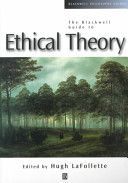
Ranging from moral realism to virtue ethics, this superb new volume presents a complete state-of-the-art survey of ethical theory.Written by an international assembly of leading moral philosophers, each of the twenty-one newly-commissioned papers develops the main tenets, arguments, themes, and problems of the main normative and meta-ethical philosophical outlooks. Contributors are Michael Smith, Simon Blackburn, Philip L. Quinn, James Rachels, Jeff McMahan, John D. Caputo, Elliott Sober, Laurence Thomas, R. G. Frey, Brad Hooker, F. M. Kamm, Thomas E. Hill, Jr., Geoffrey Sayre-McCord, David McNaughton, L. W. Sumner, Jan Narveson, Michael Slote, Alison Jagger, William R. Schroeder, Hugh LaFollette, and James P. Sterba.This volume is arguably the most ambitious and authoritative survey of ethical theory available today. It serves as a groundbreaking resource as well as a comprehensive guide for both students and general readers alike.
Most people believe that there are limits to the sacrifices that morality can demand. Although it would often be meritorious, we are not, in fact, morally required to do all that we can to promote overall good. What’s more, most people also believe that certain types of acts are simply forbidden, morally off limits, even when necessary for promoting the overall good. In this provocative analysis Kagan maintains that despite the intuitive appeal of these views, they cannot be adequately defended. In criticizing arguments for limited moral requirements as well as those for unconditionally prohibited acts, Kagan offers a sustained attack on two of the most basic features of ordinary common sense morality.
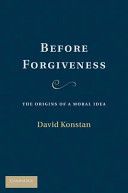
“In this book, David Konstan argues that the modern concept of interpersonal forgiveness, in the full sense of the term, did not exist in ancient Greece and Rome. Even more startlingly, it is not fully present in the Hebrew Bible, nor again in the New Testament, or in the early Jewish and Christian commentaries on the Holy Scriptures. It would still be centuries– many centuries– before the idea of interpersonal forgiveness, with its accompanying ideas of apology, remorse, and a change of heart on thepart of the wrongdoer, would emerge. For all its vast importance today in religion, law, politics, and psychotherapy, interpersonal forgiveness is creation of the 18th and 19th centuries, when the Christian concept of divine forgiveness was finally secularized. Forgiveness was God’s province, and it took a revolution in thought to bring it to earth and make it a human trait”–
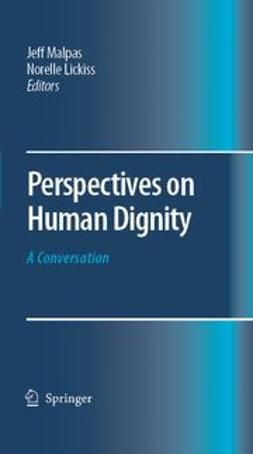
The idea of human dignity is central to any reflection on the nature of human worth, and has become a key concept in international and national law, in medical ethics, and in much philosophical and political theory. However, the idea is a complex one that also takes on many different forms. This collection explores the idea of human dignity as it arises within these many different domains, opening up the possibility of a multidisciplinary conversation that illuminates the concept itself, as well as the idea of the human to which it stands in an essential relation. The book is not only an intriguing and stimulating exploration of human dignity from a range of perspectives, but also provides an important resource for those who wish to take the exploration further.
ما از اخلاق چه انتظاری داریم؟ این سوال شاید تاحدودی برای عموم مردم و یا متخصصان این رشته قابل پاسخ باشد؛ اینکه خوب بودن را به ما بیاموزد و در تنظیم روابط فردی م...

جشن کتاب تهران به ایستگاه سی و یکم رسیده است. حال و احوال نشر کتاب خوب نیست و باید فرهنگدوستان را به خرید و هدیه دادن کتاب ترغیب نمود. خانه اخلاقپژوهان جوان ب...

بنیاد کتابهای اخلاق اسلامی عمدتا پالایش جان از آلودگیها و آراستن آن به زیباییها است. اندیشه محوری این قبیل کتابها آن است که انسان فعلی آنی نیست که باید باشد...

-
0 Comments