Notice: تابع WP_Block_Type_Registry::register به طورنادرست فراخوانی شد. نامهای نوع بلوک نباید حروف بزرگ داشته باشند. لطفاً برای اطلاعات بیشتر، اشکال زدایی در وردپرس را مشاهده کنید. (این پیام در نگارش 5.0.0 افزوده شده است.) in /home/ethicsho/public_html/wp-includes/functions.php on line 5313
Warning: Use of undefined constant TDC_PATH_LEGACY - assumed 'TDC_PATH_LEGACY' (this will throw an Error in a future version of PHP) in /home/ethicsho/public_html/wp-content/plugins/td-composer/td-composer.php on line 109
Warning: Use of undefined constant TDSP_THEME_PATH - assumed 'TDSP_THEME_PATH' (this will throw an Error in a future version of PHP) in /home/ethicsho/public_html/wp-content/plugins/td-composer/td-composer.php on line 113 بایگانیهای B945.R284 .C66 2014 - خانه اخلاق پژوهان جوان Notice: Trying to access array offset on value of type bool in /home/ethicsho/public_html/wp-content/plugins/wp-ulike/inc/general-functions.php on line 807
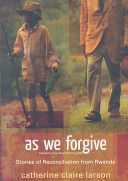
Can a country known for its radical brutality become a country known for an even more radical forgiveness? More than a decade after the 1994 genocide, the Rwandan government has released tens of thousands of murderers back into the communities they ravaged. Survivors and perpetrators have had to learn to live again as neighbors. Inspired by the award-winning film As We Forgive, this book explores the pain, the mystery, and the hope through seven compelling stories as victims, orphans, widows, and perpetrators journey toward reconciliation.
InBeing and WorthAndrew Collier argues that beings both in the natural and human worlds have worth in themselves, whether we recognize it or not. He builds on recent work in critical realism to provide a reassessment of Spinoza’s philosophy of mind and ethics. Conclusions are developed with particular reference to environmental ethics.
According to noncognitivists, when we say that stealing is wrong, what we are doing is more like venting our feelings about stealing or encouraging one another not to steal, than like stating facts about morality. These ideas challenge the core not only of much thinking about morality and metaethics, but also of much philosophical thought about language and meaning. Noncognitivism in Ethics is an outstanding introduction to these theories, ranging from their early history through the latest contemporary developments. Beginning with a general introduction to metaethics, Mark Schroeder introduces and assesses three principal kinds of noncognitivist theory: the speech-act theories of Ayer, Stevenson, and Hare, the expressivist theories of Blackburn and Gibbard, and hybrid theories. He pays particular attention both to the philosophical problems about what moral facts could be about or how they could matter which noncognitivism seeks to solve, and to the deep problems that it faces, including the task of explaining both the nature of moral thought and the complexity of moral attitudes, and the a ~Frege-Geacha (TM) problem. Schroeder makes even the most difficult material accessible by offering crucial background along the way. Also included are exercises at the end of each chapter, chapter summaries, and a glossary of technical terms – making Noncognitivism in Ethics essential reading for all students of ethics and metaethics.
The Violence of Love is a powerful collection of extracts from Romero’s homilies, letters, and articles. Each of these passages gives insight into the mind and heart of the man behind them, more insight, perhaps, than any biographic account of his life. They show a man not afraid to expose his weakness, a man whose tremendous faith and hope call us to repentance and renewal.Originally addressed to the people of El Salvador, Romero’s words speak to all people, passionately decrying injustice and violence, exhorting to peace and forgiveness, and inviting all to help build a new, just society. Chronologically arranged, the selections reflect Romero’s own spiritual transformation and call us to experience a similar revolution of the heart.Romero was martyred for his insistence that following Christ cannot be relegated to the spiritual realm. He did not die in vain; the people of Central America say his spirit lives on in them. As their struggle for justice and dignity intensifies, his words take on a renewed urgency.Short, poetic passages make this collection excellent reading for daily reflection and renewal.
Ethical constraints on relations among individuals within and between societies have always reflected or invoked a higher authority than the caprices of human will. For over two thousand years Natural Law and Natural Rights were the constellations of ideas and presuppositions that fulfilled this role in the west, and exhibited far greater similarities than most commentators want to admit. Such ideas were the lens through which Europeans evaluated the rest of the world. In his major new book David Boucher rejects the view that Natural Rights constituted a secularisation of Natural Law ideas by showing that most of the significant thinkers in the field, in their various ways, believed that reason leads you to the discovery of your obligations, while God provides the ground for discharging them. Furthermore, the book maintains that Natural Rights and Human Rights are far less closely related than is often asserted because Natural Rights never cast adrift the religious foundationalism, whereas Human Rights, for the most part, have jettisoned the Christian metaphysics upon which both Natural Law and Natural Rights depended. Human Rights theories, on the whole, present us with foundationless universal constraints on the actions of individuals, both domestically and internationally. Finally, one of the principal contentions of the book is that these purportedly universal rights and duties almost invariably turn out to be conditional, and upon close scrutiny end up being ‘special’ rights and privileges as the examples of multicultural encounters, slavery and racism, and women’s rights demonstrate.
ما از اخلاق چه انتظاری داریم؟ این سوال شاید تاحدودی برای عموم مردم و یا متخصصان این رشته قابل پاسخ باشد؛ اینکه خوب بودن را به ما بیاموزد و در تنظیم روابط فردی م...

جشن کتاب تهران به ایستگاه سی و یکم رسیده است. حال و احوال نشر کتاب خوب نیست و باید فرهنگدوستان را به خرید و هدیه دادن کتاب ترغیب نمود. خانه اخلاقپژوهان جوان ب...

بنیاد کتابهای اخلاق اسلامی عمدتا پالایش جان از آلودگیها و آراستن آن به زیباییها است. اندیشه محوری این قبیل کتابها آن است که انسان فعلی آنی نیست که باید باشد...

-
0 Comments