Notice: تابع WP_Block_Type_Registry::register به طورنادرست فراخوانی شد. نامهای نوع بلوک نباید حروف بزرگ داشته باشند. لطفاً برای اطلاعات بیشتر، اشکال زدایی در وردپرس را مشاهده کنید. (این پیام در نگارش 5.0.0 افزوده شده است.) in /home/ethicsho/public_html/wp-includes/functions.php on line 5313
Warning: Use of undefined constant TDC_PATH_LEGACY - assumed 'TDC_PATH_LEGACY' (this will throw an Error in a future version of PHP) in /home/ethicsho/public_html/wp-content/plugins/td-composer/td-composer.php on line 109
Warning: Use of undefined constant TDSP_THEME_PATH - assumed 'TDSP_THEME_PATH' (this will throw an Error in a future version of PHP) in /home/ethicsho/public_html/wp-content/plugins/td-composer/td-composer.php on line 113 بایگانیهای B835 .P87 1990 - خانه اخلاق پژوهان جوان Notice: Trying to access array offset on value of type bool in /home/ethicsho/public_html/wp-content/plugins/wp-ulike/inc/general-functions.php on line 807
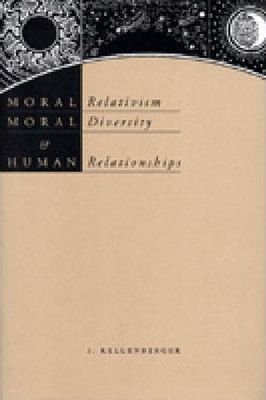
“Kellenberger’s book is thoughtful, evocative, well researched, and informative. He has managed to pull together a notable range of examples to illustrate his thesis that a proper understanding of person-person relationships can untangle differences between relativists and antirelativists…. Examples include abortion, marital Fidelity, the distribution of justice, famine relief, genital mutilation–all sensitive to such non-Western cultures as tribal Africa, Buddhism, and Hinduism….This book should find its place in many courses in ethics, philosophy of social science, cultural theory, and other courses concerned with multicultural themes.”
This book reflects philosophically about the socio-political dimension of economics.Part I provides normative reflections on the economy: Section I reflects on the interconnections between the multiple discourses on the economy, section II presents Hegel’s claim that the economic order is an ethical institution and defends his ontological view of the economy against the one of Adam Smith. Section III dialogues with economists about their concepts of public and merit goods. This section defends a Hegelian ontology of the economy through an analysis of technical concepts used by economists. Part II provides applications derived from the normative analysis: Section I presents the views of authors in different academic disciplines pointing to failures in late capitalism, in particular failures of American capitalism and section II asks the question: ” What must one pay attention to in a transition from a command economy to a free market?”Section III draws attention to an overlap of ideas found in Catholic Social Thought and in the publications of some recent Nobel prize winners in economics (Buchanan, Sen, Stiglitz).
The latter half of the twentieth century witnessed a growing interest in Buddhism, and it continues to capture the imagination of many in the West who see it as either an alternative or a supplement to their own religious beliefs. Numerous introductory books have appeared in recent years to cater for this growing interest, but almost none devotes attention to the specifically ethical dimension of the tradition. For complex cultural and historical reasons, ethics has not received as much attention in traditional Buddhist thought as it has in the West, and publications on the subject are few and far between. Here, Damien Keown, author of Buddhism: A Very Short Introduction , illustrates how Buddhism might approach a range of fascinating moral issues ranging from abortion and suicide to cloning.
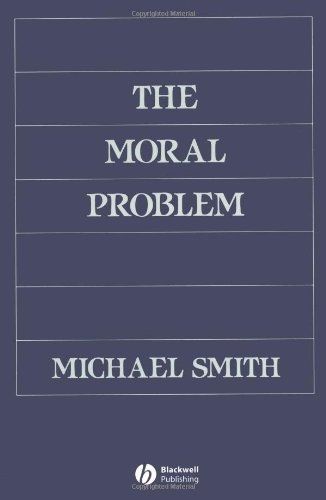
This widely anticipated volume offers a systematic introduction to and striking analysis of the central issues animating current debate in moral philosophy. It will be of interest to anyone with a serious interest in the philosophical foundations of ethics. Topics discussed include: realist vs. anti-realist accounts of moral truth, cognitivist vs expressivist accounts of moral judgement; internalist vs externalist accounts of the relation between moral judgment and the will; Humean vs anti-Humean theories of motivation; and the debate between those who think that morality is a system of hypothetical imperatives and those who think that moral requirements are categorical. In 2000, The Moral Problem received The American Philosophical Association’s first APA Book Prize for excellence in scholarship.
“Organ shortage is an ongoing problem in many countries. The needless death and suffering which have resulted necessitate an investigation into potential solutions. This examination of contemporary ethical means, both practical and policy-oriented, of reducing the shortfall in organs draws on the experiences of a range of countries. The authors focus on the resolution and negotiation of ethical conflict, examine systems approaches such as the ‘Spanish model’ and the US Breakthrough Collaboratives, evaluate policy proposals relating to incentives, presumed consent, and modifications regarding end-of-life care, and evaluate the greatly increased use of (non-heart-beating) donors suffering circulatory death, as well as living donors. The proposed strategies and solutions are not only capable of resolving the UK’s own organ-shortage crisis, but also of being implemented in other countries grappling with how to address the growing gap between supply and demand for organs”–
ما از اخلاق چه انتظاری داریم؟ این سوال شاید تاحدودی برای عموم مردم و یا متخصصان این رشته قابل پاسخ باشد؛ اینکه خوب بودن را به ما بیاموزد و در تنظیم روابط فردی م...

جشن کتاب تهران به ایستگاه سی و یکم رسیده است. حال و احوال نشر کتاب خوب نیست و باید فرهنگدوستان را به خرید و هدیه دادن کتاب ترغیب نمود. خانه اخلاقپژوهان جوان ب...

بنیاد کتابهای اخلاق اسلامی عمدتا پالایش جان از آلودگیها و آراستن آن به زیباییها است. اندیشه محوری این قبیل کتابها آن است که انسان فعلی آنی نیست که باید باشد...

-
0 Comments