Notice: تابع WP_Block_Type_Registry::register به طورنادرست فراخوانی شد. نامهای نوع بلوک نباید حروف بزرگ داشته باشند. لطفاً برای اطلاعات بیشتر، اشکال زدایی در وردپرس را مشاهده کنید. (این پیام در نگارش 5.0.0 افزوده شده است.) in /home/ethicsho/public_html/wp-includes/functions.php on line 5313
Warning: Use of undefined constant TDC_PATH_LEGACY - assumed 'TDC_PATH_LEGACY' (this will throw an Error in a future version of PHP) in /home/ethicsho/public_html/wp-content/plugins/td-composer/td-composer.php on line 109
Warning: Use of undefined constant TDSP_THEME_PATH - assumed 'TDSP_THEME_PATH' (this will throw an Error in a future version of PHP) in /home/ethicsho/public_html/wp-content/plugins/td-composer/td-composer.php on line 113 بایگانیهای B828.5 .B65 1986 - خانه اخلاق پژوهان جوان Notice: Trying to access array offset on value of type bool in /home/ethicsho/public_html/wp-content/plugins/wp-ulike/inc/general-functions.php on line 807
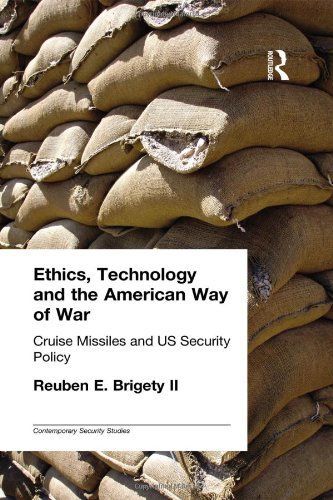
A new investigation into how the advent of precision-guided munitions affects the likelihood of US policy makers to use force. As such, this is an inquiry into the impact of ethics, strategy and military technology on the decision calculus of national leaders. Following the first Gulf War in 1991, this new study shows how US Presidents increasingly used stand-off precision guided munitions (or “PGMs,” especially the Tomahawk cruise missile) either to influence foreign adversaries to make specific policy choices or to signal displeasure with their actions. Such uses of force are attractive because they can lead to desirable policy outcomes where conventional diplomacy has failed but without the large cost of lives, economic resources, or political capital that result from large-scale military operations. In a post-9/11 world, understanding alternative uses of force under significant policy constraints is still of supreme importance.
This book traces the development of Marx’s ethics as they underwent various shifts and changes during different periods of his thought. In his early writings, his ethics were based on a concept of essence much like Aristotle’s, which Marx tried to link to a principle of universalization similar to Kant’s “categorical imperative.” In the period 1845-46, Marx abandoned this view, holding morality to be incompatible with his historical materialism. In the later work he was less of a determinist. Though he no longer wished to reject morality, he did want to transcend a morality of burdensome obligation and constraint in order to realize a community built upon spontaneous bonds of solidarity.
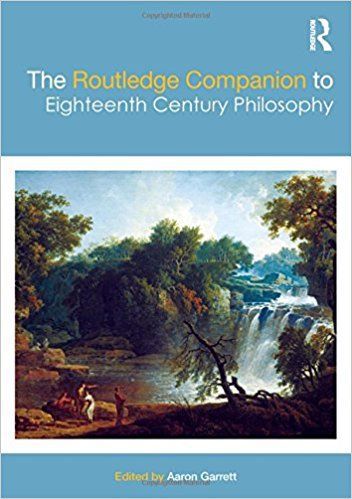
“The Eighteenth century is one of the most important periods in the history of Western philosophy, witnessing the philosophical, scientific, religious, and social and political change of the Enlightenment on a massive scale. In spite of this, there are few overviews of the philosophy of the period as a whole. The Routledge Companion to Eighteenth Century Philosophy is an authoritative survey and assessment of this momentous period, covering major thinkers, topics and movements in Eighteenth century philosophy. The thirty-six specially commissioned chapters by a team of international contributors offer an extensive treatment of the Enlightenment, metaphysics and religion, mind, knowledge, perception, passions, morals, politics and aesthetics. A section on Philosophy and the Arts and Sciences shows the connections between philosophy and other areas of inquiry, and the final part is devoted to major figures of the period: Hume, Kant, and Rousseau. The Routledge Companion to Eighteenth Century Philosophy provides students of philosophy and those from related disciplines with an outstanding and accessible guide to this fascinating period in the history of philosophy”–
ما از اخلاق چه انتظاری داریم؟ این سوال شاید تاحدودی برای عموم مردم و یا متخصصان این رشته قابل پاسخ باشد؛ اینکه خوب بودن را به ما بیاموزد و در تنظیم روابط فردی م...

جشن کتاب تهران به ایستگاه سی و یکم رسیده است. حال و احوال نشر کتاب خوب نیست و باید فرهنگدوستان را به خرید و هدیه دادن کتاب ترغیب نمود. خانه اخلاقپژوهان جوان ب...

بنیاد کتابهای اخلاق اسلامی عمدتا پالایش جان از آلودگیها و آراستن آن به زیباییها است. اندیشه محوری این قبیل کتابها آن است که انسان فعلی آنی نیست که باید باشد...

-
0 Comments