Notice: تابع WP_Block_Type_Registry::register به طورنادرست فراخوانی شد. نامهای نوع بلوک نباید حروف بزرگ داشته باشند. لطفاً برای اطلاعات بیشتر، اشکال زدایی در وردپرس را مشاهده کنید. (این پیام در نگارش 5.0.0 افزوده شده است.) in /home/ethicsho/public_html/wp-includes/functions.php on line 5313
Warning: Use of undefined constant TDC_PATH_LEGACY - assumed 'TDC_PATH_LEGACY' (this will throw an Error in a future version of PHP) in /home/ethicsho/public_html/wp-content/plugins/td-composer/td-composer.php on line 109
Warning: Use of undefined constant TDSP_THEME_PATH - assumed 'TDSP_THEME_PATH' (this will throw an Error in a future version of PHP) in /home/ethicsho/public_html/wp-content/plugins/td-composer/td-composer.php on line 113 بایگانیهای B485 .S44 2007 - خانه اخلاق پژوهان جوان Notice: Trying to access array offset on value of type bool in /home/ethicsho/public_html/wp-content/plugins/wp-ulike/inc/general-functions.php on line 807
People act for reasons. That is how we understand ourselves. But what is it to act for a reason? This is what Fred Schueler investigates. He rejects the dominant view that the beliefs and desires that constitute our reasons for acting simply cause us to act as we do, and argues instead for a view centered on practical deliberation-our ability to evaluate the reasons we accept. Schueler’s account of “reasons explanations: emphasizes the relation between reasons and purposes, and the fact that the reasons for an action are not always good reasons.
With a new foreword by Jonathan Lear’Remarkably lively and enjoyable’ŚIt is a very rich book, containing excellent descriptions of a variety of moral theories, and innumerable and often witty observations on topics encountered on the way.’ – Times Literary SupplementBernard Williams was one of the greatest philosophers of his generation. Ethics and the Limits of Philosophy is not only widely acknowledged to be his most important book, but also hailed a contemporary classic of moral philosophy. Drawing on the ideas of the Greek philosophers, Williams reorients ethics away from a preoccupation with universal moral theories towards ‘truth, truthfulness and the meaning of an individual life’. He explores and reflects upon the most difficult problems in contemporary philosophy and identifies new ideas about central issues such as relativism, objectivity and the possibility of ethical knowledge.This edition also includes a commentary on the text by A.W.Moore.At the time of his death in 2003, Bernard Williams was hailed by the Times as ‘the outstanding moral philosopher of his age.’ He taught at the Universities of Cambridge, Berkeley and Oxford and is the author of many influential books, including Morality; Descartes: The Project of Pure Enquiry (available from Routledge) and Truth and Truthfulness .
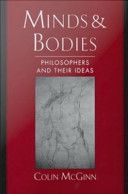
In Minds and Bodies, Colin McGinn offers proof that contemporary philosophy, in the hands of a consummate reviewer, can be the occasion not only sharp critical assessment, but also writing so clear and engaging that readers with no special background in the subject but simply a taste for challenging idea can feel welcome. Gathering nearly forty review-essays printed mainly in nonspecialist publications over the past twenty years, McGinn, a distinguished philosopher and teacher, measures the best of recent Anglo-American philosophical writing, considering books by Thomas Nagel, John Searle, and Daniel Dennett, among others, and navigating with energy and wit important new work in ethics, philosophy of language, and philosophy of mind. Opening with a section on philosophical lives–books written on or by Ludwig Wittgenstein, Bertrand Russell, Charles Peirce, and A. J. Ayer– McGinn moves to the question of consciousness, offering readers two dozen crisp and provocative pieces on work seeking to define and illuminate the mind, its activity, and its relation to the world of physical objects. Closing with a section on ethics, McGinn brings a bold and sharply original perspective to argument in such controversial areas as animal rights and feminist moral theory. A bracing collection of masterfully written reviews that together form an accessible picture of philosophy as it is practiced today, Minds and Bodies makes permanent the critical reflections of a gifted philosopher and writer and is destined to find an appreciative audience both within the philosophical community and in the wider culture of intellectually curious readers.
Moral problems do not always come in the form of great social controversies. More often, the moral decisions we make are made quietly, constantly, and within the context of everyday activities and quotidian dilemmas. Indeed, these smaller decisions are based on a moral foundation that few of us ever stop to think about but which guides our every action. Here distinguished philosopher Bernard Gert presents a clear and concise introduction to what he calls “common morality” — the moral system that most thoughtful people implicitly use when making everyday, common sense moral decisions and judgments. Common Morality is useful in that — while not resolving every disagreement on controversial issues — it is able to distinguish between acceptable and unacceptable answers to moral problems. In the first part of the book Gert lays out the fundamental features of common morality: moral rules, moral ideals, and a two-step procedure for determining when a violation of a moral rule is justified. Written in a non-technical style, the ten general moral rules include rules on which everyone can agree, such as “do not kill,” “do not deceive,” and “keep your promises.” The moral ideals include similarly uncontroversial precepts such as “Relieve pain” and “Aid the needy.” In the second part of the book Gert examines the underlying concepts that justify common morality, such as the notions of rationality and impartiality. The distillation of over 40 years of scholarship, this book is the most accessible version of Gert’s influential theory of morality as well as an eye-opening look at the moral foundations of our everyday actions. Throughout the discussion is clear enough for a reader with little or no philosophy background.
ما از اخلاق چه انتظاری داریم؟ این سوال شاید تاحدودی برای عموم مردم و یا متخصصان این رشته قابل پاسخ باشد؛ اینکه خوب بودن را به ما بیاموزد و در تنظیم روابط فردی م...

جشن کتاب تهران به ایستگاه سی و یکم رسیده است. حال و احوال نشر کتاب خوب نیست و باید فرهنگدوستان را به خرید و هدیه دادن کتاب ترغیب نمود. خانه اخلاقپژوهان جوان ب...

بنیاد کتابهای اخلاق اسلامی عمدتا پالایش جان از آلودگیها و آراستن آن به زیباییها است. اندیشه محوری این قبیل کتابها آن است که انسان فعلی آنی نیست که باید باشد...

-
0 Comments