Notice: تابع WP_Block_Type_Registry::register به طورنادرست فراخوانی شد. نامهای نوع بلوک نباید حروف بزرگ داشته باشند. لطفاً برای اطلاعات بیشتر، اشکال زدایی در وردپرس را مشاهده کنید. (این پیام در نگارش 5.0.0 افزوده شده است.) in /home/ethicsho/public_html/wp-includes/functions.php on line 5313
Warning: Use of undefined constant TDC_PATH_LEGACY - assumed 'TDC_PATH_LEGACY' (this will throw an Error in a future version of PHP) in /home/ethicsho/public_html/wp-content/plugins/td-composer/td-composer.php on line 109
Warning: Use of undefined constant TDSP_THEME_PATH - assumed 'TDSP_THEME_PATH' (this will throw an Error in a future version of PHP) in /home/ethicsho/public_html/wp-content/plugins/td-composer/td-composer.php on line 113 بایگانیهای B407 .B37 2014 - خانه اخلاق پژوهان جوان Notice: Trying to access array offset on value of type bool in /home/ethicsho/public_html/wp-content/plugins/wp-ulike/inc/general-functions.php on line 807
The contributions to Law and Art address the interaction between law, justice, the ethical and the aesthetic. The exercise of the legal role and the scholarly understanding of legal texts were classically defined as ars iuris – an art of law – which drew on the panoply of humanist disciplines, from philology to fine art. That tradition has fallen by the wayside, particularly in the wake of modernism. But, as this book demonstrates, a consideration of the relationship between law and art can still bring jurisprudence, and particularly critical jurisprudence, to life. In its attention to the inexpressible, art can contribute to the liberation of legal doctrine from its own self-imposed limits. It can inform the ethics of a legal theory that is concerned to address how theoretical abstractions and concrete oppressions overlook the singularity and spontaneity to which art attests. The contributors to this volume – and their engagement with the full range of ‘the arts’ – seek, therefore, to disturb and to supplement conventional accounts of justice: raising the difficulty, but also the promise, of that surplus which art reveals: of life over legal formalisation.
This second edition of Ethics in Practice is a comprehensive collection of more than 60 new, newly-revised, and classic essays on fourteen contemporary moral questions. Through the selection of essays, organization of sections, and incisive general and section introductions, this book integrates ethical theory and the discussion of practical moral problems. In addition to the more familiar issues, such as abortion, euthanasia, animal rights, preferential treatment, and the environment, the volume includes coverage of less familiar, but equally important issues such as immigration, political correctness, free speech, the use of drugs, world hunger, and economic justice. The second edition includes 21 essays not in the first edition, with expanded sections discussing three more topics: reproductive technologies, gun control, and capital punishment. This volume features accessible and engaging, yet philosophically rigorous essays that encourage the student to think critically about a wide range of practical moral issues. The supporting website at http://www.stpt.usf.edu/hhl/papers/ethics.in.practice.2nd.htm contains extensive links to sources on the topics, ethical theories, and guides on writing papers. These features make Ethics in Practice the ideal text for introductory and applied ethics courses.
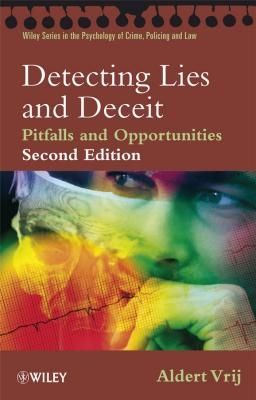
Why do people lie? Do gender and personality differences affect how people lie? How can lies be detected? Detecting Lies and Deceit provides the most comprehensive review of deception to date. This revised edition provides an up-to-date account of deception research and discusses the working and efficacy of the most commonly used lie detection tools, including: Behaviour Analysis Interview Statement Validity Assessment Reality Monitoring Scientific Content Analysis Several different polygraph tests Voice Stress Analysis Thermal Imaging EEG-P300 Functional Magnetic Resonance Imaging (fMRI) All three aspects of deception are covered: nonverbal cues, speech and written statement analysis and (neuro)physiological responses. The most common errors in lie detection are discussed and practical guidelines are provided to help professionals improve their lie detection skills. Detecting Lies and Deceit is a must-have resource for students, academics and professionals in psychology, criminology, policing and law. Published in the Wiley Series in the Psychology of Crime, Policing and Law Seried Editors: Professor Graham Davies and Professor Ray Bull, University of Leicester, UK
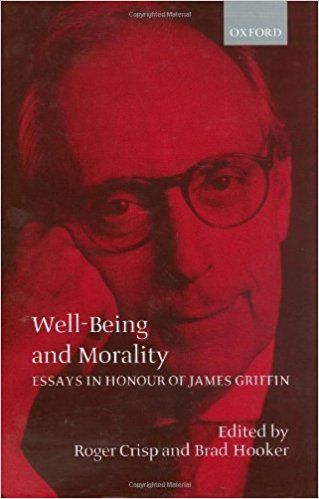
An international line-up of fourteen distinguished philosophers presents new essays in honor of James Griffin, White’s Professor of Moral Philosophy at Oxford University. The essays take up topics relating to well-being and morality, prominent themes in contemporary ethics and particularly in Griffin’s work. Griffin himself provides replies to these essays, offering a fascinating development of his own thinking on these topics.
ما از اخلاق چه انتظاری داریم؟ این سوال شاید تاحدودی برای عموم مردم و یا متخصصان این رشته قابل پاسخ باشد؛ اینکه خوب بودن را به ما بیاموزد و در تنظیم روابط فردی م...

جشن کتاب تهران به ایستگاه سی و یکم رسیده است. حال و احوال نشر کتاب خوب نیست و باید فرهنگدوستان را به خرید و هدیه دادن کتاب ترغیب نمود. خانه اخلاقپژوهان جوان ب...

بنیاد کتابهای اخلاق اسلامی عمدتا پالایش جان از آلودگیها و آراستن آن به زیباییها است. اندیشه محوری این قبیل کتابها آن است که انسان فعلی آنی نیست که باید باشد...

-
0 Comments