Notice: تابع WP_Block_Type_Registry::register به طورنادرست فراخوانی شد. نامهای نوع بلوک نباید حروف بزرگ داشته باشند. لطفاً برای اطلاعات بیشتر، اشکال زدایی در وردپرس را مشاهده کنید. (این پیام در نگارش 5.0.0 افزوده شده است.) in /home/ethicsho/public_html/wp-includes/functions.php on line 5313
Warning: Use of undefined constant TDC_PATH_LEGACY - assumed 'TDC_PATH_LEGACY' (this will throw an Error in a future version of PHP) in /home/ethicsho/public_html/wp-content/plugins/td-composer/td-composer.php on line 109
Warning: Use of undefined constant TDSP_THEME_PATH - assumed 'TDSP_THEME_PATH' (this will throw an Error in a future version of PHP) in /home/ethicsho/public_html/wp-content/plugins/td-composer/td-composer.php on line 113 بایگانیهای B1649.P373 .O6934 2009 - خانه اخلاق پژوهان جوان Notice: Trying to access array offset on value of type bool in /home/ethicsho/public_html/wp-content/plugins/wp-ulike/inc/general-functions.php on line 807
A paradox can be defined as an unacceptable conclusion derived by apparently acceptable reasoning from apparently acceptable premises. Many paradoxes raise serious philosophical problems, and they are associated with crises of thought and revolutionary advances. The expanded and revised third edition of this intriguing book considers a range of knotty paradoxes including Zeno’s paradoxical claim that the runner can never overtake the tortoise, a new chapter on paradoxes about morals, paradoxes about belief, and hardest of all, paradoxes about truth. The discussion uses a minimum of technicality but also grapples with complicated and difficult considerations, and is accompanied by helpful questions designed to engage the reader with the arguments. The result is not only an explanation of paradoxes but also an excellent introduction to philosophical thinking.
No matter what we do, however kind or generous our deeds may seem, a hidden motive of selfishness lurks–or so science has claimed for years. This book, whose publication promises to be a major scientific event, tells us differently. In Unto Others philosopher Elliott Sober and biologist David Sloan Wilson demonstrate once and for all that unselfish behavior is in fact an important feature of both biological and human nature. Their book provides a panoramic view of altruism throughout the animal kingdom–from self-sacrificing parasites to insects that subsume themselves in the superorganism of a colony to the human capacity for selflessness–even as it explains the evolutionary sense of such behavior. Explaining how altruistic behavior can evolve by natural selection, this book finally gives credence to the idea of group selection that was originally proposed by Darwin but denounced as heretical in the 1960s. With their account of this controversy, Sober and Wilson offer a detailed case study of scientific change as well as an indisputable argument for group selection as a legitimate theory in evolutionary biology. Unto Others also takes a novel evolutionary approach in explaining the ultimate psychological motives behind unselfish human behavior. Developing a theory of the proximate mechanisms that most likely evolved to motivate adaptive helping behavior, Sober and Wilson show how people and perhaps other species evolved the capacity to care for others as a goal in itself. A truly interdisciplinary work that blends biology, philosophy, psychology, and anthropology, this book will permanently change not just our view of selfless behavior but also our understanding of many issues in evolutionary biology and the social sciences.
Adam Smith is best known as the founder of scientific economics and as an early proponent of the modern market economy. Political economy, however, was only one part of Smith’s comprehensive intellectual system. Consisting of a theory of mind and its functions in language, arts, science, and social intercourse, Smith’s system was a towering contribution to the Scottish Enlightenment. His ideas on social intercourse also served as the basis for a moral theory that provided both historical and theoretical accounts of law, politics, and economics. This Companion volume provides an examination of all aspects of Smith’s thought. Collectively, the essays take into account Smith’s multiple contexts – Scottish, British, European, Atlantic; biographical, institutional, political, philosophical – and they draw on all of his works, including student notes from his lectures. Pluralistic in approach, the volume provides a contextualist history of Smith, as well as direct philosophical engagement with his ideas.
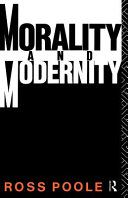
Ross Poole displays the social content of the various conceptions of morality at work in contemporary society, and casts a strikingly fresh light on such fundamental problems as the place of reason in ethics, moral objectivity and the distinction between duty and virtue. The book provides a critical account of the moral theories of a number of major philosophers, including Kant, Marx, Nietzsche, Habermas, Rawls, Gewirth and MacIntyre. It also presents a systematic critique of three of the most significant responses to modernity: liberalism, nationalism and nihilism. It takes seriously the suggestion that men and women are subject to different conceptions of morality, and places the issue of gender at the centre of moral philosophy.
ما از اخلاق چه انتظاری داریم؟ این سوال شاید تاحدودی برای عموم مردم و یا متخصصان این رشته قابل پاسخ باشد؛ اینکه خوب بودن را به ما بیاموزد و در تنظیم روابط فردی م...

جشن کتاب تهران به ایستگاه سی و یکم رسیده است. حال و احوال نشر کتاب خوب نیست و باید فرهنگدوستان را به خرید و هدیه دادن کتاب ترغیب نمود. خانه اخلاقپژوهان جوان ب...

بنیاد کتابهای اخلاق اسلامی عمدتا پالایش جان از آلودگیها و آراستن آن به زیباییها است. اندیشه محوری این قبیل کتابها آن است که انسان فعلی آنی نیست که باید باشد...

-
0 Comments