Notice: تابع WP_Block_Type_Registry::register به طورنادرست فراخوانی شد. نامهای نوع بلوک نباید حروف بزرگ داشته باشند. لطفاً برای اطلاعات بیشتر، اشکال زدایی در وردپرس را مشاهده کنید. (این پیام در نگارش 5.0.0 افزوده شده است.) in /home/ethicsho/public_html/wp-includes/functions.php on line 5313
Warning: Use of undefined constant TDC_PATH_LEGACY - assumed 'TDC_PATH_LEGACY' (this will throw an Error in a future version of PHP) in /home/ethicsho/public_html/wp-content/plugins/td-composer/td-composer.php on line 109
Warning: Use of undefined constant TDSP_THEME_PATH - assumed 'TDSP_THEME_PATH' (this will throw an Error in a future version of PHP) in /home/ethicsho/public_html/wp-content/plugins/td-composer/td-composer.php on line 113 بایگانیهای American English - خانه اخلاق پژوهان جوان Notice: Trying to access array offset on value of type bool in /home/ethicsho/public_html/wp-content/plugins/wp-ulike/inc/general-functions.php on line 807
Images of loss and yearning played a crucial role in literary texts written in the later part of the twentieth century. Despite deep cultural differences, novelists from Africa, the Caribbean, Great Britain, and the United States share a sense that the economic, social, and political forces associated with late modernity have evoked widespread nostalgia within the communities in which they write. In this original and wide-ranging study, John J. Su explores the relationship between nostalgia and ethics in novels across the English-speaking world. He challenges the tendency in literary studies to characterise memory as positive and nostalgia as necessarily negative. Instead, this book argues that nostalgic fantasies are crucial to the ethical visions presented by topical novels. From Jean Rhys to Wole Soyinka and from V. S. Naipaul to Toni Morrison, Su identifies nostalgia as a central concern in the twentieth-century novel.
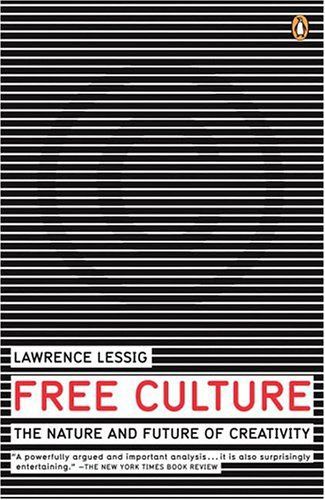
Lawrence Lessig, the most important thinker on intellectual property in the Internet era (The New Yorker), masterfully argues that never before in human history has the power to control creative progress been so concentrated in the hands of the powerful few, the so-called Big Media. Never before have the cultural powers- that-be been able to exert such control over what we can and cant do with the culture around us. Our society defends free markets and free speech; why then does it permit such top-down control? To lose our long tradition of free culture, Lawrence Lessig shows us, is to lose our freedom to create, our freedom to build, and, ultimately, our freedom to imagine.
“A magisterial work (that) culminates twenty-five years of thinking about the problems of free will. For those who believe both that robust free will cannot survive in a deterministic climate and that a viable free will need be scientifically respectable, Kane’s work may prove salvific.” — Mark Bernstein, University of Texas at San Antonio. In the past quarter-century, there has been a resurgence of interest in philosophical questions about free will. After a clear and broad-reaching survey of these recent debates, Robert Kane presents his own controversial view. Arguing persuasively for a traditional incompatibilist or libertarian conception of free will, Kane demonstrates that such a conception can be made intelligible without appeals to obscure or mysterious forms of agency and thus can be reconciled with a contemporary scientific picture of the world.
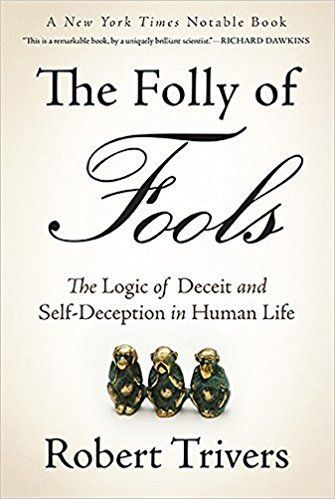
Whether it’s in a cockpit at takeoff or the planning of an offensive war, a romantic relationship or a dispute at the office, there are many opportunities to lie and self-deceive?but deceit and self-deception carry the costs of being alienated from reality and can lead to disaster. So why does deception play such a prominent role in our everyday lives? In short, why do we deceive? In his bold new work, prominent biological theorist Robert Trivers unflinchingly argues that self-deception evolved in the service of deceit?the better to fool others. We do it for biological reasons?in order to help us survive and procreate. From viruses mimicking host behavior to humans misremembering (sometimes intentionally) the details of a quarrel, science has proven that the deceptive one can always outwit the masses. But we undertake this deception at our own peril. Trivers has written an ambitious investigation into the evolutionary logic of lying and the costs of leaving it unchecked.
ما از اخلاق چه انتظاری داریم؟ این سوال شاید تاحدودی برای عموم مردم و یا متخصصان این رشته قابل پاسخ باشد؛ اینکه خوب بودن را به ما بیاموزد و در تنظیم روابط فردی م...

جشن کتاب تهران به ایستگاه سی و یکم رسیده است. حال و احوال نشر کتاب خوب نیست و باید فرهنگدوستان را به خرید و هدیه دادن کتاب ترغیب نمود. خانه اخلاقپژوهان جوان ب...

بنیاد کتابهای اخلاق اسلامی عمدتا پالایش جان از آلودگیها و آراستن آن به زیباییها است. اندیشه محوری این قبیل کتابها آن است که انسان فعلی آنی نیست که باید باشد...

-
0 Comments