Notice: تابع WP_Block_Type_Registry::register به طورنادرست فراخوانی شد. نامهای نوع بلوک نباید حروف بزرگ داشته باشند. لطفاً برای اطلاعات بیشتر، اشکال زدایی در وردپرس را مشاهده کنید. (این پیام در نگارش 5.0.0 افزوده شده است.) in /home/ethicsho/public_html/wp-includes/functions.php on line 5313
Warning: Use of undefined constant TDC_PATH_LEGACY - assumed 'TDC_PATH_LEGACY' (this will throw an Error in a future version of PHP) in /home/ethicsho/public_html/wp-content/plugins/td-composer/td-composer.php on line 109
Warning: Use of undefined constant TDSP_THEME_PATH - assumed 'TDSP_THEME_PATH' (this will throw an Error in a future version of PHP) in /home/ethicsho/public_html/wp-content/plugins/td-composer/td-composer.php on line 113 بایگانیهای 9789462092747 - خانه اخلاق پژوهان جوان Notice: Trying to access array offset on value of type bool in /home/ethicsho/public_html/wp-content/plugins/wp-ulike/inc/general-functions.php on line 807
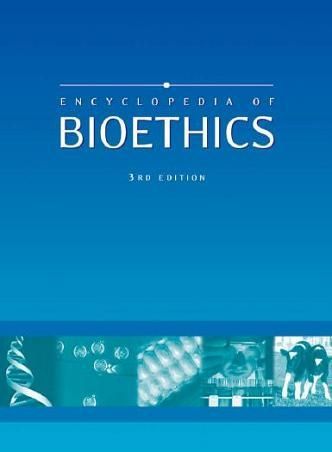
This new edition is a complete revision of the Dartmouth Medal-winning set last revised in 1995. Covering a wealth of topics on the ethics of health professions, animal research, population control and the environment, the set helps researchers to consider the impact of new scientific knowledge and its potential to harm or benefit present and future generations. All bibliographies have been updated and new entries added–from cloning, to issues of privacy or censorship on the Web, cell-stem research, same-sex marriage, privatization of water access, animal rights and much more.
Moral thinking today finds itself stranded between the particular and the universal. Alasdair MacIntyre’s work on narrative, discussed here along with that of Stanley Hauerwas and H. T. Engelhardt, aims to undo the perceived damage done by the Enlightenment by returning to narrative and abandoning the illusion of a disembodied reason that claims to be able give a coherent explanation for everything. It is precisely this – a theory that holds good for all cases – that John Rawls proposed, drawing on the heritage of Emmanuel Kant. Who is right? Must universality be abandoned? Must we only think about morality in terms that are relative, bound by space and time? Alexander Lucie-Smith attempts to answer these questions by examining the nature of narrative itself as well as the particular narratives of Rawls and St Augustine. Bound and rooted as they are in history and personal experience, narratives nevertheless strain at the limits imposed on them. It is Lucie-Smith’s contention that each narrative that points to a lived morality exists against the background of an infinite horizon; and thus it is that the particular and the rooted can also make us aware of the universal and unchanging.
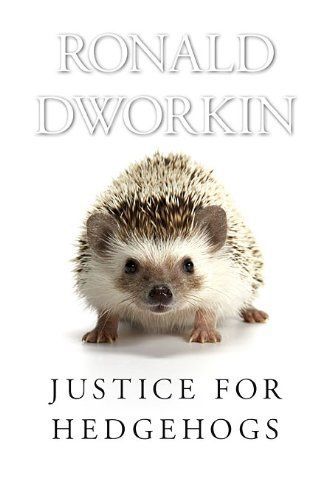
The fox knows many things, the Greeks said, but the hedgehog knows one big thing. In his most comprehensive work the author argues that value in all its forms is one big thing: that what truth is, life means, morality requires, and justice demands are different aspects of the same large question. He develops original theories on a great variety of issues very rarely considered in the same book: moral skepticism, literary, artistic, and historical interpretation, free will, ancient moral theory, being good and living well, liberty, equality, and law among many other topics. What we think about any one of these must stand up, eventually, to any argument we find compelling about the rest. Skepticism in all its forms, philosophical, cynical, or post-modern, threatens that unity. The Galilean revolution once made the theological world of value safe for science. But the new republic gradually became a new empire: the modern philosophers inflated the methods of physics into a totalitarian theory of everything. They invaded and occupied all the honorifics, reality, truth, fact, ground, meaning, knowledge, and being, and dictated the terms on which other bodies of thought might aspire to them, and skepticism has been the inevitable result. The author feels we need a new revolution, and that we must make the world of science safe for value.
“In the years shortly before and after the publication of his classic Truth and Method (1960), the eminent German philosopher Hans-Georg Gadamer returned often to questions surrounding religion and ethics. In this selection of writings from Gesammelte Werke that are here translated into English for the first time, Gadamer probes deeply into the hermeneutic significance of these subjects.”–BOOK JACKET.
ما از اخلاق چه انتظاری داریم؟ این سوال شاید تاحدودی برای عموم مردم و یا متخصصان این رشته قابل پاسخ باشد؛ اینکه خوب بودن را به ما بیاموزد و در تنظیم روابط فردی م...

جشن کتاب تهران به ایستگاه سی و یکم رسیده است. حال و احوال نشر کتاب خوب نیست و باید فرهنگدوستان را به خرید و هدیه دادن کتاب ترغیب نمود. خانه اخلاقپژوهان جوان ب...

بنیاد کتابهای اخلاق اسلامی عمدتا پالایش جان از آلودگیها و آراستن آن به زیباییها است. اندیشه محوری این قبیل کتابها آن است که انسان فعلی آنی نیست که باید باشد...

-
0 Comments