Notice: تابع WP_Block_Type_Registry::register به طورنادرست فراخوانی شد. نامهای نوع بلوک نباید حروف بزرگ داشته باشند. لطفاً برای اطلاعات بیشتر، اشکال زدایی در وردپرس را مشاهده کنید. (این پیام در نگارش 5.0.0 افزوده شده است.) in /home/ethicsho/public_html/wp-includes/functions.php on line 5313
Warning: Use of undefined constant TDC_PATH_LEGACY - assumed 'TDC_PATH_LEGACY' (this will throw an Error in a future version of PHP) in /home/ethicsho/public_html/wp-content/plugins/td-composer/td-composer.php on line 109
Warning: Use of undefined constant TDSP_THEME_PATH - assumed 'TDSP_THEME_PATH' (this will throw an Error in a future version of PHP) in /home/ethicsho/public_html/wp-content/plugins/td-composer/td-composer.php on line 113 بایگانیهای 9789400935075 - خانه اخلاق پژوهان جوان Notice: Trying to access array offset on value of type bool in /home/ethicsho/public_html/wp-content/plugins/wp-ulike/inc/general-functions.php on line 807
Is it reasonable to believe in God even in the absence of strong evidence that God exists? Pragmatic arguments for theism are designed to support belief even if one lacks evidence that theism is more likely than not. Jeff Jordan proposes that there is a sound version of the most well-known argument of this kind, Pascal’s Wager, and explores the issues involved – in epistemology, the ethics of belief, decision theory, and theology.
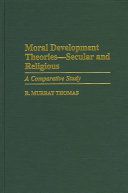
Moral Development Theories–Secular and Religious introduces readers to 13 secular models and 13 religious theories in a wide-ranging comparative study of the roots of moral development. The secular models include attribution theory, cognitive-structural views, social-learning and social-cognition approaches, Freud’s psychoanalysis (plus Erikson and Fromm), Marxist beliefs, a composite theory, Hoffman’s conception of empathy, Anderson’s information-integration view, Gilligan’s gender distinction, Sutherland and Cressey’s explanation of delinquency, and Lovinger on ego development. Religious theories represent the Judaic-Christian-Islamic line, Hinduism and derivatives (Buddhism, Jainism, Sikhism), Confucianism, Shinto, and four minor theories drawn from the belief systems of the Navajo, Zulus, Vodou adherents, and Okinawans.
Anita Superson challenges the traditional picture of the skeptic who asks, “Why be moral?” While holding that the skeptic’s position is important, she builds an argument against it by understanding it more deeply, and then shows what it would take to successfully defeat it. Superson argues that we must defeat not only the action skeptic, but the disposition skeptic, who denies that being morally disposed is rationally required, and the motive skeptic, who believes that merely going through the motions in acting morally is rationally permissible. We also have to address the amoralist, who is not moved by moral reasons he recognizes. Superson argues for expanding the skeptic’s position from self-interest to privilege to include morally unjustified behavior targeting disenfranchised social groups, as well as revising the traditional expected utility model to exclude desires deformed by patriarchy as irrational. Lastly she argues that the challenge can be answered if it can be shown that it is, in an important way, inconsistent and therefore irrational to privilege oneself over others. The Moral Skeptic makes an important contribution to both metaethics/moral theory and feminist philosophy, and brings feminist thinking into the larger discussion of the skeptical challenge.
ما از اخلاق چه انتظاری داریم؟ این سوال شاید تاحدودی برای عموم مردم و یا متخصصان این رشته قابل پاسخ باشد؛ اینکه خوب بودن را به ما بیاموزد و در تنظیم روابط فردی م...

جشن کتاب تهران به ایستگاه سی و یکم رسیده است. حال و احوال نشر کتاب خوب نیست و باید فرهنگدوستان را به خرید و هدیه دادن کتاب ترغیب نمود. خانه اخلاقپژوهان جوان ب...

بنیاد کتابهای اخلاق اسلامی عمدتا پالایش جان از آلودگیها و آراستن آن به زیباییها است. اندیشه محوری این قبیل کتابها آن است که انسان فعلی آنی نیست که باید باشد...

-
0 Comments