Notice: تابع WP_Block_Type_Registry::register به طورنادرست فراخوانی شد. نامهای نوع بلوک نباید حروف بزرگ داشته باشند. لطفاً برای اطلاعات بیشتر، اشکال زدایی در وردپرس را مشاهده کنید. (این پیام در نگارش 5.0.0 افزوده شده است.) in /home/ethicsho/public_html/wp-includes/functions.php on line 5313
Warning: Use of undefined constant TDC_PATH_LEGACY - assumed 'TDC_PATH_LEGACY' (this will throw an Error in a future version of PHP) in /home/ethicsho/public_html/wp-content/plugins/td-composer/td-composer.php on line 109
Warning: Use of undefined constant TDSP_THEME_PATH - assumed 'TDSP_THEME_PATH' (this will throw an Error in a future version of PHP) in /home/ethicsho/public_html/wp-content/plugins/td-composer/td-composer.php on line 113 بایگانیهای 9789042011182 - خانه اخلاق پژوهان جوان Notice: Trying to access array offset on value of type bool in /home/ethicsho/public_html/wp-content/plugins/wp-ulike/inc/general-functions.php on line 807
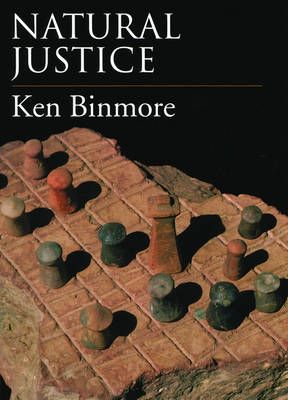
This book lays out foundations for a “science of morals.” Binmore uses game theory as a systematic tool for investigating ethical matters. He reinterprets classical social contract ideas within a game-theory framework and generates new insights into the fundamental questions of social philosophy. In contrast to the previous writing in moral philosophy that relied on vague notion such as ” societal well-being” and “moral duty,” Binmore begins with individuals; rational decision-makers with the ability to emphasize with one another. Any social arrangement that prescribes them to act against their interests will become unstable and eventually will be replaced by another, until one is found that includes worthwhile actions for all individuals involved.
For decades assisted dying and euthanasia have sparked fierce public debate. The recent case of Terri Schiavo, and the firestorm of controversy it provoked, placed the issue in dramatic fashion before the American people once again, raising a host of complex legal, medical-ethical, religious, and individual liberties questions. Now, in Easeful Death, Mary Warnock and Elisabeth Macdonald offer a clearly reasoned, even-handed assessment of arguments both for and against the legalization of assisted suicide and euthanasia. The authors take as their starting point the attempts in Britain and other countries to bring compassion into the rules governing the end of a patient’s life. Drawing on the experience of the Netherlands, Belgium, and the state of Oregon in the US, where either assisted dying or euthanasia have been legalized, the authors explore the philosophical and ethical views on both sides of the debate, and examine how different legislative proposals would affect different members of society, from the very young to the very old. They describe the practical, medical processes of palliative care, self-denial of food and water, assisted dying and euthanasia, and ultimately conclude that the public is ready to embrace a more compassionate approach to assisted dying and that the dying themselves deserve a greater say in the timing and manner of their deaths. Written with sensitivity, grace, and level-headed authority, Easeful Death is essential reading for caregivers, doctors, medical ethicists, and anyone concerned with their own or a loved one’s end of life decisions. It argues persuasively that whatever the results of the legislative debate, compassion must be the guiding principle in the way we treat people who are dying or want to die.
Kant’s third Critique, the Critique of Judgement,is regarded as one of the most influential books in the history of aesthetics. This book is designed as a reader’s guide for students trying to work their way, step-by-step, through Kant’s text. This is one of the first comprehensive introductions to Kant’s Critique of Judgement.Not only does it include a detailed and full account of Kant’s aesthetic theory, it incorporates an extended discussion of the “Critique of Teleological Judgement,” a treatment of Kant’s overall conception of the text, and its place in the wider critical system. Designed as an introduction, suitable for undergraduate and first-year postgraduate use, the book assumes no prior knowledge of Kant or any other particular philosophy. The choice of text is the Pluhar translation in the Hackett edition. However, throughout, Douglas Burnham provides alternative translations of key terms and phrases, making the book independent of any particular translation of Kant’s text.
ما از اخلاق چه انتظاری داریم؟ این سوال شاید تاحدودی برای عموم مردم و یا متخصصان این رشته قابل پاسخ باشد؛ اینکه خوب بودن را به ما بیاموزد و در تنظیم روابط فردی م...

جشن کتاب تهران به ایستگاه سی و یکم رسیده است. حال و احوال نشر کتاب خوب نیست و باید فرهنگدوستان را به خرید و هدیه دادن کتاب ترغیب نمود. خانه اخلاقپژوهان جوان ب...

بنیاد کتابهای اخلاق اسلامی عمدتا پالایش جان از آلودگیها و آراستن آن به زیباییها است. اندیشه محوری این قبیل کتابها آن است که انسان فعلی آنی نیست که باید باشد...

-
0 Comments