Notice: تابع WP_Block_Type_Registry::register به طورنادرست فراخوانی شد. نامهای نوع بلوک نباید حروف بزرگ داشته باشند. لطفاً برای اطلاعات بیشتر، اشکال زدایی در وردپرس را مشاهده کنید. (این پیام در نگارش 5.0.0 افزوده شده است.) in /home/ethicsho/public_html/wp-includes/functions.php on line 5313
Warning: Use of undefined constant TDC_PATH_LEGACY - assumed 'TDC_PATH_LEGACY' (this will throw an Error in a future version of PHP) in /home/ethicsho/public_html/wp-content/plugins/td-composer/td-composer.php on line 109
Warning: Use of undefined constant TDSP_THEME_PATH - assumed 'TDSP_THEME_PATH' (this will throw an Error in a future version of PHP) in /home/ethicsho/public_html/wp-content/plugins/td-composer/td-composer.php on line 113 بایگانیهای 9788122420852 - خانه اخلاق پژوهان جوان Notice: Trying to access array offset on value of type bool in /home/ethicsho/public_html/wp-content/plugins/wp-ulike/inc/general-functions.php on line 807
Literature often deals with moral issues. It focuses on human dilemmas and awakens our imagination to new possibilities. It compels us to rethink and revise our everyday assumptions, enabling us to consider ethical questions in creative ways. The Moral Life: An Introductory Reader in Ethics and Literature brings together an extensive and varied collection of 87 classical and contemporary readings on ethical theory and practice. The book is divided into four sections covering the nature of morality, moral theories, moral issues, and applied ethics. Integrating literature with philosophy in an innovative way, editor Louis Pojman uses literary works to enliven and make concrete the ethical theory or applied issues addressed in each chapter. Literary works by Hugo, Hawthorne, Melville, Tolstoy, Ibsen, Huxley, Orwell, Camus, LeGuin, Styron, and many others lead students into philosophical concepts and issues such as relativism, utilitarianism, virtue ethics, the meaning of life, freedom, sex, love and marriage, and environmental ethics. Once introduced, these topics are developed further through readings by philosophers including Aristotle, Sartre, Bernard Williams, Jane English, and Thomas E. Hill, Jr. This unique anthology emphasizes the personal dimension of ethics, which is often ignored or minimized in ethics texts. Featuring insightful part and chapter introductions as well as biographical sketches, abstracts, and study questions for each reading selection, The Moral Life is ideal for introductory ethics courses. It also provides an engaging gateway into personal and social ethics for the general reader.
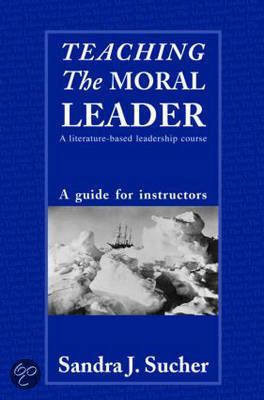
This book is a comprehensive, practical manual to help instructors integrate moral leadership in their own courses, drawing from the experience and resources of the Harvard Business School course ‘The Moral Leader’, an MBA elective taken by thousands of HBS students over nearly twenty years. Through the close study of literature–novels, plays, and historical accounts– followed by rigorous classroom discussion, this innovative course encourages students to confront fundamental moral challenges, to develop skills in moral analysis and judgment, and to come to terms with their own definition of moral leadership. Using this guide’s background material and detailed teaching plans, instructors will be well prepared to lead their students in the study of this vital and important subject. Featuring a website to run alongside that links the manual with the textbook and provides a wealth of extra resources, including on-line links to Harvard Business School case studies and teaching notes this manual forms a perfect complement to The Moral Leader core text also by Sandra Sucher.The detailed and hands-on nature of the guide makes it possible for instructors, with or without a specialized background, to replicate the 13-session Harvard Business School course, or to integrate moral leadership into an existing course, or as a module, or as stand-alone sessions. The manual presents flexible class plans, easily adaptable to a wide variety of business and academic topics. It suggests how to adapt the course to other settings, provides supporting materials, and reviews the approach to teaching The Moral Leader, differentiating it from other literature-based courses. The author, a Harvard Business School professor with a successful record in teaching this course, also brings into the text the kind of real world understanding of effective leadership development that comes from decades of experience as a high level corporate executive. An accompanying student book, focused on class preparation and the context of each work, helps students address questions like: What is the nature of a moral challenge? How do people reason morally? How do leaders – formal and informal – contend with the moral choices they face? How is moral leadership different from leadership of any other kind? Struggling with these questions, both individually and as members of a vibrant learning community, students internalize moral leadership concepts and choices, and develop the skills to pursue it in their careers and personal lives.
The Blackwell Guide to Mill’s Utilitarianism volume is an ideal commentary for students on Mill’s classic essay. Contains the complete text of Utilitarianism and twelve related essays. Essays cover the background to Mill’s classic essay, analyses of the arguments, and contemporary debates within the utilitarian tradition. Also includes a case study demonstrating the application of utilitarian theory to military or non-violent responses to terrorism. Each contribution is an original essay written by a specialist at the cutting edge of philosophical scholarship.
We live our lives through our emotions, writes Robert Solomon, and it is our emotions that give our lives meaning. What interests or fascinates us, who we love, what angers us, what moves us, what bores us–all of this defines us, gives us character, constitutes who we are. In True to Our Feelings, Solomon illuminates the rich life of the emotions–why we don’t really understand them, what they really are, and how they make us human and give meaning to life. Emotions have recently become a highly fashionable area of research in the sciences, with brain imaging uncovering valuable clues as to how we experience our feelings. But while Solomon provides a guide to this cutting-edge research, as well as to what others–philosophers and psychologists–have said on the subject, he also emphasizes the personal and ethical character of our emotions. He shows that emotions are not something that happen to us, nor are they irrational in the literal sense–rather, they are judgements we make about the world, and they are strategies for living in it. Fear, anger, love, guilt, jealousy, compassion–they are all essential to our values, to living happily, healthily, and well. Solomon highlights some of the dramatic ways that emotions fit into our ethics and our sense of the good life, how we can make our emotional lives more coherent with our values and be more “true to our feelings” and cultivate emotional integrity. The story of our lives is the story of our passions. We fall in love, we are gripped by scientific curiosity and religious fervor, we fear death and grieve for others, we humble ourselves in envy, jealousy, and resentment. In this remarkable book, Robert Solomon shares his fascination with the emotions and illuminates our passions in an exciting new way.
ما از اخلاق چه انتظاری داریم؟ این سوال شاید تاحدودی برای عموم مردم و یا متخصصان این رشته قابل پاسخ باشد؛ اینکه خوب بودن را به ما بیاموزد و در تنظیم روابط فردی م...

جشن کتاب تهران به ایستگاه سی و یکم رسیده است. حال و احوال نشر کتاب خوب نیست و باید فرهنگدوستان را به خرید و هدیه دادن کتاب ترغیب نمود. خانه اخلاقپژوهان جوان ب...

بنیاد کتابهای اخلاق اسلامی عمدتا پالایش جان از آلودگیها و آراستن آن به زیباییها است. اندیشه محوری این قبیل کتابها آن است که انسان فعلی آنی نیست که باید باشد...

-
0 Comments