Notice: تابع WP_Block_Type_Registry::register به طورنادرست فراخوانی شد. نامهای نوع بلوک نباید حروف بزرگ داشته باشند. لطفاً برای اطلاعات بیشتر، اشکال زدایی در وردپرس را مشاهده کنید. (این پیام در نگارش 5.0.0 افزوده شده است.) in /home/ethicsho/public_html/wp-includes/functions.php on line 5313
Warning: Use of undefined constant TDC_PATH_LEGACY - assumed 'TDC_PATH_LEGACY' (this will throw an Error in a future version of PHP) in /home/ethicsho/public_html/wp-content/plugins/td-composer/td-composer.php on line 109
Warning: Use of undefined constant TDSP_THEME_PATH - assumed 'TDSP_THEME_PATH' (this will throw an Error in a future version of PHP) in /home/ethicsho/public_html/wp-content/plugins/td-composer/td-composer.php on line 113 بایگانیهای 9781876213251 - خانه اخلاق پژوهان جوان Notice: Trying to access array offset on value of type bool in /home/ethicsho/public_html/wp-content/plugins/wp-ulike/inc/general-functions.php on line 807
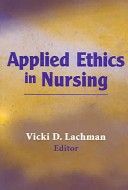
Designed to offer practical advice on ethical issues to nursing students and practicing nurses, Applied Ethics in Nursing presents suggestions for managing ethical issues in an array of clinical settings and organizational encounters. Key Features Include: ? Easy-to-follow Q & A format ? Example case studies ? Information gathered from focus groups, research, and collaboration with other experts in the field
In 1972, the young philosopher Peter Singer published “Famine, Affluence and Morality,” which rapidly became one of the most widely discussed essays in applied ethics. Through this article, Singer presents his view that we have the same moral obligations to those far away as we do to those close to us. He argued that choosing not to send life-saving money to starving people on the other side of the earth is the moral equivalent of neglecting to save drowning children because we prefer not to muddy our shoes. If we can help, we must–and any excuse is hypocrisy. Singer’s extreme stand on our moral obligations to others became a powerful call to arms and continues to challenge people’s attitudes towards extreme poverty. Today, it remains a central touchstone for those who argue we should all help others more than we do. As Bill and Melinda Gates observe in their foreword, in the age of today’s global philanthropy, Singer’s essay is as relevant now as it ever was. This attractively packaged, concise edition collects the original article, two of Singer’s more recent popular writings on our obligations to others around the world, and a new introduction by Singer that discusses his current thinking.
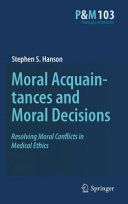
The potential of modern medicine in a pluralistic world leads to the potential for moral conflict. The most prevalent bioethical theories often either overestimate or underestimate the amount of shared moral belief that can be used to address those conflicts. This work presents a means for taking seriously the pluralism in the modern world while recognizing the likelihood of moral acquaintance between persons with differing views. It criticizes moral theories that overstate the extent of the problem of pluralism as well as those that imply too much agreement between reasonable moral persons, yet it locates a means for the resolution of many moral conflicts in moral acquaintanceship. Drawing from the work of H. Tristram Engelhardt, Jr., casuists and principle-based theorists, and Erich Loewy and Kevin W. Wildes s initial development of the concept of moral acquaintanceship, Moral Acquaintances and Moral Decisions is philosophically indepth work with direct applications for decisionmaking in real medical settings. A work in moral theory as well as a source of real world guidance, clinically oriented bioethics professionals as well as students of bioethical theory should find the theory of moral acquaintanceship provided here important to their work.
In this sequel to his Morality, Politics, and Law, Michael Perry addresses the proper relation of moral convictions to the politics of a morally pluralistic society. While his analysis focuses on religious morality, Perry’s argument applies to morality generally. Contending that no justification of a contested political choice can be neutral among competing conceptions of human good, the author develops an ideal of “ecumenical politics” in which moral convictions about human good can be brought to bear in a productive way in political argument.
Is all human behavior based on self-interest? Many social and biological theories would argue so, but such a perspective does not explain the many truly heroic acts committed by people willing to risk their lives to help others. In The Heart of Altruism, Kristen Renwick Monroe boldly lays the groundwork for a social theory receptive to altruism by examining the experiences described by altruists themselves: from Otto, a German businessman who rescued over a hundred Jews in Nazi Germany, to Lucille, a newspaper poetry editor, who, armed with her cane, saved a young girl who was being raped. Monroe’s honest and moving interviews with these little-known heroes enable her to explore the causes of altruism and the differences between altruists and other people. By delineating an overarching perspective of humanity shared by altruists, Monroe demonstrates how social theories may begin to account for altruism and debunks the notions of scientific inevitability that stem from an overemphasis on self-interest.As Monroe has discovered, the financial and religious backgrounds of altruists vary greatly–as do their views on issues such as welfare, civil rights, and morality. Altruists do, however, share a certain way of looking at the world: where the rest of us see a stranger, altruists see a fellow human being. It is this perspective that many social theories overlook. Monroe restores altruism to a general theory of ethical political behavior. She argues that to understand what makes one person act out of concern for others and not the self, we need to ask how that individual’s perspective sets the range of options he or she finds available.
ما از اخلاق چه انتظاری داریم؟ این سوال شاید تاحدودی برای عموم مردم و یا متخصصان این رشته قابل پاسخ باشد؛ اینکه خوب بودن را به ما بیاموزد و در تنظیم روابط فردی م...

جشن کتاب تهران به ایستگاه سی و یکم رسیده است. حال و احوال نشر کتاب خوب نیست و باید فرهنگدوستان را به خرید و هدیه دادن کتاب ترغیب نمود. خانه اخلاقپژوهان جوان ب...

بنیاد کتابهای اخلاق اسلامی عمدتا پالایش جان از آلودگیها و آراستن آن به زیباییها است. اندیشه محوری این قبیل کتابها آن است که انسان فعلی آنی نیست که باید باشد...

-
0 Comments