Notice: تابع WP_Block_Type_Registry::register به طورنادرست فراخوانی شد. نامهای نوع بلوک نباید حروف بزرگ داشته باشند. لطفاً برای اطلاعات بیشتر، اشکال زدایی در وردپرس را مشاهده کنید. (این پیام در نگارش 5.0.0 افزوده شده است.) in /home/ethicsho/public_html/wp-includes/functions.php on line 5313
Warning: Use of undefined constant TDC_PATH_LEGACY - assumed 'TDC_PATH_LEGACY' (this will throw an Error in a future version of PHP) in /home/ethicsho/public_html/wp-content/plugins/td-composer/td-composer.php on line 109
Warning: Use of undefined constant TDSP_THEME_PATH - assumed 'TDSP_THEME_PATH' (this will throw an Error in a future version of PHP) in /home/ethicsho/public_html/wp-content/plugins/td-composer/td-composer.php on line 113 بایگانیهای 9781847065919 - خانه اخلاق پژوهان جوان Notice: Trying to access array offset on value of type bool in /home/ethicsho/public_html/wp-content/plugins/wp-ulike/inc/general-functions.php on line 807
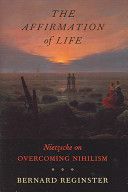
Among all the great thinkers of the past two hundred years, Nietzsche continues to occupy a special place–not only for a broad range of academics but also for members of a wider public, who find some of their most pressing existential concerns addressed in his works. Central among these concerns is the question of the meaning of a life characterized by inescapable suffering, at a time when the traditional responses inspired by Christianity are increasingly losing their credibility. While most recent studies of Nietzsche’s works have lost sight of this fundamental issue, Bernard Reginster’s book The Affirmation of Life brings it sharply into focus. Reginster identifies overcoming nihilism as a central objective of Nietzsche’s philosophical project, and shows how this concern systematically animates all of his main ideas. In particular, Reginster’s work develops an original and elegant interpretation of the will to power, which convincingly explains how Nietzsche uses this doctrine to mount a critique of the dominant Christian values, to overcome the nihilistic despair they produce, and to determine the conditions of a new affirmation of life. Thus, Reginster attributes to Nietzsche a compelling substantive ethical outlook based on the notions of challenge and creativity–an outlook that involves a radical reevaluation of the role and significance of suffering in human existence. Replete with deeply original insights on many familiar–and frequently misunderstood–Nietzschean concepts, Reginster’s book will be essential to anyone approaching this towering figure of Western intellectual history.
“We all live our daily lives surrounded by the products of technology that make what we do simpler, faster, and more efficient. These are benefits we often just take for granted. But at the same time, as these products disburden us of unwanted tasks that consumed much time and effort in earlier eras, many of them also leave us more disengaged from our natural and even human surroundings. It is the task of what Gene Moriarty calls focal engineering to create products that will achieve a balance between disburdenment and engagement.” “One of Moriarty’s examples of a focally engineered structure is the Golden Gate Bridge, which “draws people to it, enlivens and elevates the human spirit, and resonates with the world of its congenial setting. Humans, bridge, and world are in tune.” These values of engagement, enlivenment, and resonance are key to the normative approach Moriarty brings to the profession of engineering, which traditionally has focused mainly on technical measures of evaluation such as efficiency, productivity, objectivity, and precision.”–BOOK JACKET.
Accessible to students with no background in the subject, A Contemporary Introduction to Free Will provides an extensive and up-to-date overview of all the latest views on this central problem of philosophy. Opening with a concise introduction to the history of the problem of free will–and its place in the history of philosophy–the book then turns to contemporary debates and theories about free will, determinism, and related subjects like moral responsibility, coercion,compulsion, autonomy, agency, rationality, freedom, and more. Classical compatibilist and new compatibilist theories of free will are considered along with the latest incompatibilist or libertarian theories and the most recent skeptical challenges to free will. Separate chapters are devoted to the relation offree will to moral responsibility and ethics; to modern science; and to religious questions about predestination, divine foreknowledge, and human freedom. Numerous down-to-earth examples and challenging thought experiments enliven the the text. The book is an ideal addition to introduction to philosophy, metaphysics, and free will courses.
ما از اخلاق چه انتظاری داریم؟ این سوال شاید تاحدودی برای عموم مردم و یا متخصصان این رشته قابل پاسخ باشد؛ اینکه خوب بودن را به ما بیاموزد و در تنظیم روابط فردی م...

جشن کتاب تهران به ایستگاه سی و یکم رسیده است. حال و احوال نشر کتاب خوب نیست و باید فرهنگدوستان را به خرید و هدیه دادن کتاب ترغیب نمود. خانه اخلاقپژوهان جوان ب...

بنیاد کتابهای اخلاق اسلامی عمدتا پالایش جان از آلودگیها و آراستن آن به زیباییها است. اندیشه محوری این قبیل کتابها آن است که انسان فعلی آنی نیست که باید باشد...

-
0 Comments