Notice: تابع WP_Block_Type_Registry::register به طورنادرست فراخوانی شد. نامهای نوع بلوک نباید حروف بزرگ داشته باشند. لطفاً برای اطلاعات بیشتر، اشکال زدایی در وردپرس را مشاهده کنید. (این پیام در نگارش 5.0.0 افزوده شده است.) in /home/ethicsho/public_html/wp-includes/functions.php on line 5313
Warning: Use of undefined constant TDC_PATH_LEGACY - assumed 'TDC_PATH_LEGACY' (this will throw an Error in a future version of PHP) in /home/ethicsho/public_html/wp-content/plugins/td-composer/td-composer.php on line 109
Warning: Use of undefined constant TDSP_THEME_PATH - assumed 'TDSP_THEME_PATH' (this will throw an Error in a future version of PHP) in /home/ethicsho/public_html/wp-content/plugins/td-composer/td-composer.php on line 113 بایگانیهای 9781599471327 - خانه اخلاق پژوهان جوان Notice: Trying to access array offset on value of type bool in /home/ethicsho/public_html/wp-content/plugins/wp-ulike/inc/general-functions.php on line 807
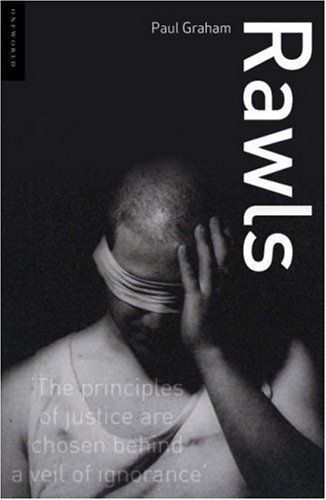
This illuminating guide covers the most interesting and important aspects of Rawls’ work in a stimulating manner, highlighting the foundations that underlie his conception of Justice, and explaining the rationale for his famous starting point, The Veil of Ignorance. Also detailing the criticisms that have met his arguments, this study will prove essential reading for students, scholars, and interested readers alike.
Philips defends a middle ground between the view that there is a set of standards binding on rational beings as such (universalism) and the view that differences in morals reduce ultimately to matters of taste (skepticism). He begins with a sustained critique of universalist moral theories and of certain familiar approaches to concrete moral questions that presuppose them (most appeals to intuitions, respect-for-persons moralities, and versions of contractarianism and wide reflective equilibrium). He goes on to criticize major recent attempts to develop nonuniversalist alternatives to skepticism, arguing that they rely on excessively abstract and philosophically indefensible preference satisfaction theories of the good. According to Philips’s positive alternative, ethics as social artifact, moral codes are social instruments and they are justified to the extent that they effectively do their jobs, which is to promote reasonably valued ways of life. Accordingly, he argues that different standards may be justified for different societies, depending on their circumstances, traditions, and current institutions. His account of a reasonably valued way of life depends on a “falsifiability” approach to reasonable values according to which existing values are treated as reasonable unless good arguments can be made against them. He describes many strategies for making such arguments, the upshot being an approach to the justification of moral standards that is sufficiently “grounded” to settle many controversies and to mark off areas in which rational persons are free to disagree. It also explains why the weight of a moral consideration may vary reasonably from one “domain” of social life toanother. An original approach to the uses and limits of reason in ethics, Between Universalism and Skepticism provides a theoretical basis for approaching actual moral controversies and questions of applied and professional ethics in a systematic way.
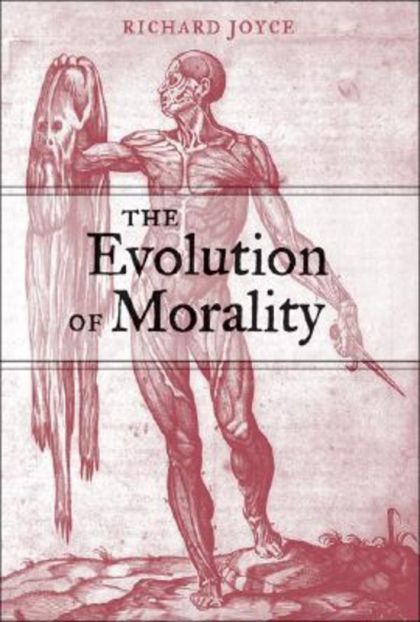
Moral thinking pervades our practical lives, but where did this way of thinking come from, and what purpose does it serve? Is it to be explained by environmental pressures on our ancestors a million years ago, or is it a cultural invention of more recent origin? In The Evolution of Morality, Richard Joyce takes up these controversial questions, finding that the evidence supports an innate basis to human morality. As a moral philosopher, Joyce is interested in whether any implications follow from this hypothesis. Might the fact that the human brain has been biologically prepared by natural selection to engage in moral judgment serve in some sense to vindicate this way of thinking—staving off the threat of moral skepticism, or even undergirding some version of moral realism? Or if morality has an adaptive explanation in genetic terms—if it is, as Joyce writes, “just something that helped our ancestors make more babies”—might such an explanation actually undermine morality’s central role in our lives? He carefully examines both the evolutionary “vindication of morality” and the evolutionary “debunking of morality,” considering the skeptical view more seriously than have others who have treated the subject.Interdisciplinary and combining the latest results from the empirical sciences with philosophical discussion, The Evolution of Morality is one of the few books in this area written from the perspective of moral philosophy. Concise and without technical jargon, the arguments are rigorous but accessible to readers from different academic backgrounds. Joyce discusses complex issues in plain language while advocating subtle and sometimes radical views. The Evolution of Morality lays the philosophical foundations for further research into the biological understanding of human morality.
Moseley considers war from all angles: Christian, Marxist, Platonic, behavioralist, economic, psychological, and biological; he concludes that market-based societies tend to foster cooperation more than combat.?
ما از اخلاق چه انتظاری داریم؟ این سوال شاید تاحدودی برای عموم مردم و یا متخصصان این رشته قابل پاسخ باشد؛ اینکه خوب بودن را به ما بیاموزد و در تنظیم روابط فردی م...

جشن کتاب تهران به ایستگاه سی و یکم رسیده است. حال و احوال نشر کتاب خوب نیست و باید فرهنگدوستان را به خرید و هدیه دادن کتاب ترغیب نمود. خانه اخلاقپژوهان جوان ب...

بنیاد کتابهای اخلاق اسلامی عمدتا پالایش جان از آلودگیها و آراستن آن به زیباییها است. اندیشه محوری این قبیل کتابها آن است که انسان فعلی آنی نیست که باید باشد...

-
0 Comments