Notice: تابع WP_Block_Type_Registry::register به طورنادرست فراخوانی شد. نامهای نوع بلوک نباید حروف بزرگ داشته باشند. لطفاً برای اطلاعات بیشتر، اشکال زدایی در وردپرس را مشاهده کنید. (این پیام در نگارش 5.0.0 افزوده شده است.) in /home/ethicsho/public_html/wp-includes/functions.php on line 5313
Warning: Use of undefined constant TDC_PATH_LEGACY - assumed 'TDC_PATH_LEGACY' (this will throw an Error in a future version of PHP) in /home/ethicsho/public_html/wp-content/plugins/td-composer/td-composer.php on line 109
Warning: Use of undefined constant TDSP_THEME_PATH - assumed 'TDSP_THEME_PATH' (this will throw an Error in a future version of PHP) in /home/ethicsho/public_html/wp-content/plugins/td-composer/td-composer.php on line 113 بایگانیهای 9781586831929 - خانه اخلاق پژوهان جوان Notice: Trying to access array offset on value of type bool in /home/ethicsho/public_html/wp-content/plugins/wp-ulike/inc/general-functions.php on line 807
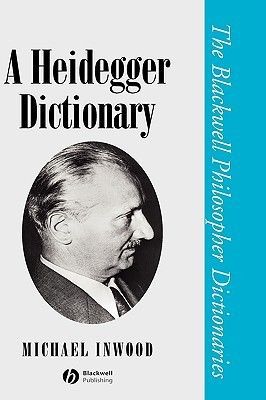
This concise and accessible dictionary explores the central concepts of one of the most significant figures in the history of thought. The author traces the history of 100 concepts from ‘aletheia’ to ‘world’ through Heidegger’s entire career, from the earlier lectures to his later essays and seminars – including many that are not yet translated. The book is extremely user-friendly, containing a full index of the words and concepts discussed, and an introduction explaining Heidegger’s use of language. “A Heidegger Dictionary” enables the student to read Heidegger’s immensely rich and varied works with understanding, and assigns him to his rightful place in both contemporary philosophy and in the history of the subject.
Currently, there is an upsurge of interest in the study of Christian ethics but much of what is written can appear confusing or beyond reach. In Christian Ethics, the first one-volume reference to include all the main themes in fundamental and applied moral theology, Bernard Hoose puts in understandable terms the state of moral theology today. At a time when many people fear that society has lost its way morally, he helps Christians make sense of the major issues that confront us all. Written by well-known ethicists in the English-speaking world, Christian Ethics is a comprehensive work of reference for students of moral theology. Scholars will value the excellent collection of essays and the range of scholarship they represent. The educated lay reader will also benefit from its highly readable text. Part one of the book deals with the fundamental themes in moral theology, including the role of the Bible, natural law, conscience, virtue, and the feminist contribution to Christian ethics. Part two is devoted to specific areas of applied or special ethics, under the headings of social ethics, interpersonal and sexual ethics, and medical ethics. Chapters in “Part 1: Basic Christian Ethics” are “The Bible and Christian Ethics,” by Tom Deidun; “Natural Law,” by Gerard J. Hughes; “Authority and Moral Teaching in a Catholic Christian Context,” by Joseph Selling; “Absolute Moral Norms,” by Charles E. Curran; “Virtue Ethics,” by James F. Keenan; “The Human Person,” by Joseph Selling; “Conscience,” by Richard M. Gula; “The Theory of the Fundamental Option and Moral Action,” by Thomas R. Kopfensteiner; “Feminist Ethics,” by Susan F. Parsons,” and “The Distinctiveness of Christian Morality,” by Vincent MacNamara. Chapters in “Part 2: Applied Ethics” are “Justice,” by Karen Lebacqz; “Property,” by Timothy J. Gorringe; “Morality and Law,” by Patrick Hannon; “The Punishment of Criminals,” by Bernard Hoose; “Peace, Violence and War,” by Richard G. Jones; “Sex, Sexuality, and Relationships,” by Gareth Moore; “Divorce and Remarriage,” by Kevin T. Kelly; “Truth and Lies,” by Bernard Hoose; “Euthanasia,” by Richard M. Gula; “Ethical Problems Arising from New Reproductive Techniques,” by Joyce Poole; “Organ Transplantation,” by David F. Kelly; and “Hypnosis and General Anaesthesia,” by Aureliano Pacciolla.
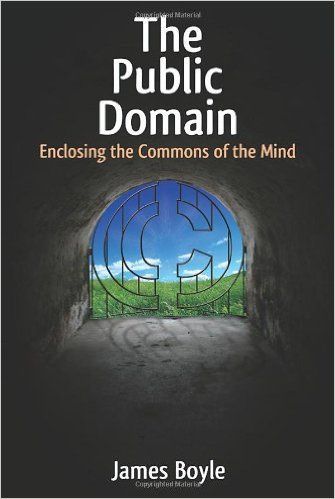
“In this enlightening book, James Boyle describes what he calls the range wars of the information age – today’s heated battles over intellectual property. Boyle argues that just as every informed citizen needs to know at least something about the environment and civil rights, every citizen should also understand intellectual property law. Why? Because intellectual property rights mark out the ground rules of the information society, and today’s policies are unbalanced, unsupported by evidence, and often detrimental to cultural access, free speech, digital creativity, and scientific innovation.” “Boyle identifies as a major problem the widespread failure to understand the importance of the public domain – the realm of material that everyone is free to use and share without permission or fee. The public domain is as vital to innovation and culture as the material protected by intellectual property rights, he asserts, and he calls for a movement akin to the environmental movement to preserve it. With a clear analysis of issues ranging from Jefferson’s philosophy of innovation to musical sampling, synthetic biology, and Internet file sharing, this timely book brings a positive new perspective to important cultural and legal debates. If we continue to enclose the “commons of the mind,” Boyle argues, we will all be the poorer.”–BOOK JACKET.
The Latin root of the English word culture ties together both worship and the tilling of the soil. In each case, the focus is the same: a rightly-directed culture produces either a bountiful harvest or falls short of the mark, materially or spiritually. This volume critically explores the nature and depth of our contemporary cultural crisis: its lack of traditional orientation and moral understanding. Prime among the issues at stake are the meaning and significance of birth, copulation, suffering, and death, expressed in debates regarding human embryo-experimentation and stem cell research, the character of moral and scientific norms, as well as more fundamentally, the character of an adequate epistemology for coming to appreciate the deep nature of reality and its normative implications. Given varying background ontological, epistemological, and axiological presuppositions, different moral positions and political objections will appear as not merely morally permissible but as socially and politically obligatory. The volume is addressed to philosophers, theologians, bioethicists and public policy professionals as it critically assesses the increasing void between the traditional Christian metaphysical and moral understandings that guided the flourishing of Christian culture and today’s very secular, and frequently empty, cultural backdrop.
ما از اخلاق چه انتظاری داریم؟ این سوال شاید تاحدودی برای عموم مردم و یا متخصصان این رشته قابل پاسخ باشد؛ اینکه خوب بودن را به ما بیاموزد و در تنظیم روابط فردی م...

جشن کتاب تهران به ایستگاه سی و یکم رسیده است. حال و احوال نشر کتاب خوب نیست و باید فرهنگدوستان را به خرید و هدیه دادن کتاب ترغیب نمود. خانه اخلاقپژوهان جوان ب...

بنیاد کتابهای اخلاق اسلامی عمدتا پالایش جان از آلودگیها و آراستن آن به زیباییها است. اندیشه محوری این قبیل کتابها آن است که انسان فعلی آنی نیست که باید باشد...

-
0 Comments