Notice: تابع WP_Block_Type_Registry::register به طورنادرست فراخوانی شد. نامهای نوع بلوک نباید حروف بزرگ داشته باشند. لطفاً برای اطلاعات بیشتر، اشکال زدایی در وردپرس را مشاهده کنید. (این پیام در نگارش 5.0.0 افزوده شده است.) in /home/ethicsho/public_html/wp-includes/functions.php on line 5313
Warning: Use of undefined constant TDC_PATH_LEGACY - assumed 'TDC_PATH_LEGACY' (this will throw an Error in a future version of PHP) in /home/ethicsho/public_html/wp-content/plugins/td-composer/td-composer.php on line 109
Warning: Use of undefined constant TDSP_THEME_PATH - assumed 'TDSP_THEME_PATH' (this will throw an Error in a future version of PHP) in /home/ethicsho/public_html/wp-content/plugins/td-composer/td-composer.php on line 113 بایگانیهای 9781444339307 - خانه اخلاق پژوهان جوان Notice: Trying to access array offset on value of type bool in /home/ethicsho/public_html/wp-content/plugins/wp-ulike/inc/general-functions.php on line 807
Why should we be tolerant? What does it mean to “live and let live”? What ought to be tolerated and what not? Toleration: A Critical Introductionis a comprehensive and accessible philosophical introduction to toleration. The first part of the book clearly and coherently introduces and assesses the major theoretical accounts of toleration, examining toleration in light of challenges from skepticism, value pluralism and reasonableness. Catriona McKinnon also draws from those philosophers whose theories are central to toleration, from Locke and Mill to Rawls. In the second part of the book, McKinnon applies the theories of toleration to urgent contemporary problems such as female circumcision, the French headscarves affair, artistic freedom, pornography and censorship, and holocaust denial. Toleration: ACritical Introductionprovides a solid theoretical base to those who value toleration, whilst considering the challenges toleration faces in practice. It provides anideal starting point for those coming to the topic for the first time, and anyone interested in the challenges facing toleration today.
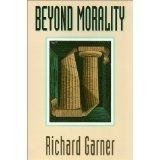
“Morality and religion have failed because they are based on duplicity and fantasy. We need something new….” With this startling statement, Richard Garner begins to define a system of behavior that will nurture our capabilities for love and language, for creation and cooperation.The satisfying personal and social strategy for living Garner proposes is “informed, compassionate amoralism.” To do without morality, he argues, is to reject the idea that there are intrinsic values, objective duties, and natural rights. Leaving illusions behind us and learning to listen to others and to ourselves may be what we need to lead us out of the darkness.Garner builds his case on a survey of moral definitions and arguments from ancient Greece forward. Beyond Morality revisits the tenets of Christianity and Eastern religious, providing readers with a meaningful overview of the history of moral thought.Quotations illuminate and illustrate the text, adding to the value of Beyond Morality as a textbook for ethics courses. Author note: Richard Garner is Professor of Philosophy at The Ohio State University.
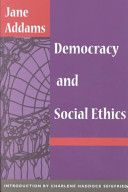
Nearly a century before the advent of “multiculturalism,” Jane Addams put forward her conception of the moral significance of diversity. Each member of a democracy, Addams believed, is under a moral obligation to seek out diverse experiences, making a daily effort to confront others’ perspectives. Morality must be seen as a social rather than an individual endeavour, and democracy as a way of life rather than merely a basis for laws. Failing this, both democracy and ethics remain sterile, empty concepts.In this, Addams’ earliest book on ethics – presented here with a substantial introduction by Charlene Haddock Seigfried – she reflects on the factors that hinder the ability of all members of society to determine their own well-being. Observing relationships between charitable workers and their clients, between factory owners and their employers, and between household employers and their servants, she identifies sources of friction and shows how conceiving of democracy as a social obligation can lead to new, mutually beneficial lines of conduct.She also considers the proper education of workers, struggles between parents and their adult daughters over conflicting family and social claims, and the merging of politics with the daily lives of constituents. “The sphere of morals is the sphere of action”, Addams proclaims. It is not enough to believe passively in the innate dignity of all human beings. Rather, one must work daily to root out racial, gender, class, and other prejudices from personal relationships.
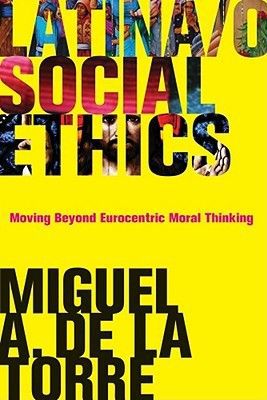
A groundbreaking corrective work, Latina/o Social Ethics strives to create a liberative ethical approach to the Hispanic experience by using its own tools and materials. First explaining why Eurocentric ethical paradigms are inadequate in their attempts to liberate oppressed communities, Miguel De La Torre looks with Hispanic eyes at three major ethicists of the twentieth century–Walter Rauschenbusch, Reinhold Niebuhr, and Stanley Hauerwas–and how ethics is presented in U.S. culture wars, from the Religious Right to the Religious Left. He deconstructs these ethical paradigms and demonstrates why all are detrimental to and irreconcilable with the Hispanic social location.With a clean slate, then, De La Torre moves to constructing a new Hispanic-centered ethical paradigm that is rooted in the Latino community way of being. Reviewing the field of Hispanic ethical thought, De La Torre pays special attention to specific concepts ripe with potential that have been developed over the past generation. In the final chapter, De La Torre offers his own constructive paradigm–an ethics para joder , which is rooted in the Latina/o experience, and by which, he argues, the Hispanic community can survive within U.S. culture.
ما از اخلاق چه انتظاری داریم؟ این سوال شاید تاحدودی برای عموم مردم و یا متخصصان این رشته قابل پاسخ باشد؛ اینکه خوب بودن را به ما بیاموزد و در تنظیم روابط فردی م...

جشن کتاب تهران به ایستگاه سی و یکم رسیده است. حال و احوال نشر کتاب خوب نیست و باید فرهنگدوستان را به خرید و هدیه دادن کتاب ترغیب نمود. خانه اخلاقپژوهان جوان ب...

بنیاد کتابهای اخلاق اسلامی عمدتا پالایش جان از آلودگیها و آراستن آن به زیباییها است. اندیشه محوری این قبیل کتابها آن است که انسان فعلی آنی نیست که باید باشد...

-
0 Comments