Notice: تابع WP_Block_Type_Registry::register به طورنادرست فراخوانی شد. نامهای نوع بلوک نباید حروف بزرگ داشته باشند. لطفاً برای اطلاعات بیشتر، اشکال زدایی در وردپرس را مشاهده کنید. (این پیام در نگارش 5.0.0 افزوده شده است.) in /home/ethicsho/public_html/wp-includes/functions.php on line 5313
Warning: Use of undefined constant TDC_PATH_LEGACY - assumed 'TDC_PATH_LEGACY' (this will throw an Error in a future version of PHP) in /home/ethicsho/public_html/wp-content/plugins/td-composer/td-composer.php on line 109
Warning: Use of undefined constant TDSP_THEME_PATH - assumed 'TDSP_THEME_PATH' (this will throw an Error in a future version of PHP) in /home/ethicsho/public_html/wp-content/plugins/td-composer/td-composer.php on line 113 بایگانیهای 9781444339086 - خانه اخلاق پژوهان جوان Notice: Trying to access array offset on value of type bool in /home/ethicsho/public_html/wp-content/plugins/wp-ulike/inc/general-functions.php on line 807
The truth commission is an increasingly common fixture of newly democratic states with repressive or strife-ridden pasts. From South Africa to Haiti, truth commissions are at work with varying degrees of support and success. To many, they are the best–or only–way to achieve a full accounting of crimes committed against fellow citizens and to prevent future conflict. Others question whether a restorative justice that sets the guilty free, that cleanses society by words alone, can deter future abuses and allow victims and their families to heal. Here, leading philosophers, lawyers, social scientists, and activists representing several perspectives look at the process of truth commissioning in general and in post-apartheid South Africa. They ask whether the truth commission, as a method of seeking justice after conflict, is fair, moral, and effective in bringing about reconciliation. The authors weigh the virtues and failings of truth commissions, especially the South African Truth and Reconciliation Commission, in their attempt to provide restorative rather than retributive justice. They examine, among other issues, the use of reparations as social policy and the granting of amnesty in exchange for testimony. Most of the contributors praise South Africa’s decision to trade due process for the kinds of truth that permit closure. But they are skeptical that such revelations produce reconciliation, particularly in societies that remain divided after a compromise peace with no single victor, as in El Salvador. Ultimately, though, they find the truth commission to be a worthy if imperfect instrument for societies seeking to say “never again” with confidence. At a time when truth commissions have been proposed for Bosnia, Kosovo, Cyprus, East Timor, Cambodia, Nigeria, Palestine, and elsewhere, the authors’ conclusion that restorative justice provides positive gains could not be more important. In addition to the editors, the contributors are Amy Gutmann, Rajeev Bhargava, Elizabeth Kiss, David A. Crocker, André du Toit, Alex Boraine, Dumisa Ntsebeza, Lisa Kois, Ronald C. Slye, Kent Greenawalt, Sanford Levinson, Martha Minow, Charles S. Maier, Charles Villa-Vicencio, and Wilhelm Verwoerd.
No matter what we do, however kind or generous our deeds may seem, a hidden motive of selfishness lurks–or so science has claimed for years. This book, whose publication promises to be a major scientific event, tells us differently. In Unto Others philosopher Elliott Sober and biologist David Sloan Wilson demonstrate once and for all that unselfish behavior is in fact an important feature of both biological and human nature. Their book provides a panoramic view of altruism throughout the animal kingdom–from self-sacrificing parasites to insects that subsume themselves in the superorganism of a colony to the human capacity for selflessness–even as it explains the evolutionary sense of such behavior. Explaining how altruistic behavior can evolve by natural selection, this book finally gives credence to the idea of group selection that was originally proposed by Darwin but denounced as heretical in the 1960s. With their account of this controversy, Sober and Wilson offer a detailed case study of scientific change as well as an indisputable argument for group selection as a legitimate theory in evolutionary biology. Unto Others also takes a novel evolutionary approach in explaining the ultimate psychological motives behind unselfish human behavior. Developing a theory of the proximate mechanisms that most likely evolved to motivate adaptive helping behavior, Sober and Wilson show how people and perhaps other species evolved the capacity to care for others as a goal in itself. A truly interdisciplinary work that blends biology, philosophy, psychology, and anthropology, this book will permanently change not just our view of selfless behavior but also our understanding of many issues in evolutionary biology and the social sciences.
The philosophy of Albert Schweitzer has proved widely influential in modern thinking, especially in the field of ethics. His leading ethical idea can be summarized in the phrase “reverence for life” – namely, that good consists in maintaining and perfecting life, and evil consists in destroying and obstructing life. For Schweitzer, all life is sacred. Ethics thus deals with human attitudes and behavior toward all living beings. Unlike many moral philosophers, Schweitzer argues that knowledge of human nature does not provide a sufficient foundation for any adequate moral theory. That is why he bases his ethics on much broader foundations, articulated in his philosophy of civilization and the philosophy of religion. Schweitzer argues that the material aspect of our civilization has become far more important than its spiritual counterpart. Even organized religion has put itself in the service of politics and economy, thereby losing its vitality and moral authority. Schweitzer’s ethics of reverence for life, argues Predrag Cicovacki, offers a viable alternative at a time when traditional ethical theories are found inadequate. Schweitzer’s robust and un-dogmatic idealism may offer the best antidote to the prevailing relativism and nihilism of the postmodern epoch. His ethical vision directs us toward a new way of building a more just and more peaceful world. Collecting sixteen of Schweitzer’s most effective essays, this volume serves as a compelling introduction to this remarkable thinker and humanist.
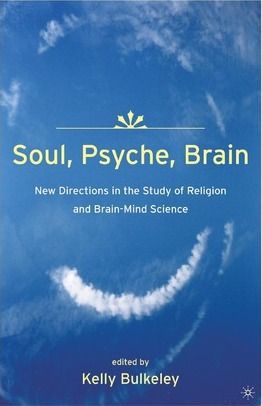
Soul, Psyche, Brainis a collection of essays that address the relationships between neuroscience, religion and human nature. The book highlights some startling new developments in neuroscience that have many people rethinking spirituality, the mind-body connection, and cognition in general. Soul, Psyche, Brainexplores questions like: What are the neurological effects of meditation and prayer? How does the mind develop psychological and spiritual self-awareness? And what are the practical implications of brain-mind science for religious faith and moral reasoning?
ما از اخلاق چه انتظاری داریم؟ این سوال شاید تاحدودی برای عموم مردم و یا متخصصان این رشته قابل پاسخ باشد؛ اینکه خوب بودن را به ما بیاموزد و در تنظیم روابط فردی م...

جشن کتاب تهران به ایستگاه سی و یکم رسیده است. حال و احوال نشر کتاب خوب نیست و باید فرهنگدوستان را به خرید و هدیه دادن کتاب ترغیب نمود. خانه اخلاقپژوهان جوان ب...

بنیاد کتابهای اخلاق اسلامی عمدتا پالایش جان از آلودگیها و آراستن آن به زیباییها است. اندیشه محوری این قبیل کتابها آن است که انسان فعلی آنی نیست که باید باشد...

-
0 Comments